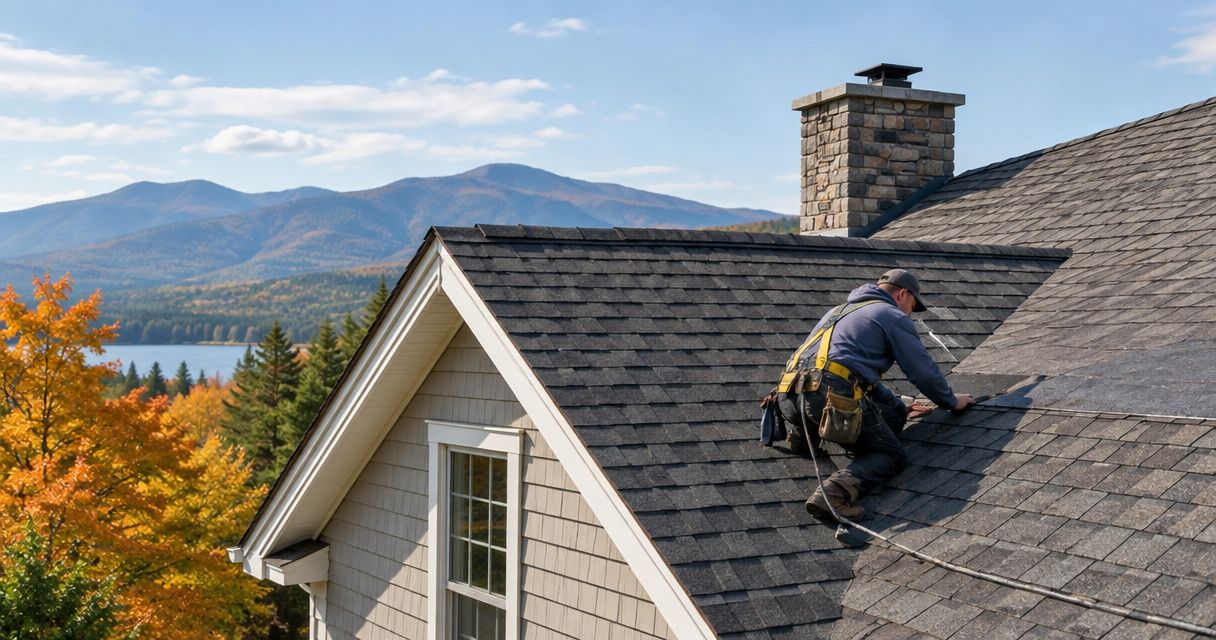
Early fall is the best planning target for a roof replacement in New Hampshire because moderate temperatures can make asphalt-shingle installation more manageable. For your 2026 project, a dry roof deck, suitable installation temperatures, and a sound weather plan matter more than the season printed on the calendar.
- Best time of year for roof replacement NH: target early fall, but let roof conditions and installation requirements decide.
- Spring and summer work for residential roof replacement when the contractor plans around rain and heat.
- Winter roof replacement requires suitable conditions and material-specific cold-weather procedures; don't choose it solely for convenience.
- Prescott Roofing serves Southern New Hampshire homeowners planning residential roof replacement; request an inspection before choosing an installation window.
Why this matters
Choosing a season is useful. Choosing a contractor who explains when work should stop is more useful, because tear-off removes the existing roof covering and exposes the decking underneath.
For a homeowner-paid replacement, start with the roof's condition and a written scope. You can request an inspection with Prescott Roofing to discuss your roof replacement; submitting a request does not mean an appointment is booked.
What time of year is best for a roof replacement in NH?
Early fall is the strongest starting point for scheduling an asphalt-shingle replacement, not a guarantee of suitable working conditions. Compare every season against the same requirements: a suitable substrate, safe access, manufacturer instructions, and protection against changing weather.
| Season | Best for | Main advantage | Main limitation |
|---|---|---|---|
| Spring | Homeowners whose roof can wait for a suitable dry window | Moderate weather can suit installation | Rain interrupts tear-off and installation |
| Summer | Homeowners who need to coordinate around household schedules | Long daylight hours support work planning | Heat affects handling and working conditions |
| Early fall | Homeowners with flexibility to target moderate weather | Less exposure to summer heat or winter cold | Shortening days and changing weather still affect scheduling |
| Winter | Homeowners whose replacement cannot reasonably wait | Replacement remains possible under suitable conditions | Cold, frost, snow, and limited daylight complicate the work |
Use this comparison as a planning framework, not a weather forecast. For 2026 scheduling, ask the contractor what conditions would delay your particular roofing system and who makes that decision before tear-off begins.
These seasonal trade-offs mainly describe asphalt shingles. Metal and other roof coverings have different installation details, so confirm the requirements for the material named in your estimate.
Early fall: best for flexible replacement plans
Early fall is a practical target when your existing roof remains serviceable and you can choose your installation window. Moderate conditions help avoid the handling difficulties associated with very hot or very cold shingles.
The limitation is simple: fall does not promise dry weather. A contractor still needs to evaluate the forecast, the roof surface, and how much work can be completed and protected before conditions change.
Ask whether the proposed date is a target start or a confirmed start subject to weather. Also ask what happens if rain pushes the project later; a calendar date should never overrule installation requirements.
Choose early fall for the conditions it can offer, not because a calendar date makes every roof ready for replacement.
Spring: best for homeowners ready to work around rain
Spring is a reasonable replacement season when the roof is ready for work and the forecast provides an appropriate opening. You do not need to postpone a sound installation until fall simply because fall is your preferred season.
Rain is the main planning concern. The contractor should explain how the crew limits exposed decking, protects unfinished areas, and decides whether to postpone the start.
On a shaded property in Bedford, check the actual roof surface rather than assuming that comfortable conditions at ground level mean the roof is dry. Ask how the contractor checks for lingering moisture or frost before work starts.
Choose spring when the roof needs replacement and the contractor has a clear weather-contingency plan.
Summer: best for coordinating the household schedule
Summer can work well when you need to arrange driveway access, pets, children, or time away from home. Longer daylight provides more room for daily work planning, but it does not establish how long your roof replacement will take.
Heat is the trade-off. Asphalt shingles can become more susceptible to scuffing in hot conditions, and roof work requires appropriate heat-safety practices.
Ask how material storage, foot traffic, and the daily work sequence change during hot weather. For a 2026 summer project, have the contractor explain the plan for both heat and rain rather than promising an uninterrupted installation.
Choose summer when the contractor can explain how the crew protects people, materials, and unfinished work.
Winter: best reserved for a roof that cannot reasonably wait
Winter replacement is possible, but cold-weather installation is not simply summer installation with heavier clothing. Shingles become less flexible in cold conditions, and their self-sealing adhesive needs suitable conditions to bond.
The contractor must follow the selected manufacturer's instructions, including any applicable requirements for storage, handling, and hand-sealing. Hand-sealing means applying approved adhesive where required rather than assuming the shingle's factory seal will activate immediately.
Snow, frost, and ice also affect roof access and the installation surface. For a closer look at those decisions, read the guide to replacing a roof during winter in New Hampshire.
Choose winter only after the contractor explains why the work should proceed and how the selected materials will be installed correctly. If the roof can safely wait, you have more flexibility to choose suitable conditions.
Why the best replacement window varies
The season narrows your choices. These factors determine whether a particular day is appropriate for your home:
- Roof condition: A roof with active water entry needs prompt assessment. Do not wait for a preferred season without understanding the consequences.
- Material requirements: Shingles, underlayment, adhesives, and sealants each have installation instructions. Ask which requirements affect the proposed schedule.
- Roof surface: Frost, moisture, and unsuitable decking must be addressed before the next roof covering goes on.
- Roof complexity: Dormers, valleys, chimneys, and intersecting rooflines add details that require time and careful sequencing.
- Weather protection: The contractor needs a workable plan for exposed areas, overnight protection, and unexpected rain.
- Project coordination: Permits, material delivery, access, and related work must be arranged before tear-off, where applicable.
A Manchester roof with several dormers presents a different sequencing problem from a simple roof plane. Ask for a plan based on your house rather than a generic promise about how quickly roofs are replaced.
What should your seasonal replacement estimate include?
A useful 2026 roof replacement estimate explains the work, not just the proposed season. Make sure you understand what is included, what is excluded, and what requires additional authorization.
Tear-off and decking
Tear-off means removing the existing roof covering. Ask whether the estimate includes removal of all existing roofing layers and how the contractor will handle decking that proves unsuitable after removal.
Decking is the wood surface that supports the roof covering. The estimate should explain how concealed damage is documented and how you approve additional work before it proceeds.
Underlayment and flashing
Underlayment is the protective layer beneath the roof covering. Flashing directs water away from vulnerable joints, including walls and chimneys; step flashing uses overlapping pieces where a sloped roof meets a sidewall.
Ask which materials will be installed and which existing components, if any, will remain. A new shingle covering does not resolve a flashing detail that the replacement scope leaves unaddressed.
Ventilation and cleanup
Ask whether attic ventilation will be assessed and whether any changes are included. Ventilation decisions should reflect the roof and attic assembly, not an assumption that adding more vents always improves performance.
The written scope should also address debris removal, property protection, and final cleanup. Clarify responsibility for gutters, landscaping, driveway access, and any other area affected by the work.
How do you turn a preferred season into a workable schedule?
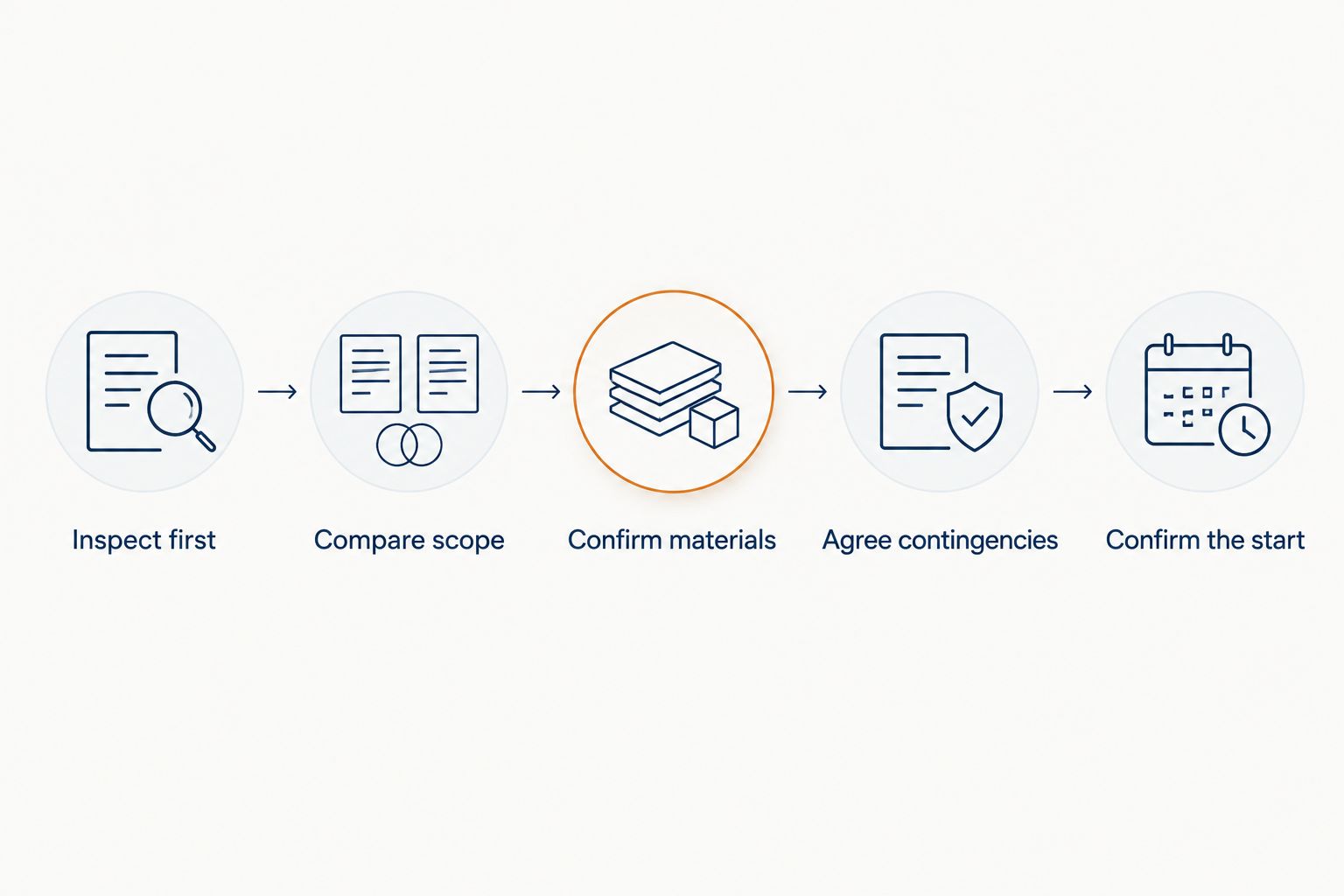
Use this sequence before agreeing to a start window. Each step removes a different source of avoidable confusion.
- Inspect first. Establish whether the roof can reasonably wait for your preferred season and identify visible conditions that affect the scope.
- Compare scope. Review tear-off, decking provisions, flashing, underlayment, ventilation, and cleanup on the same basis across estimates.
- Confirm materials. Identify the roof covering and supporting components so installation requirements can guide scheduling.
- Agree contingencies. Establish how weather delays, concealed decking work, and changes to the start date will be communicated.
- Confirm the start. Get confirmation before moving vehicles, arranging time away, or treating a tentative window as a booked installation.
Prescott Roofing is a local option for Southern New Hampshire homeowners planning a residential roof replacement. Use the inspection conversation to ask about these details; the contractor's explanation should help you understand the proposed work and its limits.
Request a roof replacement inspection
Discuss your roof's condition and replacement scope. An inspection request is not a confirmed appointment.
Should I wait until fall to replace my roof?
Do not wait until fall without knowing whether your roof can safely remain in service. An inspection should establish whether waiting is reasonable and identify any work needed before replacement.
If the roof can wait, early fall is a sensible target. If it cannot, a suitable spring or summer installation window is a better decision than delaying solely for the season.
Should I choose the contractor with the earliest start date?
An earlier start date is not evidence of better workmanship. Compare the written scope, material requirements, communication, and weather plan before letting schedule convenience decide.
Ask what must be complete before the start is confirmed. A contractor who distinguishes a target window from a firm appointment gives you a clearer basis for planning.
Does the season change what my roof estimate should cover?
The season changes installation planning, not the need for a complete scope. Tear-off, decking provisions, flashing, underlayment, ventilation decisions, and cleanup still need attention.
For a cold-weather project, ask for applicable handling and sealing procedures. For a summer project, ask how heat and changing weather affect the daily sequence.
FAQ
What's the best time of year for roof replacement in NH?
Early fall is the best planning target for an asphalt-shingle roof replacement in NH, provided the roof is dry and installation conditions meet manufacturer requirements. Spring and summer are also practical when the contractor has an appropriate weather plan.
Can I replace my roof in New Hampshire during winter?
Yes, winter roof replacement is possible when access, roof conditions, and material requirements permit it. Ask the contractor to explain cold-weather handling, sealing requirements, and protection of exposed areas.
Is summer too hot to install asphalt shingles?
Summer is not automatically too hot for asphalt-shingle installation. The contractor must account for material handling, surface protection, worker safety, and the selected manufacturer's instructions.
Should I schedule my 2026 roof replacement before getting an inspection?
Get an inspection before committing to an installation window for your 2026 roof replacement. The roof's condition and proposed scope determine whether your preferred timing makes sense.
What happens if rain delays my roof replacement?
The contractor should explain how the start date will change and how any unfinished areas will be protected. Confirm who contacts you and whether a revised date is tentative or confirmed.
Does requesting a roof inspection book an appointment?
No, requesting an inspection does not by itself confirm an appointment. Wait for the contractor to confirm the date and any access requirements.
What should I compare besides the proposed installation date?
Compare tear-off, decking provisions, underlayment, flashing, ventilation decisions, cleanup, and exclusions. Ask how additional work is documented and authorized before it begins.
One last thing
Ask what would make the contractor postpone your job. A clear answer about wet decking, unsafe access, or unsuitable installation conditions tells you more than a promise to start regardless of the forecast.
For your 2026 replacement, write those conditions into your scheduling discussion. The right date is the one that supports correct installation—not merely the earliest opening on a calendar.