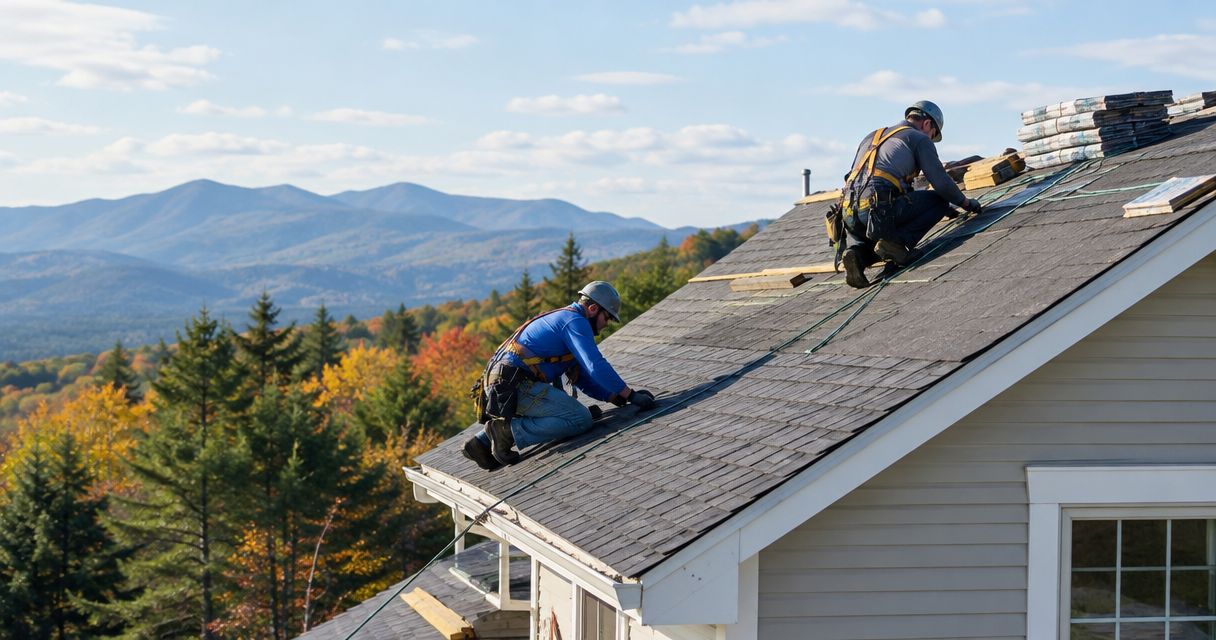
A roof replacement in New Hampshire takes a project-specific amount of time: roof size, access, tear-off, hidden deck repairs, and weather determine the installation window. The full calendar also includes inspection, material selection, scheduling, and any required approvals before work starts. Ask for both the expected working days on your roof and the elapsed time from contract to final cleanup—not a completion promise made before an inspection.
- How long does a roof replacement take? Separate installation days from the full project calendar.
- Prescott Roofing serves Southern New Hampshire homeowners planning residential roof replacement.
- Tear-off can expose damaged roof decking that changes the agreed scope and schedule.
- Get weather delays, daily roof protection, cleanup, and completion expectations in writing.
How long does a roof replacement take in New Hampshire?
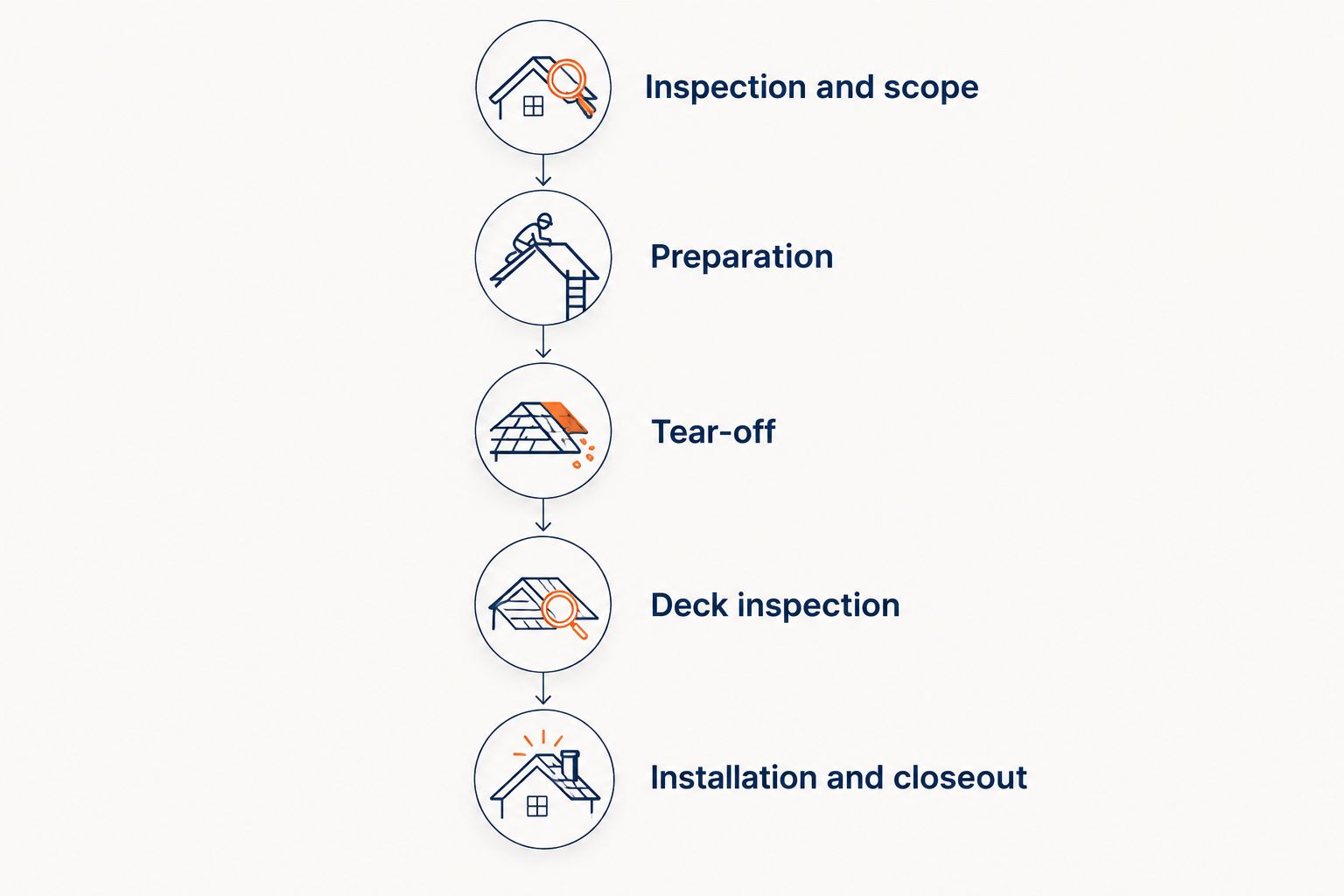
Your contractor should estimate roof replacement time after checking the roof and defining the work. A useful schedule separates preparation, active installation, and closeout instead of treating them as one uninterrupted block.
For a 2026 replacement, request an inspection before arranging time off or coordinating other exterior work. An inspection request is not a booked appointment; confirm the date with the contractor.
| Project stage | What happens | What to confirm |
|---|---|---|
| Inspection and scope | Roof conditions, measurements, and replacement details are reviewed | What is visible now and what remains concealed |
| Preparation | Materials, property access, scheduling, and required approvals are coordinated | What must happen before the start date is confirmed |
| Active installation | Existing roofing is removed, decking is checked, and the new system is installed | Expected working days and daily weather protection |
| Closeout | Debris removal, cleanup, and final review take place | What the contractor considers complete |
A start date and an installation duration answer different questions. A contractor can have a short installation plan but a later opening on the calendar. Conversely, an early start does not establish how long complicated roof details will take.
Why this matters before you sign an estimate
A roof replacement affects driveway access, outdoor space, noise, and your household routine. Understanding the sequence helps you prepare without assuming the roof will be finished by a date that has not been confirmed.
For Southern New Hampshire homeowners comparing 2026 estimates, the useful question is not simply which contractor promises the fastest finish. Ask which estimate explains the work, the schedule assumptions, and the procedure when conditions change.
Prescott Roofing is a fit for Southern New Hampshire homeowners seeking residential roof replacement. Evaluate the proposed work through the written scope and inspection findings, rather than treating the company name or an early completion promise as proof of workmanship.
What happens during a roof replacement?
The installation follows a construction sequence, but the time assigned to each stage depends on your home. Ask the contractor to explain these stages against your actual roof—not a different house used as an example.
Inspection and scope
The contractor needs to understand roof dimensions, slopes, access, penetrations, and visible conditions before proposing a schedule. Penetrations are places where items such as plumbing vents pass through the roof covering.
An attic inspection, where access permits, adds information about the underside of the roof deck and ventilation. It does not reveal every condition concealed beneath the existing roofing. Ask what the inspection establishes and which assumptions remain in the estimate.
Preparation
Before tear-off, confirm material selection, delivery arrangements, debris-container placement, and property access. Establish who handles any required permits and whether those approvals affect the proposed start.
This stage also sets household expectations. Identify where you should park, which entrances need to remain accessible, and who will communicate schedule changes. Preparation belongs in the project calendar even though no shingles are being removed yet.
Tear-off
Tear-off means removing the existing roof covering so the underlying assembly can be assessed and the replacement installed. The amount of existing material and the difficulty of moving debris affect the work involved.
Ask how the crew will protect landscaping, siding, windows, and entry paths. Do not assume a promise to remove the old roof also explains property protection or debris handling; those details need their own explanation.
Deck inspection
The roof deck is the structural surface beneath the roofing materials. Once tear-off exposes it, the contractor can identify damaged sections that were not visible during the initial inspection.
Deck repairs change the work before new roofing goes down. Your estimate should explain how the contractor documents discoveries, obtains your approval for additional work, and communicates the effect on completion. The deck repair discovery to finished roof workflow explains that handoff in more detail.
Installation and closeout
Installation includes more than the visible roof covering. Underlayment, flashing, roof edges, ventilation details, and penetrations all need attention within the agreed scope.
Flashing directs water away from vulnerable joints, such as roof-to-wall intersections and chimney connections. After installation, closeout should address debris removal, the agreed cleanup, and a review of completed work. Ask whether these tasks fall within the quoted installation window or occur afterward.
Why roof replacement time varies
For your 2026 project, ask the contractor to connect each scheduling assumption to a condition on your roof. These factors explain why the same finish-date promise does not suit every home:
- Roof area and layout. More roof surface means more material to remove and install. Valleys, dormers, intersecting slopes, and roof-to-wall connections add detailing beyond the main roof planes.
- Pitch and access. Steeper slopes require different working arrangements than easier-to-access surfaces. Limited driveway space, close neighboring structures, and restricted delivery access also affect how materials and debris move.
- Existing roofing and deck condition. Tear-off scope affects removal work. Concealed deck damage adds repair work before the replacement assembly can continue.
- Chosen roof assembly. The covering, underlayment, flashing, and ventilation details determine the installation steps. A material change needs its own scope and schedule rather than an assumption that every roof system installs the same way.
- Weather and installation requirements. Rain, snow, ice, wind, and unsuitable working conditions affect safe roofing work. Product installation instructions also matter; ask how the contractor decides whether conditions are suitable.
- Coordination and approvals. Required permits, deliveries, and related work must align with the roofing sequence. Homes with solar panels need a removal-and-reinstallation plan before roofing work is scheduled around them.
A clear estimate does not eliminate these variables. It explains which are already accounted for and how the contractor will handle the rest.
What should a roof replacement estimate say about timing?
A useful 2026 estimate makes the schedule understandable without pretending construction has no uncertainties. Ask for written answers to the following points before signing.
Expected start and installation window
Distinguish a target start from a confirmed start. Ask what still needs to happen before confirmation and how the contractor will notify you of a change.
Then ask for the expected working days on site and what that expectation includes. Delivery, roof installation, debris-container pickup, and final review do not necessarily happen together. Your paperwork should make the boundaries clear.
Included work and exclusions
Look for tear-off, disposal, deck inspection, underlayment, flashing, ventilation work, and cleanup in the scope. Ask which existing components will remain and why.
Exclusions matter just as much. If chimney masonry, gutter work, or solar-panel coordination falls outside the roofing agreement, establish who handles it and whether it must happen before or after installation. Unassigned work creates an avoidable scheduling gap.
Concealed repairs and changes
Ask how the contractor will show you damaged decking and obtain authorization before performing additional work. Photos and a written description give you a clearer basis for that decision than a verbal instruction relayed through someone else.
The change procedure should also address timing. A written change order should identify the added work and explain its schedule effect rather than leaving you to infer a new completion date.
Daily protection and communication
Ask how the contractor limits exposed roof areas and protects unfinished work if conditions interrupt installation. Do not accept speed as a substitute for a clear protection plan.
Identify your point of contact and how you will receive updates. You need to know whom to ask about access, weather interruptions, and unexpected findings—not just whom to call before signing.
Is a faster roof replacement always better?
A shorter schedule is useful only when the scope and workmanship remain intact. Speed alone does not establish whether the contractor has addressed decking, flashing, ventilation, and cleanup.
A concentrated installation can reduce the period of household disruption, but it still needs enough time for required details and inspections. A longer schedule gives no automatic assurance of better work either; ask what specific tasks account for the difference.
When comparing contractors, put the written scopes beside each other before comparing finish dates. An estimate that includes flashing replacement and deck-repair procedures is not equivalent to one that leaves those subjects unresolved.
Can you stay home during roof replacement?
Staying home requires a plan for noise, access, children, pets, and any work-from-home needs. Ask your contractor which areas must remain clear and whether your usual entrance will stay usable.
If you need quiet for meetings or daytime sleep, arrange an alternative rather than relying on construction to pause around your routine. Confirm daily working arrangements directly; do not assume another homeowner's experience applies to your project.
What happens if weather interrupts the replacement?
A weather interruption calls for a protection plan and a revised schedule. Ask who decides when work stops, how unfinished areas are secured, and when you will receive an update.
For a New Hampshire roof replacement in 2026, avoid making another contractor's arrival or a rigid household deadline depend on an unconfirmed roofing finish. Coordinate follow-on work only after discussing the roofing schedule and its dependencies.
How should you prepare before the crew arrives?
Preparation should follow the contractor's instructions for your property. Use the pre-start conversation to settle practical details rather than waiting until delivery vehicles arrive.
- Clear the agreed driveway and material-staging areas.
- Move outdoor furniture and belongings out of designated work zones.
- Plan safe routes for children, pets, and visitors away from roofing activity.
- Ask whether fragile wall decorations or attic belongings need protection.
- Confirm access needs, your contact information, and the update process.
- Review the boundaries of the work area and any landscaping concerns.
Tell the contractor about access needs before the start date is confirmed. A household member who needs a particular entrance or an unobstructed path requires a specific arrangement, not a last-minute assumption.
FAQ
How long does a roof replacement take from signing to completion?
The full roof replacement timeline includes preparation and scheduling as well as installation and closeout. Ask for the expected start window, working days on site, and remaining tasks after the roof covering is installed.
Can a roofer promise my roof will be finished on a specific day?
A completion commitment needs a defined scope and stated conditions. Ask how weather, concealed deck damage, and approved changes affect that commitment before relying on the date.
Does requesting an inspection mean my roof replacement is booked?
Requesting an inspection does not book a roof replacement. Confirm the inspection appointment separately, then review the scope, agreement, and installation schedule.
Will damaged roof decking delay my replacement?
Damaged roof decking adds repair work before the new roofing assembly can proceed. The schedule effect depends on the damage found and the work needed; ask for documentation and an updated plan.
Should I choose the contractor with the shortest timeline?
Choose a roof replacement contractor based on a clear scope, explained installation details, and accountable communication—not the shortest timeline alone. Compare what each contractor includes before comparing completion promises.
What should I ask Prescott Roofing before a replacement?
Ask Prescott Roofing to explain the inspection findings, proposed replacement scope, expected working days, and handling of concealed deck repairs. Confirm the schedule and appointment details directly rather than treating a request as a booking.
One last thing
Ask what remains after the last shingle is installed. Debris-container removal, cleanup, a final review, and unresolved scope items all affect when the project is actually complete.
Before signing your 2026 roof replacement agreement, have the contractor define completion in writing. That single clarification makes the promised schedule much more useful to your household.