
A roof replacement estimate should include the removal work, roofing materials, installation details, property protection, cleanup, payment terms, and written exclusions for your project. Hidden roof-deck damage is not always visible before tear-off, so the estimate should also explain how additional work gets documented and approved. For a homeowner-paid replacement in 2026, you need a defined scope—not just a total at the bottom.
- What does a roof replacement estimate include? Materials, labor, tear-off, flashing, cleanup, exclusions, and written terms for additional work.
- Prescott Roofing serves Southern New Hampshire homeowners planning residential roof replacement; compare the written scope before choosing a contractor.
- Require a clear distinction between included work, optional upgrades, and repairs that need approval after tear-off.
- A shingle name alone does not describe a complete roof replacement.
Why this matters
Two contractors can measure the same house and propose different work. One includes new flashing and disposal; another leaves those items unclear. Comparing their totals without checking the scope does not tell you which proposal covers your roof.
Before signing a 2026 proposal, understand why roof replacement estimates vary between contractors. Resolve missing scope before choosing a contractor, not after the old roof comes off.
What does a roof replacement estimate include?
A useful estimate follows the job from removal through final cleanup. It identifies what the contractor will install, what existing components will remain, and what requires a separate decision.
| Estimate item | What the written scope should explain | What needs clarification |
|---|---|---|
| Roof measurements | Roof areas covered and measurement units | Omitted additions, porches, or detached structures |
| Tear-off | Existing roofing layers to be removed | Whether extra layers change the scope |
| Roof deck | Inspection after removal and repair procedure | How concealed damage gets approved |
| Underlayment | Product type and installation areas | Vague wording such as roofing felt |
| Protective membrane | Material and specified locations | Coverage described only as needed |
| Shingles or roof covering | Manufacturer, product line, and selected finish | Unapproved material substitutions |
| Flashing and edges | Replacement or reuse at each relevant detail | Chimneys, walls, valleys, and pipe penetrations |
| Ventilation | Existing components retained and proposed changes | Exhaust changes without an intake assessment |
| Site work | Property protection, debris handling, and cleanup | Disposal, driveway access, and gutter cleaning |
| Project terms | Payment milestones, exclusions, and change approval | Verbal promises absent from the document |
The estimate does not need a separate page for every component. It does need enough detail that you and the contractor understand the same job. A broad description such as complete roofing system leaves too much unanswered unless an attached scope defines it.
Tear-off, measurements, and disposal
Tear-off means removing the existing roofing before installing the replacement. Ask whether the estimate includes removal down to the roof deck—the wood surface beneath the roofing—or describes a different approach.
Roofing measurements often use squares. One roofing square equals 100 square feet of roof area, not floor area inside your house. Slopes, overhangs, and connected roof sections affect the roof measurement, so your home's living-area figure is not a substitute.
The removal scope should address:
- Existing layers: What the contractor expects to remove and how unexpected layers are handled.
- Included areas: Whether attached garages, porch roofs, and additions are part of the project.
- Debris handling: Where removed materials go and who handles disposal.
- Site access: Where containers, vehicles, and material deliveries will be placed.
Ask the contractor to identify each included roof section on a photo or drawing. That simple step helps prevent a garage or small rear roof from becoming an assumption neither party discussed.
Materials beneath the shingles
Shingles are the visible surface, but the estimate also needs to describe the layers underneath. Underlayment provides a secondary water-shedding layer beneath the roof covering; self-adhered protective membrane serves specified vulnerable areas.
For a Southern New Hampshire replacement, ask the contractor to identify the proposed membrane locations and explain the applicable installation requirements. Do not assume every proposal includes identical coverage at eaves, valleys, and roof penetrations.
Look for named materials or clearly defined specifications. The estimate should distinguish the roof covering from underlayment, protective membrane, starter shingles, and ridge-cap materials where those components apply.
A named shingle product is helpful, but it is not a complete specification. Ask what happens if the selected material changes before installation and whether your written approval is required for substitutions.
Flashing, roof edges, and ventilation
Flashing directs water away from joints and openings. Step flashing consists of individual pieces integrated with shingles where a sloped roof meets a wall; chimney flashing and pipe boots address different roof penetrations.
The estimate should identify which flashing components get replaced and which remain. Reuse is a decision that needs an explanation, not an omission you discover after signing. Ask how the contractor will evaluate existing metal and document anything that cannot be assessed beforehand.
Drip edge is metal installed along roof edges to help direct water away from the deck and fascia. Its scope should be clear too, including how it connects with the other roofing layers.
Ventilation deserves separate attention. Ask whether the proposal changes attic intake, exhaust, or both, and whether the contractor has assessed the existing arrangement. Adding an exhaust vent is not the same as evaluating the airflow path through the attic.
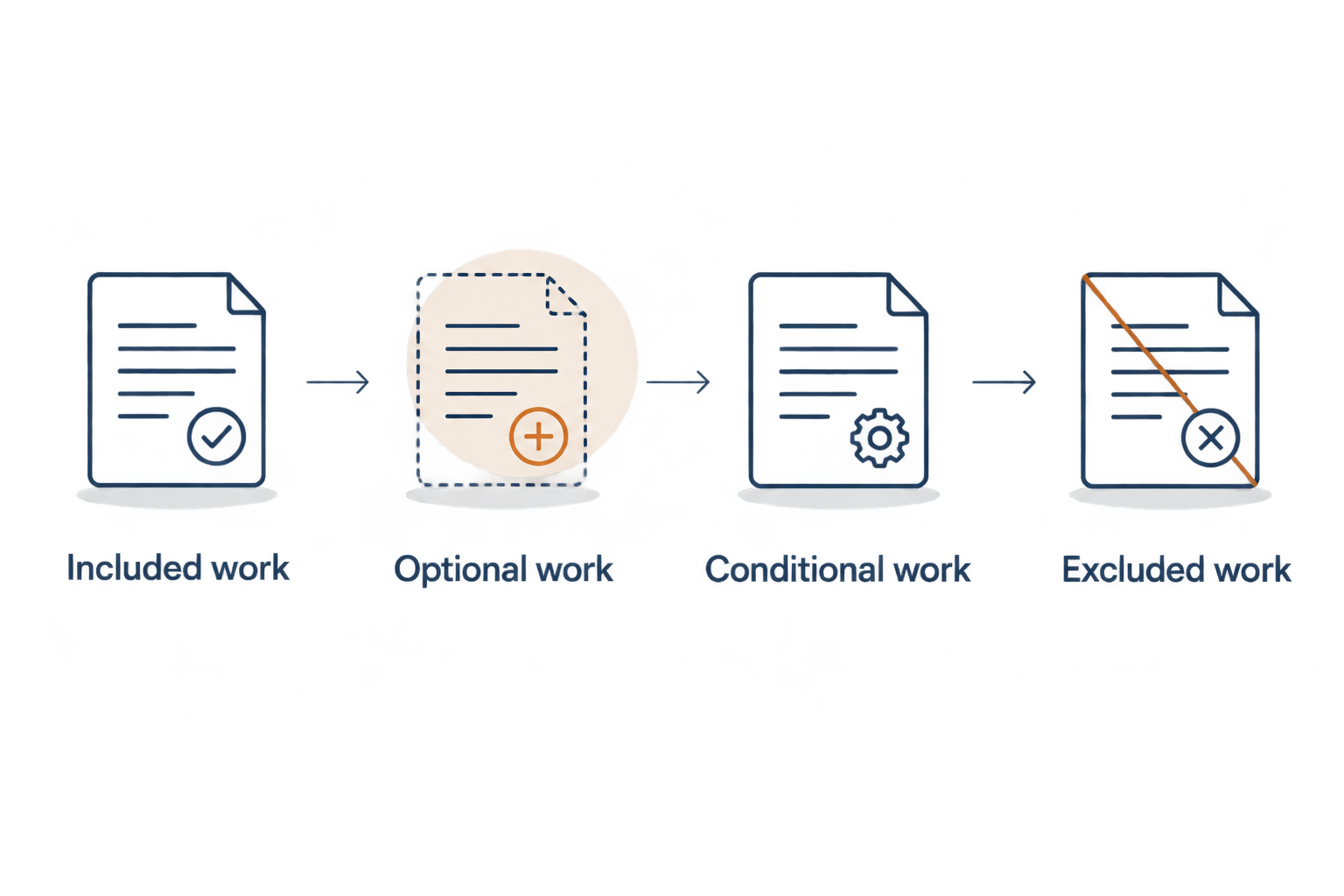
Separate included work from conditional work
A roof estimate becomes easier to compare when every task has a clear status. Use these categories when you review the proposal with the contractor.
| Scope status | Best for identifying | Benefit | Limitation |
|---|---|---|---|
| Included work | Tasks covered by the base agreement | Establishes the work you are authorizing | Still needs material and installation detail |
| Optional work | Upgrades you can accept or decline | Separates preferences from required scope | Can distract from missing essential work |
| Conditional work | Repairs dependent on concealed conditions | Establishes a process before discoveries occur | Final extent remains unknown until inspection |
| Excluded work | Tasks outside the agreement | Makes separate responsibilities visible | Leaves you responsible for arranging unresolved work |
For example, replacing deteriorated roof decking is different from choosing another shingle finish. The first depends on the condition of the structure beneath the roofing; the second is a selection decision. Neither should be hidden inside a vague allowance.
Why roof replacement estimates vary
Different totals do not establish that one contractor is overcharging or another has found a shortcut. First, identify whether the proposals describe the same work.
- Removal scope: Different assumptions about existing layers change the removal work.
- Material specifications: Different roof coverings and supporting components create different proposals.
- Roof details: Walls, chimneys, valleys, and penetrations require specific installation work.
- Access and protection: Container placement, landscaping, and access affect job planning.
- Deck condition: Included repairs and conditional repairs are not equivalent commitments.
- Related work: Ventilation, gutters, and carpentry must be identified as included, separate, or excluded.
For your 2026 comparison, ask each contractor to explain differences against the same checklist. A lower total with undefined work is not an equal-scope proposal. You need the explanation before you can judge the offer.
How should concealed roof-deck damage be handled?
Concealed roof-deck damage should trigger a documented approval process, not an unexplained addition to the final invoice. The estimate should explain how the contractor identifies damaged material, records the finding, and obtains authorization for work outside the agreed scope.
Ask whether the agreement describes repairs by sheet, square foot, or another defined unit. The unit alone is not enough: material thickness, repair method, and included labor also need clarification.
Before signing, settle these questions:
- Who receives the photos and explanation?
- Who can authorize additional work?
- How is the adjustment recorded in writing?
- What happens while the contractor waits for your decision?
Your 2026 agreement should also address temporary protection if work pauses. Do not assume that every unexpected condition follows the same approval process; ask the contractor to distinguish roof-deck repairs from broader structural work.
What changes when your home has older roof details?
Older homes can have roof-to-wall connections, trim, and previous alterations that need closer inspection. Ask which details the contractor has actually examined and which remain assumptions until removal begins.
Appearance and installation scope need separate decisions. Comparing roofing options for historic homes involves the visible roof profile as well as the details needed to install it; a material discussion centered on Georgia does not establish New Hampshire installation requirements.
For your own house, ask whether the estimate includes disturbing or restoring adjacent siding, trim, or masonry. A roofing proposal that excludes those tasks leaves a coordination question you need answered before work starts.
How do you compare estimates before signing?
Compare 3 written estimates using the same roof sections and material requirements. That is a practical review method, not a rule that you must choose among exactly that many contractors. The goal is to expose differences, not collect totals indefinitely.
Read the removal scope first, then the installation details, then the exclusions. Mark each unanswered item and ask for a written revision rather than relying on a conversation. An email explanation helps, but important commitments belong in the agreement or its referenced attachments.
Check these project terms as well:
- Expected scheduling process and how weather-related changes are communicated.
- Responsibility for permits and required inspections, where applicable.
- Payment milestones tied to defined project events.
- Written manufacturer and workmanship coverage, including exclusions.
- Final walkthrough, cleanup, and documentation responsibilities.
Prescott Roofing is a fit for Southern New Hampshire homeowners planning residential roof replacement. Apply the same scope review to its proposal: service-area fit does not replace a clear agreement about your house.
What should you prepare before requesting an inspection?
Write down known leaks, prior roof work, attic access details, and any roof sections you want included. Share your goals too: replacing the full roof, coordinating gutter work, or understanding whether existing ventilation needs attention.
You do not need to climb onto the roof. Provide ground-level observations and let the contractor explain what the inspection can establish and what remains concealed.
When you request a roof replacement inspection, ask for a written scope that separates included work from conditional repairs. Requesting an inspection is not the same as having a confirmed appointment; confirm the date, access arrangements, and next steps directly.
FAQ
What does a roof replacement estimate include besides shingles?
A roof replacement estimate should include removal, supporting roofing materials, flashing, ventilation scope, property protection, disposal, cleanup, and project terms. It should also identify exclusions and the approval process for concealed repairs.
Is roof-deck replacement automatically included in a roofing estimate?
Roof-deck replacement is not automatically included unless the estimate says so. Ask how concealed damage will be documented and how additional repairs require your approval.
Should a roofing estimate include new flashing?
A roofing estimate should state which flashing gets replaced and which existing components remain. Ask for the reason behind any proposed reuse and how concealed flashing conditions will be handled.
What does a square mean on my roof estimate?
One roofing square equals 100 square feet of roof area. It is not the same as your home's interior floor area, and the estimate should distinguish measured roof area from material quantities.
Are gutters included when I replace my roof?
Gutter work is included only when the written scope includes it. Ask whether the project covers gutter protection, cleaning, removal, reinstallation, or replacement rather than assuming those tasks are bundled together.
Does requesting an inspection mean my appointment is booked?
Requesting an inspection does not mean your appointment is booked. Confirm the date, arrival arrangements, required access, and what information the contractor will provide afterward.
One last thing
Read the exclusions before you reread the total. An estimate can name every major roofing material and still leave siding restoration, deck repairs, or disposal unresolved.
Before authorizing a 2026 roof replacement, ask the contractor to explain every unclear exclusion in plain language. If a task matters to completing your roof, its responsibility belongs in writing.