A roofer can start after an estimate once you authorize the work and the contractor confirms the scope, materials, crew schedule, and installation conditions; receiving an estimate alone does not reserve a start date. For a homeowner-paid roof replacement in Southern New Hampshire in 2026, ask for a written start window and the conditions that must be met before tear-off begins.
- How soon can a roofer start after estimate? Get a written start window, not a verbal promise.
- Prescott Roofing serves Southern New Hampshire homeowners seeking residential roof replacement.
- Confirm the replacement scope, material selections, and scheduling conditions before authorizing work.
- An inspection request, an estimate, and a confirmed installation date are different commitments.
Why this matters
An early opening is useful only when the contractor is ready to complete the agreed work. A date without a defined scope leaves you comparing promises instead of replacement plans. A longer wait does not establish better workmanship, either.
Separate the time needed to prepare the job from the time needed to install the roof. The guide to how much notice you need before scheduling a roof replacement addresses the planning side; here, the decision is whether the proposed start window is ready to become a commitment.
How soon can a roofer start after giving an estimate?
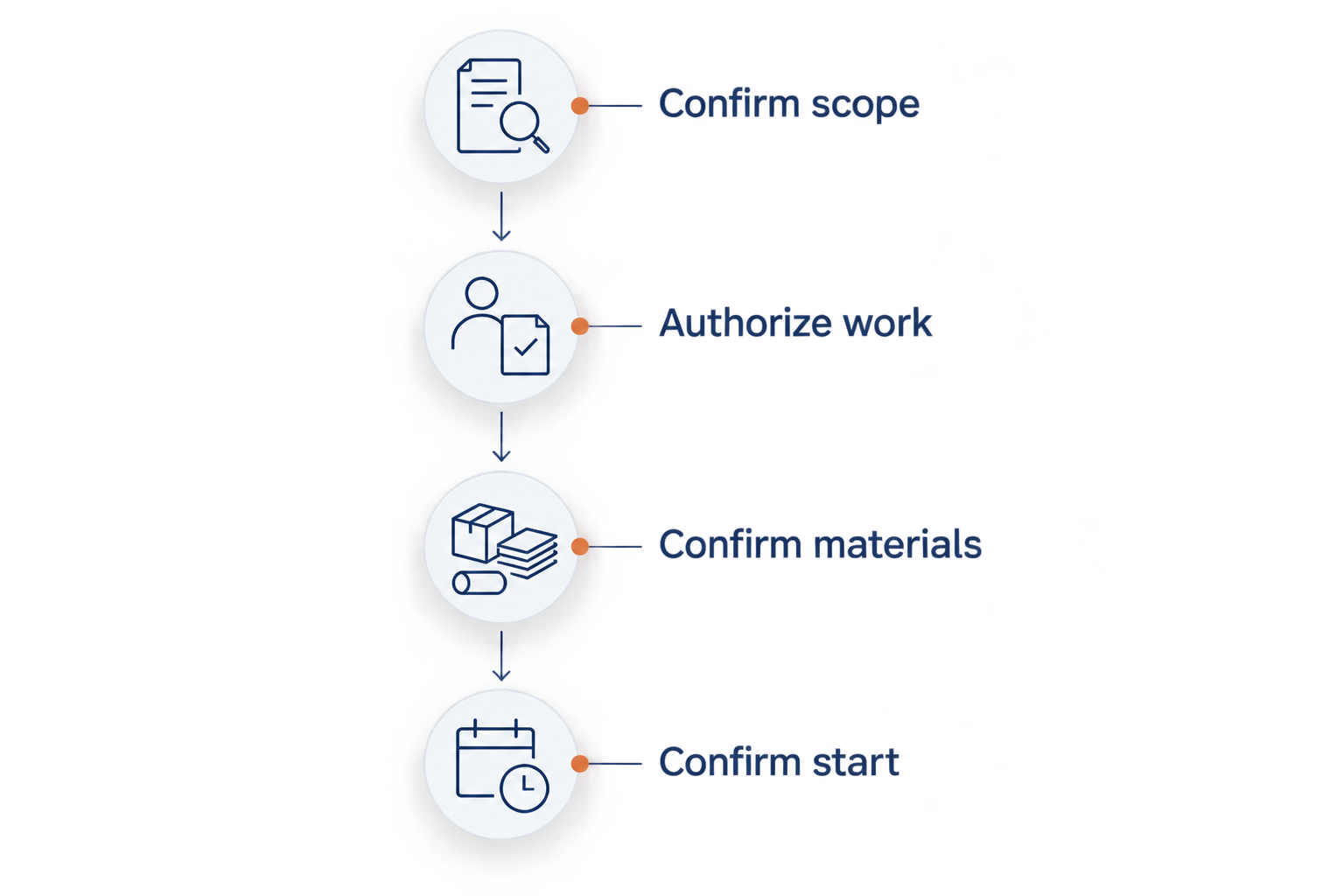
The start date depends on what remains unresolved after the estimate. Ask the contractor to walk through these steps rather than give you an unsupported number of days.
Confirm the replacement scope
Start with what the estimate actually covers. A tear-off means removing the existing roofing before installing the new roof; the written scope should explain removal, disposal, replacement materials, flashing work, and cleanup.
Also identify exclusions. If gutters, chimney work, or roof decking repairs are outside the base scope, understand how those items will be handled before accepting a schedule. Roof decking is the wood surface beneath the roofing materials.
Authorize the agreed work
Ask what action places your project into the contractor's schedule. Do not assume that receiving an estimate, replying to an email, or discussing a preferred month reserves a crew.
Read the agreement before signing. Confirm that the material selection, scope, payment terms, and scheduling language match what you discussed, including how changes require your approval.
Confirm materials and job preparation
Ask whether the specified roofing materials and accessories are confirmed for your project. A preferred shingle color is not a completed selection if you are still considering alternatives.
Clarify delivery and access arrangements as well. The contractor should explain where materials and debris containers will go, what space must remain clear, and whether any related work needs coordination before installation.
Get the start window in writing
Ask whether the proposed timing is a target window or a confirmed start date. Then ask what could change it and how you will receive an update.
Do not treat delivery day as permission to begin tear-off. Material delivery, crew arrival, and removal of the old roof are separate milestones. Confirm which milestone the contractor means when discussing the start.
Compare scheduling options without choosing by speed alone
For your 2026 roof replacement, compare contractors using the same scope and scheduling questions. Otherwise, a quick opening for loosely defined work can look better than a carefully explained proposal.
| Scheduling option | Best for | Benefit | Limitation to resolve |
|---|---|---|---|
| Earliest proposed opening | Homeowners ready to approve the full scope | Moves the project toward installation promptly | Confirm that preparation is complete rather than assumed |
| Later agreed window | Homeowners coordinating access or related work | Gives you a planning target | Ask how schedule changes will be communicated |
| Flexible opening | Homeowners able to accommodate a changing date | Allows you to consider an opening in the schedule | Requires clarity about notice and readiness |
None of these options proves quality by itself. Ask each contractor the same question: what remains to be done before this roof can be removed and replaced as specified?
A useful answer identifies the unfinished items. A weak answer repeats the proposed date without explaining whether the job is ready.
Why the time between estimate and installation varies
These are scheduling questions to resolve with your contractor, not reasons to accept an indefinite delay:
- Scope approval: Unresolved decisions about tear-off, flashing, ventilation, or related work leave the installation plan incomplete.
- Material selection: Confirm the chosen roofing material, color, and accessories rather than assuming the estimate finalized them.
- Crew scheduling: Ask whether your project has a reserved place or is waiting for an opening after other work.
- Permit requirements: Confirm with the contractor and your local building department whether approval is required before work begins.
- Installation conditions: Weather, roof conditions, and the selected product's installation instructions must inform the decision to start.
- Related work and access: Solar equipment, chimney work, driveway access, and delivery arrangements need attention when they affect your project.
Ask which factors apply to your house. A straightforward replacement and a project requiring related trade work should not be discussed as though their preparation is identical.
What should the estimate say about scheduling?
For a 2026 proposal, look for language that distinguishes a planning target from a commitment. You need to understand both the expected timing and the process for changing it.
The scheduling trigger
Ask what moves the project from an estimate into the installation schedule. Have the contractor identify the required authorization and any other contractual conditions.
Do not substitute assumptions for contract language. If the explanation differs from the paperwork, resolve the difference before you sign.
The remaining prerequisites
Ask for a short list of unfinished items: material selection, permit confirmation, access arrangements, or related work. Each item needs a clear next action.
This is more useful than repeatedly asking whether the date still looks good. You can see what is ready and what is holding up confirmation.
The update process
Ask who will contact you if the start window changes. Confirm how that person will reach you and what information the update will include.
You need more than a notice that work is delayed. Ask for the reason, the revised expectation, and any action needed from you.
The change-approval process
Some roof conditions remain concealed until the old roofing is removed. Ask how the contractor documents unexpected decking problems and obtains approval for additional work.
That discussion does not establish that your house needs repairs. It establishes how decisions will be handled if concealed damage is found.
Can a roofer start immediately after giving an estimate?
An immediate start is acceptable only when authorization, preparation, and installation conditions support it. Speed is not a substitute for a written agreement.
Ask why the opening exists, what has already been confirmed, and what remains unfinished. An explanation tied to the actual project gives you something to evaluate; pressure to sign before reviewing the scope does not.
Do not reject a contractor simply for having an opening. Reject the idea that an opening removes the need to verify the work.
Does signing the estimate guarantee a start date?
Signing an estimate does not, by itself, tell you whether a date is guaranteed; the agreement's scheduling terms control that question. Read the document for the start language and any conditions attached to it.
If the proposal describes timing as tentative, do not plan as though it is fixed. Ask for clarification before arranging time away from work or coordinating another contractor.
Should I choose the roofer who can start first?
Choose the contractor whose scope, workmanship plan, and scheduling commitments you understand—not simply the earliest date. Compare timing only after you know the proposals describe equivalent work.
For homeowners paying directly for a replacement, that means checking what is included and excluded before comparing openings. Removing old roofing, addressing flashing, handling concealed decking issues, and cleaning up should not remain vague just because a crew can arrive sooner.
Ask these questions before accepting the start window
Use this checklist during your next estimate discussion. It keeps the conversation on decisions you can verify rather than broad assurances.
- What exactly starts on the proposed date? Distinguish delivery, setup, and tear-off so you know what to prepare for.
- What must happen before that date is confirmed? Ask for the remaining decisions and who is responsible for each.
- Does the schedule match the written scope? Confirm that the proposed opening covers the complete replacement you are considering.
- How will you handle a change? Ask about notification, revised timing, and approval of changes to the work.
- What do I need to prepare? Confirm parking, driveway access, outdoor belongings, pets, and any access needed inside the home.
Keep the answers with your estimate. If the contractor later revises the schedule or scope, compare the update with the written agreement rather than relying on memory.
Prescott Roofing is a fit for Southern New Hampshire homeowners seeking residential roof replacement. When you request an inspection, describe your replacement plans, any deadline you are working toward, and known access constraints. Submitting a request is not the same as having an inspection appointment or installation date confirmed.
Plan around your house, not just the calendar
A homeowner in Manchester planning a replacement around work commitments has a different scheduling concern from a Bedford homeowner coordinating chimney work. Explain the constraint that actually affects your property.
If you have a deadline in 2026, tell the contractor before accepting the proposal. Ask whether the requested timing is a firm commitment or a target subject to conditions, and make sure the written terms reflect the answer.
Avoid creating a deadline by booking dependent work around a tentative date. Coordinate related contractors only after everyone understands the order of work and the possibility of a schedule change.
For a Prescott Roofing residential roof replacement inquiry, explain both your preferred timing and your flexibility. That gives the scheduling conversation a clear starting point without assuming a particular opening.
FAQ
How soon can a roofer start after giving me an estimate?
A roofer can start once you authorize the work and the contractor confirms the project is ready for installation. Get the proposed start window and its conditions in writing; the estimate alone does not reserve a date.
Does requesting an inspection mean my roof replacement is booked?
No, an inspection request does not book a roof replacement. Confirm the inspection appointment separately, then review the replacement proposal and installation scheduling terms.
Should I worry if a roofer can start right away?
An immediate opening is not, by itself, a reason to reject a roofer. Verify the written scope, authorization, materials, and job preparation before agreeing to tear-off.
Can my roof replacement start date change after I sign?
A start date can change under the conditions described in your agreement. Ask how weather, preparation, and other scheduling conditions are handled and how you will receive updates.
Does material delivery mean the roofing crew will start that day?
Material delivery does not establish the tear-off date. Ask the contractor to distinguish delivery, setup, and installation in the schedule.
What should I ask Prescott Roofing about replacement timing?
Ask Prescott Roofing what remains to be confirmed before your residential roof replacement can be scheduled. Discuss the scope, material selections, access, and how the proposed start window will be communicated.
Should I take time off work as soon as I receive the estimate?
Do not arrange time off solely because you received an estimate. First confirm whether you need to be present and whether the contractor has provided a tentative window or a confirmed date.
One last thing
Ask the contractor to separate the start window from the installation duration. Knowing when work is expected to begin does not tell you when driveway access, cleanup, or the final walkthrough will be complete.
For your 2026 replacement, confirm what starts, what must be ready, and how changes will be communicated before you authorize tear-off. That is a better basis for choosing than an early date with unanswered questions.