The notice needed to schedule roof replacement depends on the contractor’s schedule, your approved scope, material coordination, and any required approvals—not a universal number of days. Start the inspection and estimate process before you need a firm installation date, and distinguish an inspection request from a confirmed appointment or construction start.
- The notice needed to schedule roof replacement depends on project readiness, not just when you first call.
- Prescott Roofing serves Southern New Hampshire homeowners planning residential roof replacement.
- An inspection request, signed estimate, and confirmed installation date are different scheduling milestones.
- Confirm materials, permit responsibility, weather procedures, and additional-work approval before accepting a start date.
How much notice do you need before scheduling a roof replacement?
Give your roofer enough notice to inspect the roof, define the replacement, document the agreement, and coordinate the work before your preferred completion date. For a 2026 project, ask about each milestone separately rather than treating the first conversation as a reservation.
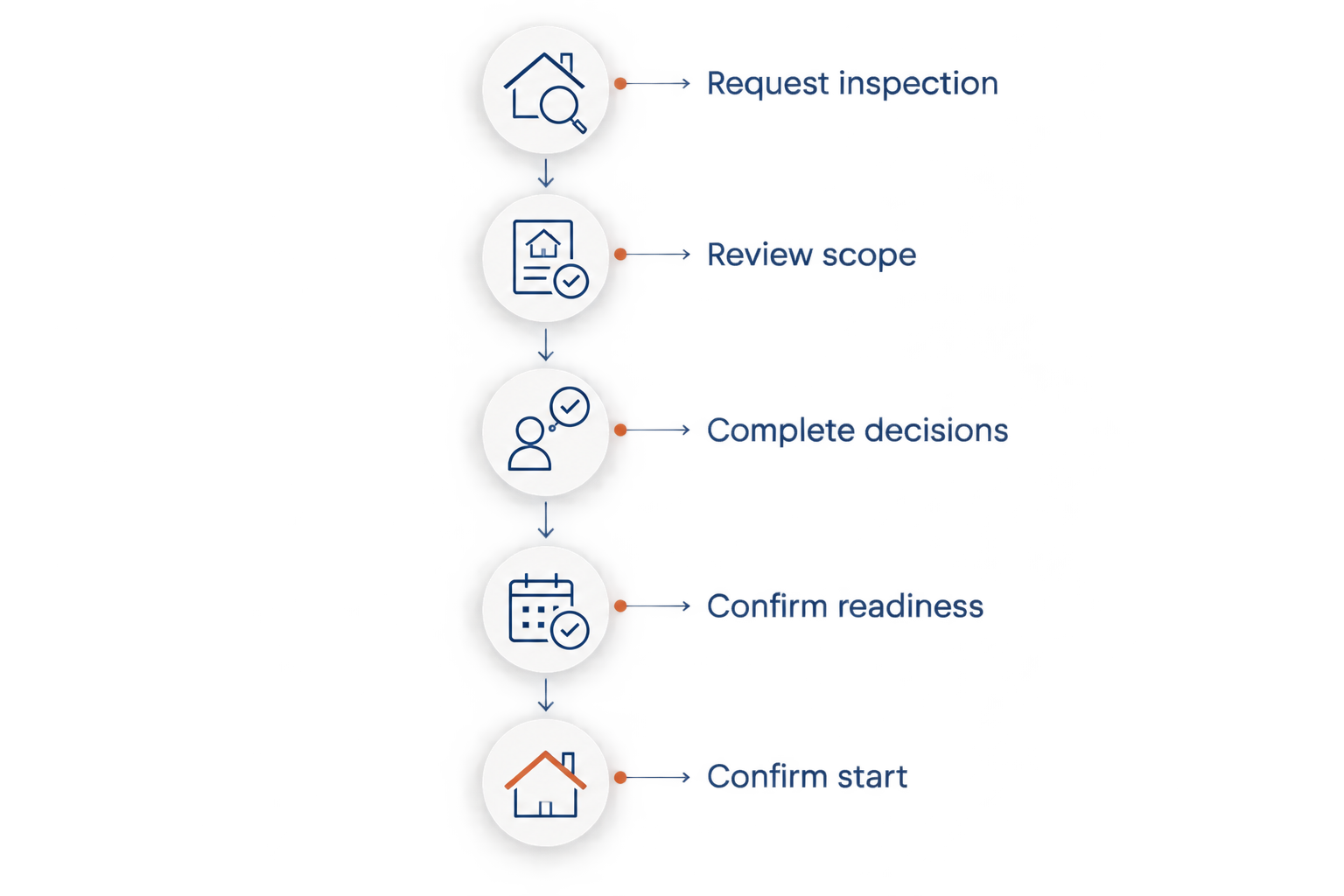
Use this sequence to work backward from your deadline:
- Request an inspection. Share the property address, your replacement goals, and any deadline. A request for a roof inspection starts the conversation; wait for confirmation before treating the appointment as booked.
- Review the written scope. Confirm what will be removed, installed, protected, and cleaned up. Resolve exclusions before agreeing to the work.
- Complete project decisions. Settle the roofing material, color, flashing details, and any related work that affects installation.
- Confirm project readiness. Establish who handles required permits, material coordination, and access arrangements.
- Confirm the start. Ask whether the proposed timing is a target window or a confirmed date, and how changes will be communicated.
A useful scheduling answer identifies what remains unfinished. If the contractor gives you a date without explaining those dependencies, ask what must happen before that date becomes dependable.
Why this matters
Roof replacement affects more than the surface above your head. You need to coordinate driveway access, vehicles, pets, outdoor belongings, and any household activities that conflict with overhead work.
For Southern New Hampshire homeowners planning work in 2026, the practical goal is a documented sequence—not a verbal promise that everything will happen soon. A clear scope makes a start date more useful because both parties know what the date covers.
Do not confuse lead time with installation duration. Lead time covers the steps before work begins; installation duration covers the work itself. A short installation does not establish how much notice the contractor needs beforehand.
What does your scheduling status actually mean?
Ask the contractor to describe your project’s status in plain language. These stages serve different purposes, and none should be treated as interchangeable.
| Scheduling stage | Best for | What it establishes | Limitation |
|---|---|---|---|
| Inspection request | Starting a replacement discussion | Your interest and project information | Does not confirm an appointment |
| Confirmed inspection | Arranging property access | An agreed inspection appointment | Does not reserve an installation date |
| Written proposal | Evaluating the replacement scope | Proposed work and stated terms | Does not establish scheduling unless it says so |
| Signed agreement | Authorizing the defined project | The scope and obligations you accepted | Check whether timing remains conditional |
| Confirmed installation start | Preparing your household for construction | The stated start and applicable conditions | Weather or documented project changes still need a communication plan |
The advantage of early discussion is time to resolve decisions without rushing the agreement. Its limitation is that an initial conversation does not settle the construction schedule.
A confirmed start supports household planning, but read its conditions. Ask whether material delivery, required approvals, or another unresolved item still controls the start.
Why roof replacement notice varies
The useful question is not simply how far ahead to call. Ask which parts of your particular replacement must be settled before the roofer can commit to starting.
- Scope decisions. Changing the replacement area or adding related work changes what the contractor must plan. Finalize those decisions before relying on the original schedule.
- Material coordination. The selected roof covering and its required components must be coordinated. Ask when your selections become final and how later substitutions are approved.
- Permits and approvals. Confirm applicable requirements with the contractor and local building department. Do not assume the same process applies to every Southern New Hampshire property.
- Related work. Solar equipment, chimney work, ventilation changes, and gutters need clear responsibility when they are part of the project. Identify any work that must happen before roofing begins.
- Crew scheduling and weather. Ask how the contractor assigns the project and communicates weather-related changes. A proposed window needs a stated confirmation process.
- Concealed deck conditions. The roof deck is the supporting surface beneath the roofing assembly. Deterioration discovered after removal requires an agreed process for documenting and authorizing additional work.
For your 2026 replacement, separate decisions you control from conditions the contractor must manage. Choose materials and resolve scope questions promptly, while asking for direct updates on the remaining dependencies.
What should the estimate settle before you accept a date?
Agree on the work before organizing your household around the start. A date attached to an unclear proposal leaves important decisions unresolved until preparation or construction is underway.
Read the estimate alongside the contractor. The explanation should connect each major task to an inclusion, exclusion, or condition—not leave you guessing what the crew intends to do.
Tear-off and deck repairs
Tear-off means removing the existing roof covering. Ask which layers the proposal includes and how the exposed deck will be evaluated before new roofing goes down.
The deck is not fully visible beneath an intact roofing assembly. Confirm how the contractor will document deterioration, request your authorization, and explain any effect on the remaining work.
Flashing and roof penetrations
Flashing directs water away from vulnerable intersections, including walls and chimneys. Step flashing consists of pieces integrated with the roofing where a sloped roof meets a wall.
Ask which flashing will be replaced and whether any existing components will remain. The proposal should also identify how vents, pipes, and other roof penetrations are handled so those decisions do not surface unexpectedly during installation.
Ventilation and related components
Ask whether the replacement includes changes to attic intake or exhaust ventilation. Have the contractor explain the proposed approach in terms of your roof and attic, rather than simply naming a product.
Gutters, fascia, and other adjacent components also need clear boundaries. Work beside the roof is not automatically included just because the crew will be nearby.
Property protection and cleanup
Discuss access, material staging, debris removal, and protection for areas beneath the roof edge. Identify anything that needs to move before the crew arrives.
If the proposal does not explain these responsibilities, ask for clarification. This guide to what a roof replacement estimate includes provides a useful framework for reviewing the scope before discussing a start.
What should you tell the roofer when you first call?
Give the roofer a clear description of the replacement you are considering. You do not need to diagnose the roof yourself or climb onto it to make the conversation useful.
Prepare the following information:
- Property details: Your address and the roof areas you want evaluated, including attached additions or a garage.
- Project goal: Whether you want to retain a similar roof covering or discuss a change.
- Deadline: Any closing date, planned travel, or other event that affects access or completion.
- Known conditions: Existing leaks, visible deterioration, prior roof work, or documents you already have.
- Coordination needs: Solar equipment, chimney work, gutter work, shared access, or another contractor’s involvement.
- Decision process: Who needs to review the estimate and authorize the replacement.
Prescott Roofing is a fit for Southern New Hampshire homeowners planning a residential roof replacement. Bring those project details to the inspection discussion, then evaluate the written scope and scheduling terms before committing.
Can you schedule a roof replacement before choosing materials?
You can discuss timing before choosing materials, but do not treat the installation date as settled while material decisions remain unresolved. Ask the contractor which selections are required before the schedule can be confirmed.
A preliminary discussion helps you understand the order of decisions. Its limitation is that a later change in roof covering or related components requires the contractor to reassess the plan.
For a 2026 project, record the agreed selection in the proposal rather than relying on a sample you remember seeing. Ask how the contractor handles any proposed substitution before delivery or installation.
Does signing an estimate mean your roof replacement is booked?
Signing an estimate establishes scheduling only to the extent that the document says it does. Read the timing language, conditions, and acceptance terms before assuming the signature reserves a particular installation date.
Ask the contractor to distinguish these points:
- What action authorizes the project?
- What confirms that the project has entered the construction schedule?
- What remains conditional before work starts?
- How will you receive confirmation or notice of a change?
Get the scheduling explanation in writing. A signed scope and a confirmed start serve different purposes, even when they appear in the same agreement.
What if you need the roof finished before a fixed deadline?
State the completion deadline at the first conversation, not after accepting the proposal. Explain what the deadline means so the contractor can address the actual constraint.
For example, a property closing requires a different discussion from a preferred date before a vacation. Ask the contractor to distinguish a proposed start from expected completion, including cleanup and any required final steps.
Keep the deadline separate from your preferred schedule. If the contractor cannot commit to the necessary sequence, resolve that issue before authorizing work rather than assuming the project will fit.
What should you confirm before installation begins?
Before your 2026 installation, review the latest project plan—not an earlier conversation that later decisions have changed. Confirm who will communicate with you and how to reach that person during the work.
Use this final preparation checklist:
- Verify the agreed roof covering and replacement areas.
- Confirm the start date or window and its remaining conditions.
- Establish where vehicles, materials, and debris containers will go.
- Ask which outdoor belongings need to move.
- Confirm access requirements and arrangements for pets.
- Review the authorization process for concealed deck repairs.
- Ask how weather-related changes and completion updates will be communicated.
When discussing residential roof replacement with Prescott Roofing, request an inspection first and confirm the appointment separately. Use the resulting scope discussion to establish what must happen before an installation start can be agreed.
Request a roof replacement inspection
Share your property details, replacement goals, and preferred timing. Confirm the appointment separately.
FAQ
How far in advance should I contact a roofer for replacement?
Contact a roofer before you need a firm installation date, allowing the inspection, scope review, and project coordination to happen first. Ask for project-specific timing rather than relying on a general lead-time claim.
Does requesting a roof inspection book an appointment?
Requesting a roof inspection does not confirm an appointment. Wait for the contractor to confirm the appointment details before arranging access around it.
Does signing a roof estimate reserve my installation date?
Signing a roof estimate reserves an installation date only if the agreement establishes that commitment. Check the scheduling language and ask what conditions remain before work begins.
Is roof replacement lead time the same as installation time?
Roof replacement lead time and installation time are different. Lead time covers the period before work starts; installation time covers the construction itself.
Can I choose my roof material after agreeing to the work?
Follow the selection process stated in your agreement and settle required material decisions before treating the start as confirmed. Ask how a later change would affect the project plan.
What should I ask if I need my roof completed before selling?
Tell the contractor your completion deadline before accepting the proposal. Ask whether the planned sequence includes cleanup and any required final steps before that deadline.
Can weather change a confirmed roof replacement date?
Weather can change a roof replacement date. Ask how the contractor decides to postpone work and how you will receive the revised plan.
One last thing
The most revealing scheduling question is: What still has to happen before you can start? It turns a vague date into a list of decisions, responsibilities, and conditions you can check.
For a homeowner-paid replacement, that clarity matters more than getting the earliest verbal promise. Choose a contractor who explains the scope and the sequence before asking you to organize your household around construction.