
Ask a roofing contractor what the inspection found, what the replacement includes, who will supervise the work, and how hidden damage or changes will be approved. Get written answers about tear-off, flashing, ventilation, property protection, payment terms, and responsibility after installation. For a homeowner-paid roof replacement, those answers matter more than a verbal promise or a low headline estimate.
- The essential questions to ask a roofing contractor cover inspection findings, roof replacement scope, supervision, and written change approvals.
- Prescott Roofing serves Southern New Hampshire homeowners considering residential roof replacement; compare written scope before choosing a contractor.
- Ask which flashing, ventilation, decking, and cleanup work your roof replacement estimate includes and excludes.
- Request an inspection before signing; submitting a request does not confirm an appointment.
Why this matters
A roof replacement estimate describes a construction project, not just a shingle purchase. Two contractors can propose different work on the same house, leaving you to discover the differences after signing.
For your 2026 replacement, start with what a roof replacement estimate actually includes. Then use the questions below to turn broad assurances into specific responsibilities. If an answer changes what you are buying, put it in the contract.
What questions should you ask a roofing contractor before hiring?
Bring these questions to the inspection and keep the answers beside each estimate. Ask every contractor about the same roof areas so you can compare the work rather than the sales presentation.
1. What did you inspect, and why does the roof need replacement?
Ask the contractor to explain the condition of the roof covering, visible flashing, penetrations, and accessible supporting areas. Request photographs that connect the recommendation to your house, rather than pictures of unrelated roofs.
You need to understand what was inspected and what remains concealed. An inspection cannot establish the condition of every covered component. Ask the contractor to identify those limits and explain how the crew will handle discoveries after the old roofing comes off.
2. Will you remove the existing roofing down to the deck?
Tear-off means removing existing roof covering. The deck is the wood surface beneath the roofing assembly. Ask which layers will be removed, which areas are included, and whether disposal appears in the written scope.
Removing the covering exposes the deck for inspection, but it also creates debris and leaves the roof needing temporary protection during the work. Get both sides of that plan: what the crew removes and how the crew protects the exposed structure.
3. How will you handle damaged decking?
Ask what condition makes decking unacceptable for the proposed roof system. Then ask how the contractor will document a problem, measure the repair, and obtain your approval before additional work proceeds.
Agree on the change process before tear-off. A useful answer explains who contacts you, what evidence you receive, and how the revised scope becomes part of the agreement. Do not accept an open-ended promise to settle everything afterward.
4. Which materials are included, beyond the shingles?
Request the actual roof covering, underlayment, protective membrane, edge components, flashing, and ventilation components proposed for your house. Underlayment is the protective layer beneath the roof covering; flashing directs water at joints and roof intersections.
A named shingle alone does not describe the whole assembly. Ask which components follow the selected manufacturer's installation instructions and which existing components the contractor proposes to retain. Record substitutions and require approval before a different material is installed.
5. What happens at chimneys, walls, valleys, and roof penetrations?
Ask the contractor to describe each transition separately. Step flashing consists of overlapping pieces used where a sloped roof meets a wall; other details address valleys, chimneys, vents, and similar interruptions.
Find out what will be replaced, what will remain, and why. Reuse needs a condition-based explanation, not silence in the estimate. Also ask whether siding or masonry work falls outside the roofing agreement so you know who handles that work before installation begins.
6. What ventilation work are you proposing?
Ask how the contractor evaluated attic intake and exhaust ventilation, including any areas that were inaccessible. Intake lets air enter the roof ventilation system; exhaust lets it leave. Adding a visible vent is not a substitute for explaining the whole arrangement.
If the proposal includes ventilation changes, ask what problem each change addresses. If it excludes changes, ask why. Keep unrelated insulation or interior work separate unless the agreement expressly includes it.
7. Who is doing the work, and who is accountable?
Ask who employs or hires the installation crew, who supervises the project, and who has authority to resolve a problem. You should know the job contact before materials arrive.
Request current documentation of relevant insurance and any credentials or authorizations the contractor claims. Ask how applicable local requirements will be checked. For a Manchester or Bedford replacement in 2026, have the contractor identify the property-specific requirements rather than relying on a general statement about New Hampshire.
8. Who handles permits and inspections?
Ask who determines whether a permit is required, who submits the application, and who coordinates any required inspections. Put responsibility in writing rather than assuming the contractor or homeowner automatically handles it.
Your agreement should also explain whether required administrative work is included or excluded. If an approval affects the start date, ask how the contractor will communicate that dependency. A proposed installation date should not obscure unresolved requirements.
9. How will you protect the house and yard?
Discuss landscaping, siding, windows, gutters, outdoor equipment, and access routes. Ask where the crew will place materials and debris containers, which areas you need to clear, and how the crew will protect the roof if work pauses.
Cleanup deserves its own answer. Ask about debris removal, nail collection, driveway access, and the final property check. These are project responsibilities, not details to leave until the crew arrives.
10. What affects the schedule, and how will you communicate changes?
Ask how the contractor sets the start window and what must happen before work begins. Discuss weather interruptions, material delivery, access, and concealed damage without treating a preliminary date as a guarantee.
For a 2026 project, have the agreement distinguish an estimated start window from a confirmed schedule. Ask who will contact you if the plan changes and how the crew will secure unfinished work. Avoid scheduling other exterior work around an unconfirmed assumption.
11. What do the payment and change terms require?
Read the payment milestones, cancellation language, exclusions, and change provisions before signing. Ask what event triggers each payment and which document controls if the estimate and contract use different wording.
Do not substitute a conversation for a written clarification. If a contractor explains that a particular task is included, ask for that task in the scope. If a task is excluded, decide who will arrange it and how it affects the roofing work.
12. What happens after installation?
Ask what the final walkthrough covers, what documentation you receive, and whom you contact about a concern. Separate manufacturer coverage from any contractor workmanship commitment; they are not interchangeable.
Request the actual written terms rather than relying on a broad warranty statement. Ask who handles registration if registration applies, what maintenance responsibilities exist, and which exclusions matter. Evaluate the commitment as written, without assuming that a familiar material name covers every installation issue.
How do you compare the answers fairly?
Use the same checklist for every 2026 proposal. A short estimate can be clear, and a long estimate can still omit important work. Judge whether the document resolves the decisions that matter on your roof.
| Proposal approach | Best for | Advantage | Limitation |
|---|---|---|---|
| Itemized written scope | Comparing contractor responsibilities | Shows included work and exclusions | Still needs clear change and payment terms |
| Summary estimate with attachments | Reviewing a project with separate specifications | Keeps the main document readable | Attachments must be identified and incorporated |
| Verbal explanation without written scope | Preliminary conversation only | Lets you ask initial questions | Does not establish a dependable project agreement |
Choose written accountability, not document length. When one proposal includes new flashing and another retains it, ask both contractors to explain their reasoning before judging the totals.
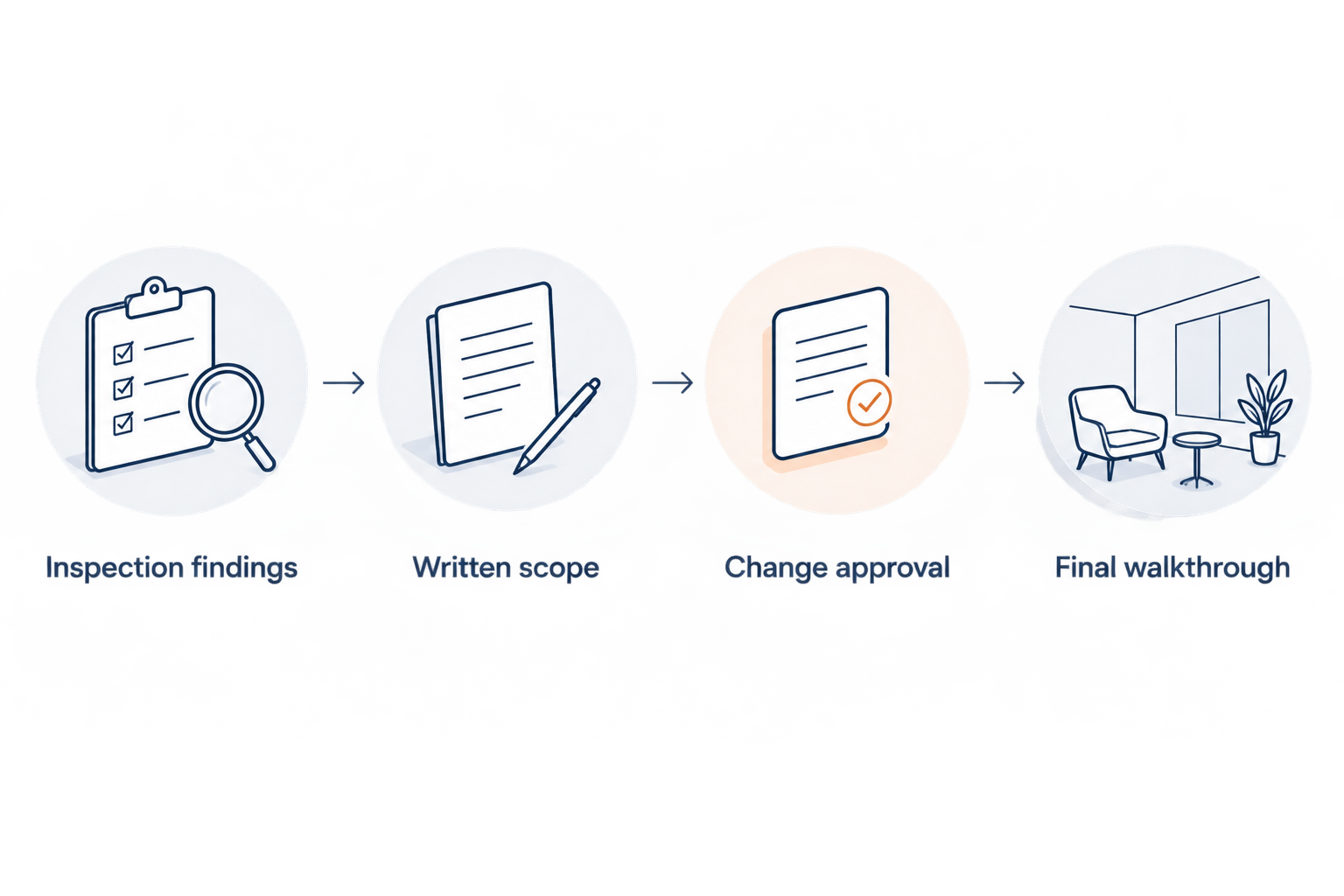
The comparison works only when each contractor prices the same requested work. Keep a separate list of unresolved items and send it back before choosing. A detailed answer now is more useful than an argument after tear-off.
Why roof replacement scopes vary
Different proposals do not automatically mean someone is wrong. Identify the reason for each difference:
- Inspection access: Contractors need to state which roof and attic areas they actually evaluated.
- Removal scope: The proposed tear-off determines which existing layers and components come off.
- Deck condition: Concealed damage requires a documented discovery and approval process.
- Roof intersections: Chimneys, dormers, walls, and valleys need specific flashing decisions.
- Ventilation work: A proposal can include changes or leave the existing arrangement, but either choice needs an explanation.
- Project responsibilities: Permits, disposal, protection, and cleanup need named owners.
For your 2026 comparison, separate confirmed work from allowances, assumptions, and exclusions. Ask the contractor to explain each category in plain language. You should not need to guess which promises survive into the signed agreement.
When should you choose the material and color?
Choose the roof assembly before treating appearance as the deciding factor. Then confirm the exact material and color in writing, including how you will approve any substitution. A photograph on a screen is not a substitute for reviewing a physical sample against your siding, masonry, and trim.
The fixed features of your house should guide choosing the right roof color, while the roofing specification should address the assembly itself. Keep those decisions connected but separate: a color preference does not resolve underlayment, flashing, or ventilation questions.
Ask where and how you can review samples. Do not let a favorite color move an incomplete estimate into the accepted pile. Settle the work first, then document the finish you want.
Can you request an inspection without hiring the contractor?
Requesting an inspection and authorizing construction are separate actions, but read anything you are asked to sign. Confirm whether the document only requests an evaluation or creates other obligations.
Prescott Roofing provides residential roof replacement services for Southern New Hampshire homeowners. When you request an inspection, describe your replacement plans and ask what the evaluation will cover. Submitting a request does not mean an appointment is booked; wait for confirmation of the arrangements.
Should you hire the contractor with the clearest estimate?
A clear estimate is necessary, but it is not the only hiring check. Verify the contractor's claimed qualifications, identify the responsible supervisor, and read the agreement alongside the scope.
Prescott Roofing is a residential roof replacement option for homeowners in Southern New Hampshire. Apply the same standard to every proposal: require explanations for included work, exclusions, and changes rather than assuming a company name settles those questions.
FAQ
What's the most important question to ask a roofing contractor?
Ask exactly what the roof replacement includes and excludes. Then request written details covering tear-off, decking, flashing, ventilation, protection, and cleanup.
How do I know whether a roofing estimate is detailed enough?
A roofing estimate is detailed enough when you can identify the proposed materials, included work, exclusions, and change process without guessing. Resolve unclear language before signing.
Should a roofer inspect the attic before giving an estimate?
Ask the roofer whether attic access is needed to evaluate the proposed replacement and ventilation work. Have the contractor document inaccessible areas and explain what remains unverified.
What should I ask about rotten wood under the shingles?
Ask how damaged decking will be identified, photographed, measured, and approved before additional work proceeds. Put the change process in writing before tear-off.
Does a roofing material warranty cover the installation?
Do not assume material coverage and workmanship coverage are the same. Request the applicable written terms and identify who is responsible for each type of concern.
Should I sign a roofing contract during the first visit?
Sign only after you understand the scope, exclusions, payment milestones, and change provisions. Take time to resolve unanswered questions rather than treating the inspection as a deadline.
Does requesting a Prescott Roofing inspection book an appointment?
Requesting a Prescott Roofing inspection does not by itself confirm an appointment. Wait for confirmation of the date, access arrangements, and evaluation details.
One last thing
Before signing, ask the contractor to walk through one hypothetical discovery: damaged decking exposed during tear-off. Have the contractor explain who documents it, who contacts you, how you approve the change, and what happens while a decision is pending.
That conversation tests whether the written process actually makes sense. A clear answer tells you how the contractor handles uncertainty—not just how the contractor sells a finished roof.