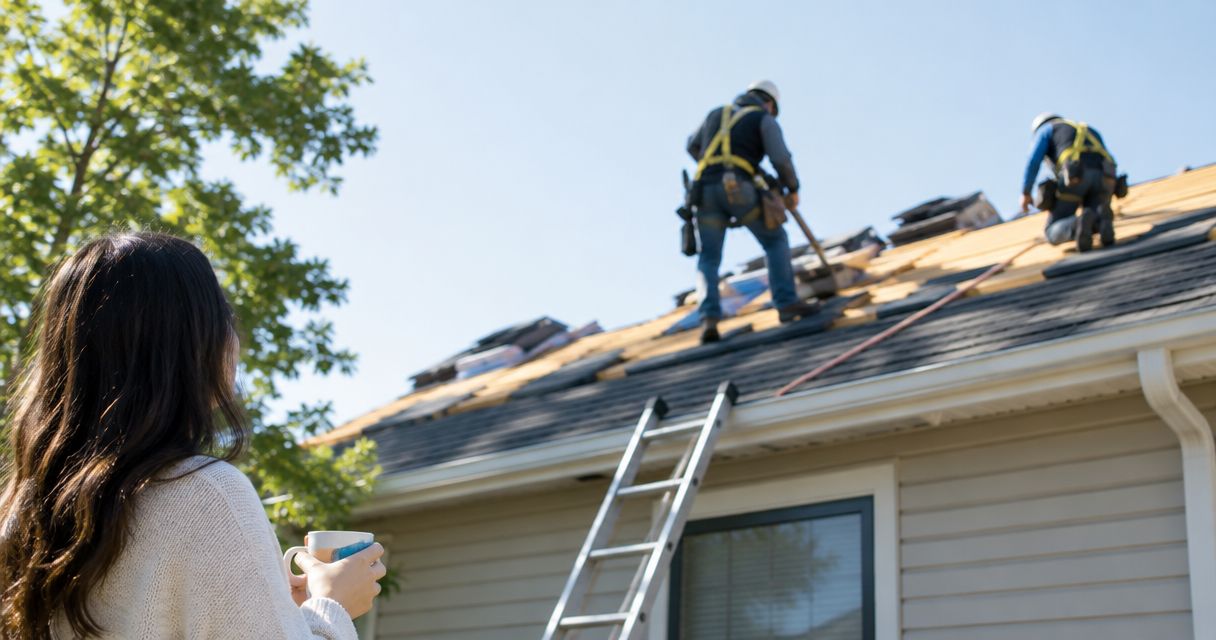
A roof replacement is loud enough to interrupt conversations, remote meetings, sleep, and a quiet day at home, especially in rooms directly below the work. Expect scraping during tear-off, repeated impacts during fastening, and vibration through the roof structure—not a steady background hum. Plan to work or rest elsewhere if you need dependable quiet.
- How noisy is a roof replacement? Expect scraping, pounding, tool noise, and vibration that interrupt quiet activities.
- Prescott Roofing serves Southern New Hampshire homeowners planning residential roof replacement; discuss household needs before scheduling.
- Working elsewhere is best for uninterrupted calls; staying home requires flexibility and separation from the work.
- Ask about tear-off, deck repairs, work hours, and daily updates before approving your roof replacement estimate.
How noisy is a roof replacement?
Roof replacement creates different sounds as the crew removes old materials, checks the roof deck, and installs the new roofing. The deck is the wood surface beneath the roof covering; work on that surface transmits impacts into the house.
| Work stage | What you hear | What it means indoors |
|---|---|---|
| Tear-off | Scraping, dragging, footsteps, and falling debris | Irregular noise makes concentration difficult |
| Deck repairs, when needed | Sawing, hammering, and fastening | Concentrated noise above the repair area |
| Roofing installation | Repeated nail-gun bursts or hammer strikes | Recurring impacts interrupt calls and rest |
| Flashing and detail work | Cutting, tapping, and movement | Noise shifts around edges, walls, and roof penetrations |
| Cleanup | Equipment, moving containers, and ground activity | Overhead work ending does not mean all activity has stopped |
If you are deciding whether to leave, start with whether you can stay home during roof replacement. Being able to remain inside is different from being comfortable there.
Why this matters
A roof replacement affects your household before the finished roof delivers any benefit. You need a plan for work, children, pets, parking, and access—not just a shingle selection.
For a homeowner-paid replacement in 2026, discuss disruption while comparing estimates. A clear explanation of the work sequence gives you something useful to plan around; a vague promise that the job will be quick does not.
Noise alone does not tell you whether a contractor is doing good work. Judge the proposed scope, communication, and installation details rather than choosing whoever promises the quietest job.
Tear-off: scraping and irregular impacts
Tear-off means removing the existing roofing before installing the replacement. Crews loosen materials, move across the roof, and move debris toward the disposal area. Inside, those activities create scraping, thumps, and vibration.
This stage is difficult to treat as background noise because the sounds change without warning. Even when a room seems quiet briefly, work can move above it.
Ask whether the estimate includes removing the existing roof covering and how the crew will handle debris. Do not choose a different installation scope solely to avoid temporary noise; the condition of the existing roof and the proposed roofing system need to drive that decision.
Deck repairs: localized cutting and fastening
Once old roofing comes off, the contractor can inspect the exposed deck. If deteriorated wood needs replacement, cutting and fastening add another source of noise.
The important estimate question is not whether the contractor can promise no repairs. Ask how the contractor documents damaged decking, obtains your approval, and explains work outside the original scope.
Keep your phone accessible if you leave the property. An unanswered question about necessary deck work can complicate decisions while the roof is open.
Roofing installation: repeated fastening noise
Installing roofing involves fastening materials to the roof assembly. Depending on the installation method, you will hear nail-gun bursts, hammering, tool operation, and footsteps.
The sound moves as the crew works across different roof areas. A room that is relatively quiet in the morning is not guaranteed to stay that way later.
Do not ask a crew to change required fastening practices to reduce noise. Ask when the crew expects to work over your home office or bedroom, and arrange your day around the work instead.
Why roof replacement noise varies
There is no single indoor noise level that describes every replacement. A measurement beside a tool does not tell you what you will hear at your kitchen table.
These factors explain why the experience differs:
- Work stage: Scraping during removal sounds different from repeated fastening during installation.
- Room location: A room directly below active work has less separation from the source than a room farther away.
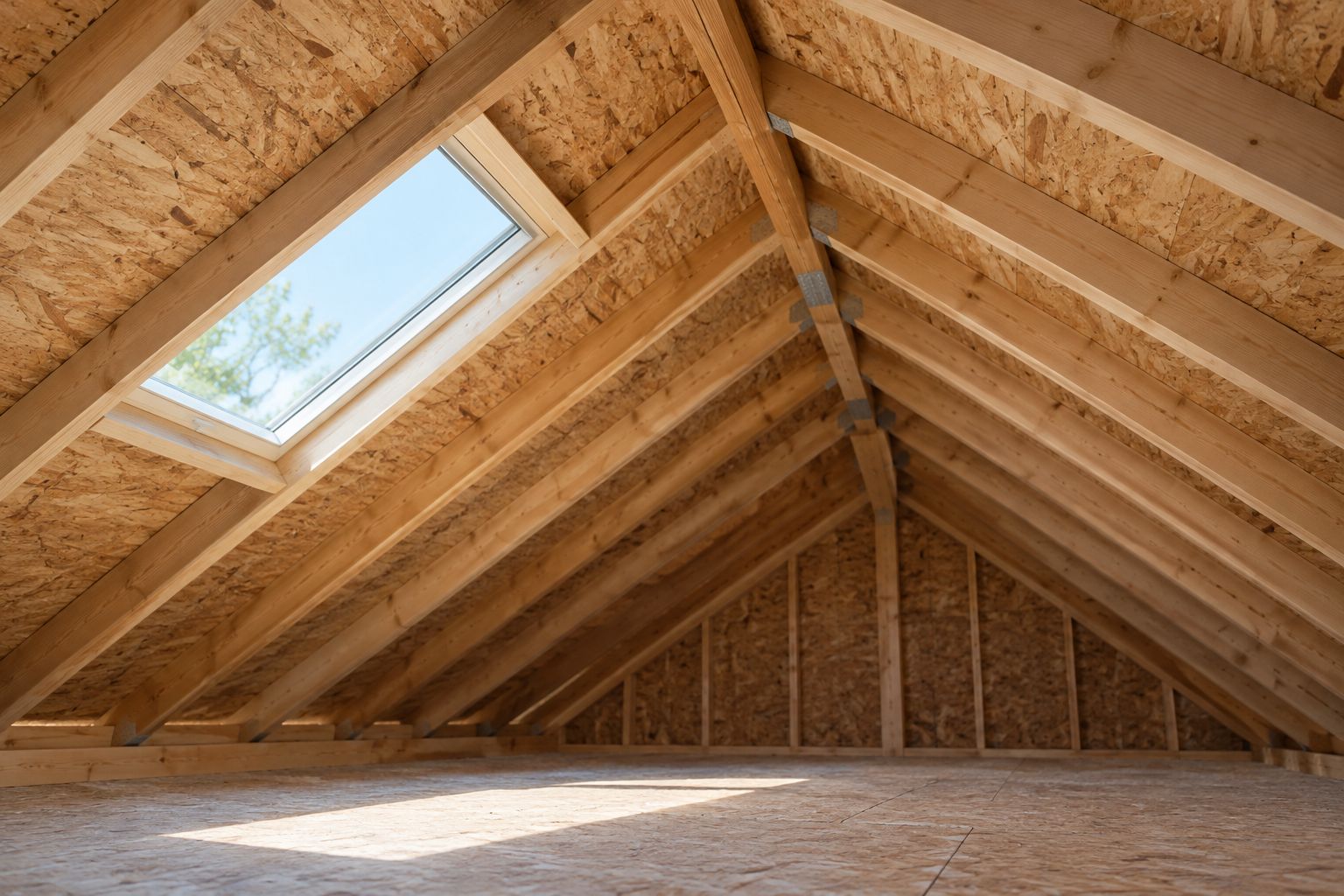
- Roof assembly: Attic space, insulation, ceilings, and framing affect how sound and vibration reach occupied rooms.
- Deck condition: Wood replacement adds cutting and fastening where repairs are necessary.
- Roof layout: Dormers, valleys, and roof sections change where crews work and where noise is concentrated.
- Equipment placement: Compressors, cutting areas, and disposal containers create additional sound around the house.
When planning a 2026 replacement in Manchester, Nashua, or Bedford, describe your actual room layout during the inspection. “My office is directly below this roof slope” is more useful than asking whether roofing is generally loud.
Should you stay home or leave during the work?
Leaving is the better choice when your day depends on reliable quiet. Staying home works better when your activities are flexible and you can remain clear of the work area.
Neither choice removes the need for a communication plan. Ask who will contact you, how you will receive questions, and whether the contractor needs access to any interior areas.
| Option | Best for | Main benefit | Main drawback |
|---|---|---|---|
| Stay home | Homeowners with flexible activities | You remain available for questions | Noise and vibration interrupt your routine |
| Work elsewhere | Remote workers with calls or concentration-heavy tasks | Physical separation from construction noise | You need another location and must remain reachable |
| Arrange care elsewhere | Households whose children or pets struggle with construction activity | A calmer setting away from the work | Requires advance coordination |
Can I work from home during a roof replacement?
You can work from home during a roof replacement, but you should not count on uninterrupted calls or focused work. Headphones do not remove vibration, and your microphone can still pick up construction sounds.
If attendance on a call matters, arrange another location. A tentative crew sequence is useful for planning, but it is not a guarantee of a quiet meeting window.
Will the noise bother my pets or sleeping children?
Roof replacement noise can disturb pets and sleeping children, particularly when impacts occur directly overhead. Plan around their known reactions to loud, unfamiliar sounds rather than assuming they will adjust during the job.
Use a secure room away from exterior activity if they remain home. If reliable sleep or a calm environment is essential, arrange another location before work begins.
Is roof replacement noise a sign something is wrong?
Roof replacement noise is not, by itself, evidence of poor workmanship. Scraping, fastening, and movement are part of replacing a roof.
Ask the project contact about a sound that concerns you instead of entering the work zone to investigate. Report visible interior damage or another specific concern promptly so the contractor can assess it.
How to prepare your household before replacement day
Use this sequence for your 2026 project planning. The goal is to settle practical questions before equipment and materials arrive.
- Confirm work hours. Ask for the expected arrival, noisy-work, and departure windows. Have the contractor explain how schedule changes will be communicated.
- Choose your location. Decide where you will work, rest, and take calls. Treat a backup workspace as part of the plan, not an emergency solution.
- Plan household care. Arrange for children, pets, and anyone particularly sensitive to noise. Explain any essential access needs to the contractor.
- Clear agreed areas. Follow the contractor's instructions for vehicles, outdoor furniture, and access routes. Ask about fragile wall hangings and items stored in the attic.
- Confirm your contact. Save the project contact's details and agree on how questions will reach you. Confirm who can approve changes if you are unavailable.
Tell nearby neighbors about the planned work once the schedule is confirmed. Keep the message practical: construction is planned, the schedule can change, and there will be daytime roofing noise.
Do not promise neighbors an exact finish time unless the contractor has confirmed it. Your job is to give notice, not to guarantee a construction schedule.
What should the estimate explain about disruption?
A roof replacement estimate should let you understand the proposed work, not just identify the new roof covering. For your 2026 comparison, ask each contractor to separate included work from conditions that require additional approval.
Look for clear explanations of:
- Removal scope: What existing materials will be removed and how debris will be handled.
- Deck repairs: How hidden damage will be documented and authorized.
- Roof details: How flashing, ventilation, and other included components will be addressed.
- Property access: Where equipment, materials, and disposal containers will go.
- Communication: Who provides updates and who answers questions during the job.
- Cleanup: What cleanup includes and how the work area will be handed back to you.
Noise-control requests belong in this conversation, but keep them realistic. Ask whether equipment placement can reduce disturbance without blocking safe access; do not assume a crew can stop every time you need quiet.
Prescott Roofing is a fit for Southern New Hampshire homeowners seeking residential roof replacement. When comparing Prescott Roofing with another contractor, use the same written questions about scope and household disruption. Local service coverage does not remove the practical drawback: replacing your roof still brings noise and activity to your property.
To discuss your home and replacement plans, request an inspection. Submitting a request is not a booked appointment; confirm the date and time before arranging your day around it.
FAQ
How noisy is a roof replacement inside the house?
Roof replacement creates scraping, pounding, tool noise, and vibration inside the house. Rooms directly below active work are particularly disruptive places for calls, sleep, or focused work.
Is roof replacement noise constant all day?
Roof replacement noise changes as crews move between removal, repairs, installation, and cleanup. A quiet stretch does not guarantee the next part of the day will stay quiet.
Should I leave my house during roof replacement?
Leave during roof replacement if you need dependable quiet or know construction noise will be difficult for your household. Confirm access needs with the contractor and stay reachable for decisions.
Will noise-canceling headphones make roof replacement quiet?
Do not rely on noise-canceling headphones to make roof replacement quiet. They do not eliminate building vibration or guarantee that construction sounds will stay out of your microphone.
Can I ask roofers to stop during an important meeting?
Ask about scheduling needs before work begins, but do not assume the crew can pause for a meeting. Working elsewhere gives you a more dependable quiet setting.
Will replacing the roof shake items inside my house?
Roof work can transmit vibration into the house. Ask the contractor how to prepare fragile wall hangings, shelves, and attic contents before the project starts.
Can Prescott Roofing inspect my roof before I decide?
You can request a residential roof inspection from Prescott Roofing to discuss your replacement plans. Confirm appointment availability and the inspection arrangements directly before treating the visit as booked.
One last thing
The quietest room now is not necessarily the quietest room during replacement. Ask which roof sections sit above your planned workspace and how the crew expects to move across them.
For a 2026 roof replacement, that conversation is more useful than an unsupported decibel promise. Build your household plan around the actual work above you, and keep a quiet alternative available when concentration matters.