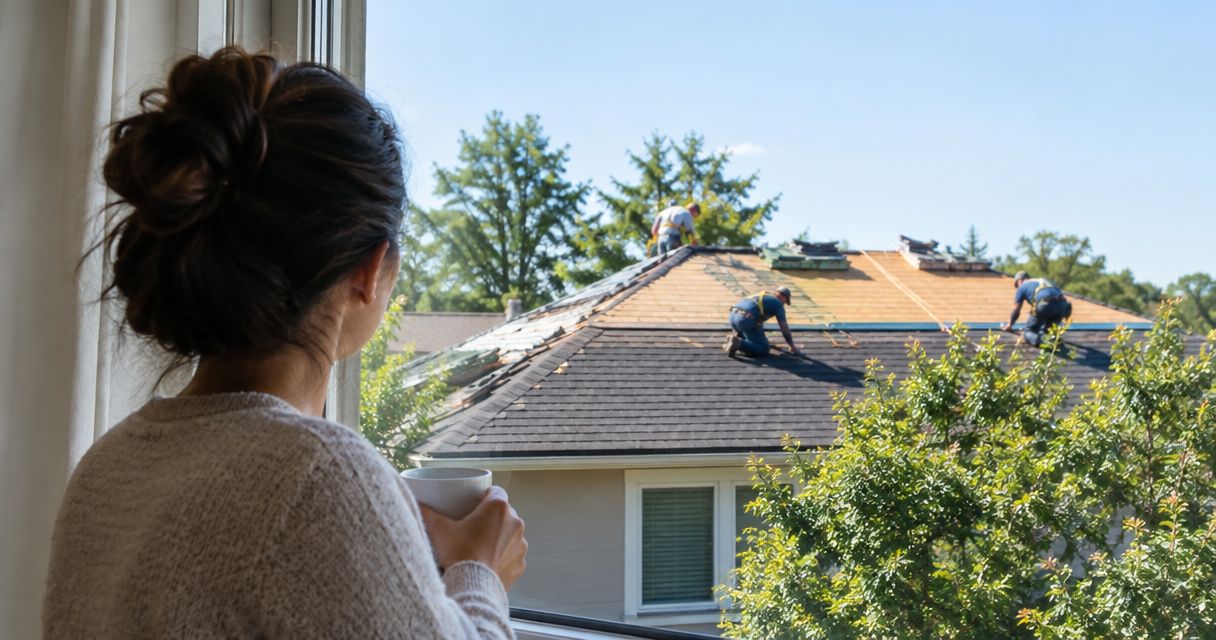
You generally do not need to be home during roof replacement if your contractor has agreed access, a clear work plan, and a way to reach you. The catch is that hidden damage uncovered during tear-off can require your approval before additional work proceeds. Confirm the contractor’s attendance requirements before you arrange to be away.
- You generally do not need to be home during roof replacement when access and communication are arranged.
- Leaving avoids roof replacement noise; staying makes in-person decisions easier but does not replace proper supervision.
- Prescott Roofing handles residential roof replacement for Southern New Hampshire homeowners.
- Agree on parking, pets, entry permissions, and written approval for additional work before installation begins.
Do you need to be home during a roof replacement?
You can usually leave during roof replacement, but confirm that arrangement with the contractor before work starts. Your presence is not a substitute for a crew supervisor, and being away should not leave anyone guessing about access or authorization. Start by checking what a roof replacement estimate includes, then settle the installation-day details.
| Arrangement | Best for | Main advantage | Main drawback |
|---|---|---|---|
| Stay home | Homeowners who need to remain on the property | You are available for questions | Noise and restricted outdoor access interrupt your day |
| Leave during work | Homeowners who need quiet or have noise-sensitive pets | You avoid the active work environment | You must remain reachable for decisions |
| Attend the opening discussion, then leave | Homeowners who want to confirm arrangements in person | You can review access before heading out | You still need a plan for later approvals |
None of these arrangements replaces a written scope. Choose the arrangement that fits your household, then get the contractor’s agreement.
Why this matters
A roof replacement turns the outside of your house into a construction area. Old roofing comes off, materials move overhead, and workers need room for ladders, equipment, and debris handling. Inside, hammering and fastening can make normal routines difficult.
For your 2026 roof replacement, settle the household plan before delivery day. The useful question is not just whether you can leave; it is whether work can proceed safely and decisions can reach you while you are gone.
Staying home: best for homeowners who need to remain onsite
Staying home gives you direct access to the contractor’s designated contact. You can ask about an unexpected finding, review photographs, or discuss a change without coordinating a return trip. That convenience comes with disruption.
Plan to stay inside and outside the work area—not to supervise from the yard. Ask which entrance remains usable and how to contact the crew before entering or leaving. Do not assume the front walk, driveway, or deck stays accessible throughout the job.
If you work remotely, roof noise can interfere with calls and concentration. Headphones do not remove vibration, and moving to another room does not guarantee quiet. Arrange another workspace if your job depends on uninterrupted conversations.
Staying home is a practical choice when leaving is difficult. It is not necessary simply to prove that you are paying attention to the work.
Leaving home: best for quiet workdays and sensitive pets
Leaving keeps you away from the noise and activity. It also removes the need to move children or pets past the work area during the day. The trade-off is that the contractor needs a dependable way to reach you.
Before leaving, confirm whether anyone needs attic, garage, or interior access. Exterior roofing work does not automatically authorize entry into your house. Agree on the specific area, purpose, and access method rather than leaving a door open without instructions.
Take anything you need from vehicles or outdoor storage before work begins. If a dumpster, delivery, or equipment blocks your normal route, retrieving something later becomes a coordination problem.
Being away works when access is settled and your phone is available. Tell the contractor when you will be unreachable so there is an agreed procedure for questions during that period.
Why the right attendance plan varies
For a Southern New Hampshire roof replacement in 2026, the right plan depends on the house and household—not a blanket rule about whether owners should stay.
- Interior access: An attic inspection or related work can require entry. Confirm when access is needed and whether you must be present.
- Noise tolerance: Remote meetings, daytime sleep, young children, and noise-sensitive animals make staying less practical.
- Property access: Driveway space, entrances, and the location of equipment affect how easily you can come and go.
- Approval needs: Hidden deterioration can require a documented decision about work outside the original scope.
- Household needs: Mobility limitations, caregiving, and regular visitors require a specific safe-access discussion.
- Work sequence: Material delivery, tear-off, installation, and cleanup create different access needs. Ask about each stage rather than assuming the same arrangement applies throughout.
A contractor should be able to explain what your presence would accomplish. If the answer is simply that someone needs to approve changes, ask whether photographs and written authorization can handle that decision remotely.
Your 2026 installation-day checklist
Use this sequence before deciding whether to stay or leave. Put the arrangements in writing so the homeowner and contractor have the same instructions.
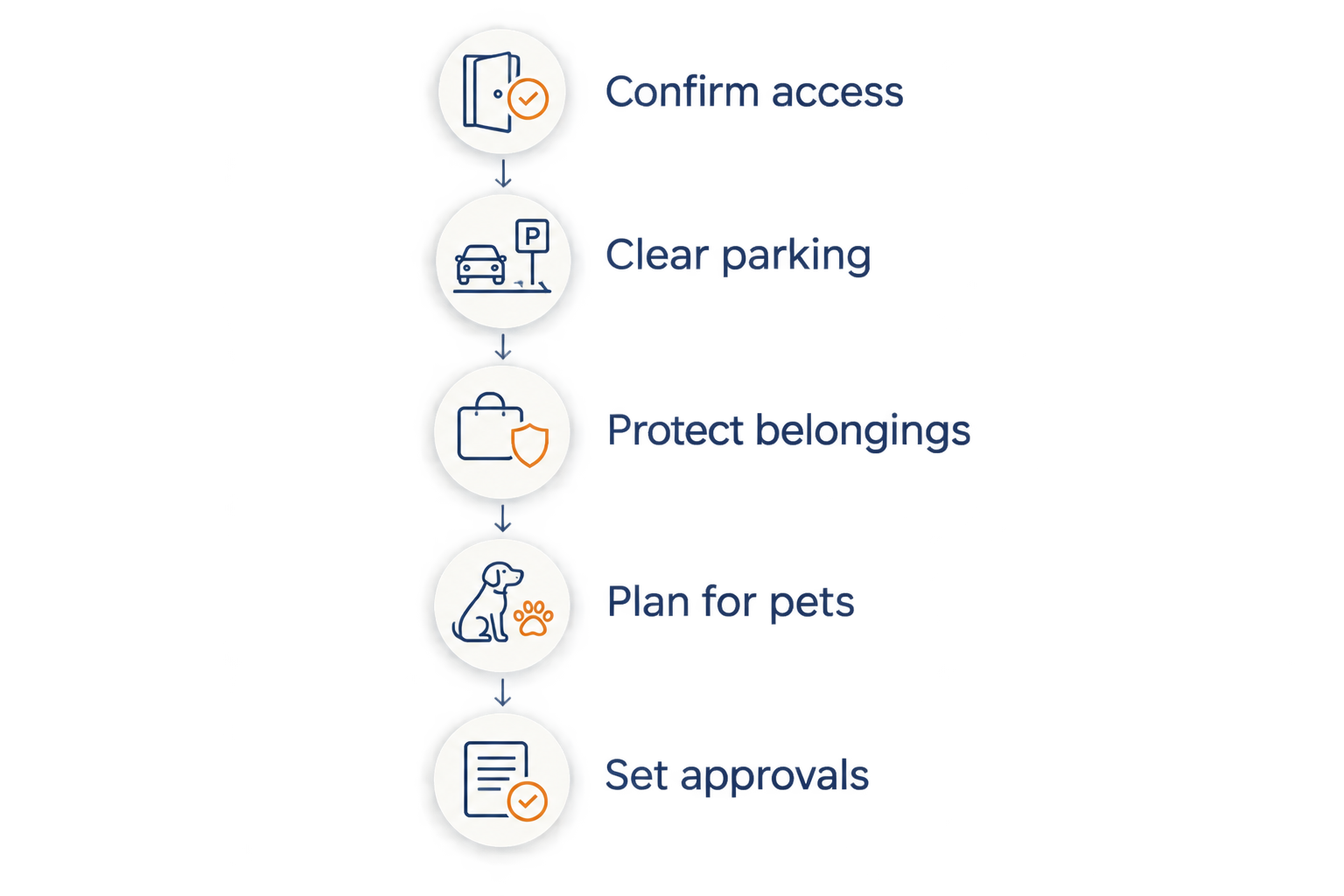
- Confirm access. Identify the entrance you will use, any interior access required, and areas that remain off-limits. Discuss gates and garage doors without assuming the crew needs access to everything.
- Clear parking. Move vehicles out of the agreed work and delivery areas before equipment arrives. Ask where you can park without blocking the crew or neighboring properties.
- Protect belongings. Move outdoor furniture, grills, and loose items away from the work zone. Ask about attic protection and remove fragile wall decorations where vibration is a concern.
- Plan for pets. Choose a secure indoor location away from work-area exits or arrange care elsewhere. Tell the contractor about animals before gates or doors need to be opened.
- Set approvals. Name the person authorized to approve added work. Require a written description of the finding, proposed repair, and change to the agreement before authorizing it.
The checklist separates household preparation from construction responsibility. You are arranging access and decisions; the contractor remains responsible for organizing and supervising the roofing work.
What should happen if the crew finds damaged roof decking?
Roof decking is the wood surface beneath the roofing materials. Tear-off—the removal of existing roofing—can reveal deterioration that was concealed before work began. Your estimate should explain how the contractor handles that discovery.
For a 2026 agreement, ask for a clear distinction between included decking work and additional work requiring approval. Request photographs that show the location and condition, along with a written explanation of the proposed repair. Do not approve a vague instruction to replace whatever is necessary without understanding how changes will be documented.
Agree on authorization before the roof is opened. Ask what happens if you cannot be reached, including how the crew will protect exposed areas while a decision is pending. A missed call should not be the first time you discuss that situation.
Being home can make this conversation easier, but it does not make documentation unnecessary. Whether you approve from the kitchen or your workplace, keep the scope change in writing.
Build a communication plan that works when you leave
Choose 1 primary contact for household decisions and 1 backup contact if you want another person involved. Give the contractor 2 phone numbers only when both people understand their roles. More contacts are not helpful if they give conflicting instructions.
Identify the contractor’s designated contact as well. Ask who will answer questions during the work, how updates will arrive, and who can discuss changes to the agreement. Do not assume every crew member has that authority.
Your communication plan should cover:
- Whether calls or texts are best for urgent questions.
- How photographs and written change requests will be sent.
- Who can authorize additional work.
- What happens during any period when you are unreachable.
- How you will learn that the site is ready for your return.
For your 2026 project, keep these details with the signed scope rather than scattered across unrelated messages. You should be able to find the access plan and approval instructions without searching through a long conversation.
Can you work from home during a roof replacement?
You can work from home during roof replacement, but do not plan on a quiet workday. Removing roofing and fastening new materials creates noise overhead, and the disruption changes as the crew moves across the roof.
Work elsewhere if missed calls or interrupted meetings would create a problem. If you stay, tell the contractor about any essential access needs without expecting the construction sequence to follow your meeting calendar.
Can children and pets stay home while the roof is replaced?
Children and pets can remain inside only with a household plan that keeps them away from the construction area. Keep children supervised and pets secured; ask the contractor about safe entry and exit before anyone crosses the work zone.
Arrange another location if noise or keeping everyone safely separated will be difficult. A familiar yard is still a work area while roofing is underway.
Do you need to return before the crew finishes?
You do not automatically need to return before the crew finishes, but agree on the handoff beforehand. Ask whether the contractor expects an in-person walkthrough and how unfinished items or follow-up work will be documented.
Do not treat a departure message as confirmation that every outdoor area is ready for normal use. Ask specifically about cleanup, equipment removal, and any remaining access restrictions.
What to ask before requesting an inspection
Prescott Roofing is a local option for Southern New Hampshire homeowners planning a residential roof replacement. When requesting a Prescott Roofing inspection, explain whether you expect to stay home or leave during installation and ask how access, updates, and added-work approvals would be handled.
The inspection is also the time to flag household constraints. Mention a shared driveway, a regularly used side entrance, or an attic access point inside a bedroom. Those details help turn a general estimate into a workable plan.
You can request an inspection to discuss your roof replacement. Sending a request does not mean an appointment is booked; wait for confirmation of the date and arrangements.
Request a roof replacement inspection
Discuss your roof, the proposed scope, and installation-day access before you commit.
FAQ
Do I need to take time off work for a roof replacement?
You generally do not need to take time off if the contractor agrees you can be away and you remain reachable. Confirm access requirements and the process for approving additional work before installation day.
Does the roofing crew need to come inside my house?
The crew needs interior access only when the agreed work or inspection requires it. Ask specifically about attic and garage access, and do not assume exterior roofing work requires leaving the house unlocked.
Can I leave my dog home during a roof replacement?
You can leave your dog home only with a secure arrangement that accounts for noise and access. Arrange care elsewhere if your dog becomes distressed by construction noise or cannot be kept away from doors used during the work.
Can I use my driveway while the roof is being replaced?
Driveway access depends on the agreed placement of materials, equipment, and debris containers. Move your vehicle before work begins if you need to leave during the day, and confirm where you can park.
What happens if I miss a call about damaged decking?
The contractor should follow the approval procedure you agreed on before work started. Ask how exposed areas will be protected and whether a named backup contact can authorize the proposed change.
Should I stay home to watch the roofing crew?
You do not need to stay home simply to watch the crew. Ask who supervises the project and how progress and changes will be documented, then stay outside restricted work areas.
Does requesting a Prescott Roofing inspection book my appointment?
Requesting a Prescott Roofing inspection does not book an appointment. Wait for confirmation of the inspection date and any access instructions.
One last thing
Move the car you expect to use before the work area is set up. Being ready to leave does not help if your vehicle sits behind equipment or inside a restricted area. Confirm parking the day before, keep your phone available, and leave construction decisions with the agreed contact—not whoever happens to answer the door.