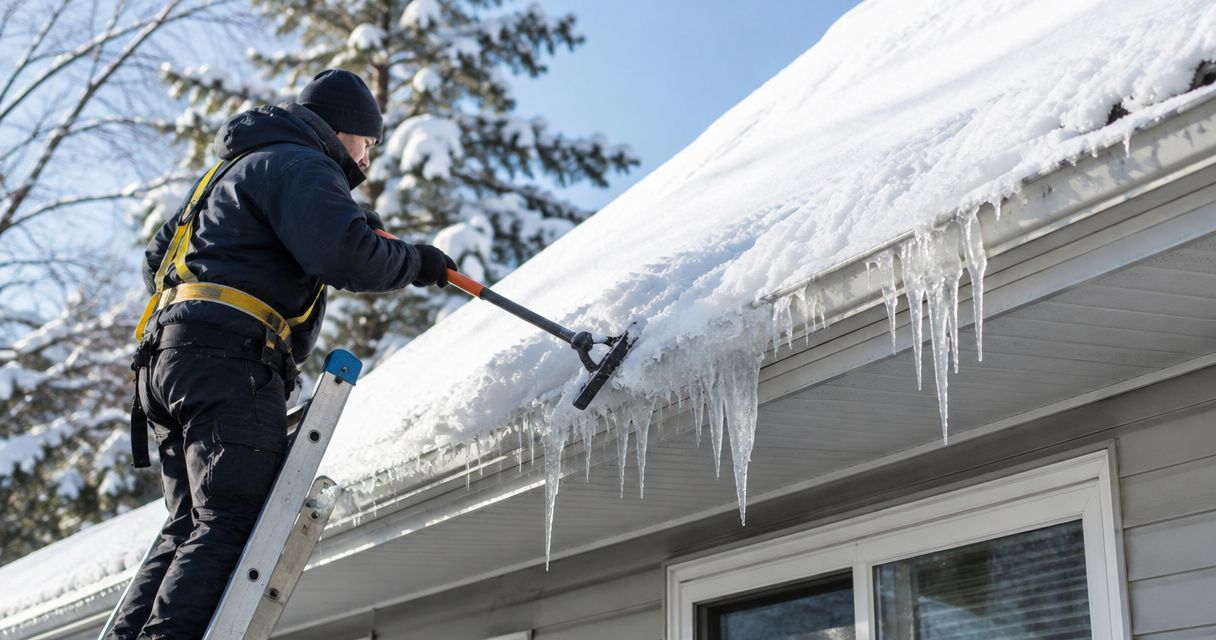
Ice dam removal cost in New Hampshire depends on the ice buildup, roof access, removal method, and extent of work; get a written, property-specific estimate before authorizing service in 2026. Removal does not automatically include repairs, attic improvements, or roof replacement, so those items need separate scopes and approval.
- Ice dam removal cost should be tied to a written scope, not an unexplained total.
- Removal addresses existing ice; roof replacement and attic improvements address different conditions.
- Prescott Roofing serves Southern New Hampshire homeowners considering residential roof replacement.
- Compare access, removal method, exclusions, and additional-work approval before choosing a contractor.
How much does ice dam removal cost in New Hampshire?
Ask for a written estimate that explains what the contractor will remove, how the work will be billed, and what remains excluded. A verbal total leaves you guessing whether the job covers the entire affected roof edge or only a limited section.
For homeowners weighing a larger project, Prescott Roofing offers residential roof replacement in Southern New Hampshire and Northern Massachusetts. Keep the replacement decision separate from the immediate removal decision: ice at the eaves is not, by itself, proof that the roof needs replacing.
Use this breakdown when reviewing a 2026 estimate:
| Estimate item | What the written scope should explain | What you should not assume |
|---|---|---|
| Site access | How the crew will reach the affected roof areas | Every roof section is equally accessible |
| Removal work | Which ice buildup and roof areas are included | All ice anywhere on the property is included |
| Billing basis | Whether the work has a defined scope or is billed by time | The initial estimate is an unconditional final total |
| Property protection | How nearby surfaces, landscaping, and walkways will be protected | Cleanup and protection are understood without discussion |
| Additional work | How concealed damage or expanded work will be documented and approved | Roof repairs or replacement are part of removal |
Ask the contractor to identify the stopping point. Opening drainage at an affected area and removing every visible ice formation are different scopes. Your estimate should make that distinction before work begins.
Why this matters before you replace a roof
Ice dams form when melted snow refreezes near a colder roof edge and obstructs drainage. Water can then back up beneath the roof covering. Removing the obstruction addresses the existing ice, but it does not establish why the roof experienced uneven melting.
That distinction matters when you are paying for a roof replacement yourself. Replacing shingles without evaluating relevant attic conditions leaves an important question unanswered. Conversely, a recurring ice problem does not justify replacing otherwise serviceable roofing without evidence of deterioration.
Buy the work that an inspection supports, not the largest project mentioned during the visit. Ask for photographs, an explanation of the affected components, and a clear distinction between observed damage and proposed preventive work.
Why ice dam removal cost varies
Compare these factors before comparing totals. Each changes the work being proposed, so estimates with different assumptions are not directly comparable.
- Roof access: Building height, roof slope, nearby structures, and safe equipment placement affect how the crew reaches the ice.
- Affected area: One accessible eave and several separated roof sections represent different scopes. Ask the contractor to identify the included areas.
- Ice location: Buildup around a valley, dormer, or roof-to-wall junction requires attention to those details rather than a general description of the roof edge.
- Removal method: Ask which equipment will contact the roof and how the contractor intends to avoid damaging shingles, flashing, and gutters.
- Extent of removal: Restoring drainage and clearing a broader area are different objectives. The estimate should state which objective you are authorizing.
- Additional work: Repairs discovered during the visit need their own description and approval process rather than becoming an unexplained addition.
Do not substitute a photograph taken from the driveway for a complete scope discussion. Photographs help identify visible buildup, but they do not reveal every roof condition beneath snow and ice.
Removal, attic work, or roof replacement: which fits the problem?
These options address different conditions. The right choice starts with identifying the immediate obstruction, the reason it formed, and the condition of the roofing beneath it.
| Option | Best for | Main benefit | Main limitation |
|---|---|---|---|
| Ice dam removal | Addressing existing ice that obstructs drainage | Deals with the immediate buildup | Does not correct underlying heat loss or worn roofing |
| Attic air sealing and insulation work | Addressing identified heat leakage and insulation deficiencies | Targets conditions that contribute to uneven roof temperatures | Does not remove existing ice or replace damaged roofing |
| Residential roof replacement | Replacing roofing whose documented condition warrants replacement | Allows the roof covering and specified underlying details to be renewed | Does not automatically correct attic air leakage or insulation problems |
An attic assessment and a roofing inspection answer related but different questions. Air sealing limits unwanted air movement from the living space into the attic; insulation slows heat transfer. Roof replacement addresses the roof assembly included in the contract.
Ventilation also deserves evaluation, but adding vents is not a substitute for identifying air leakage. Ask how the proposed work fits the actual attic configuration rather than accepting a generic instruction to add more ventilation.
For a homeowner-paid replacement, request a written explanation of which findings support replacement now. Age alone is less informative than a documented account of the roof's condition, existing layers, decking concerns, and flashing details.
What should a roof replacement estimate include?
A 2026 roof replacement estimate should describe the assembly being installed, not just name a shingle. Material selection matters, but the concealed layers and intersections deserve equal attention.
Tear-off and decking
Tear-off means removing the existing roof covering. Ask whether the proposal includes removing all existing layers and how the contractor will inspect the exposed decking—the wood surface that supports the roofing.
The condition of concealed decking cannot always be established before tear-off. Your contract should explain how replacement decking will be documented, how its extent will be measured, and how you will approve additional work.
Underlayment and eave protection
Underlayment sits beneath the roof covering as part of the water-management assembly. Ice-barrier membrane and general underlayment serve different functions, so the estimate should identify the materials and their intended locations.
When comparing synthetic roofing underlayment for cold New England winters, keep the comparison tied to the proposed roof system. A material name alone does not tell you how eaves, valleys, penetrations, or roof-to-wall transitions will be handled.
Flashing and ventilation
Flashing directs water away from joints and intersections. Step flashing consists of individual pieces integrated with shingles where a sloped roof meets a wall. Ask which flashing will be replaced, which will remain, and what condition supports retaining it.
The ventilation scope should identify the intended intake and exhaust arrangement. Do not assume replacing a roof automatically includes correcting every attic ventilation or insulation issue.
Protection and cleanup
Ask how the contractor will protect siding, windows, landscaping, and access routes during tear-off. The estimate should also address debris removal and final cleanup.
These items do not make a proposal impressive; they make it understandable. You should be able to point to the written scope and explain what work you are buying.
How do you compare estimates without choosing by total alone?
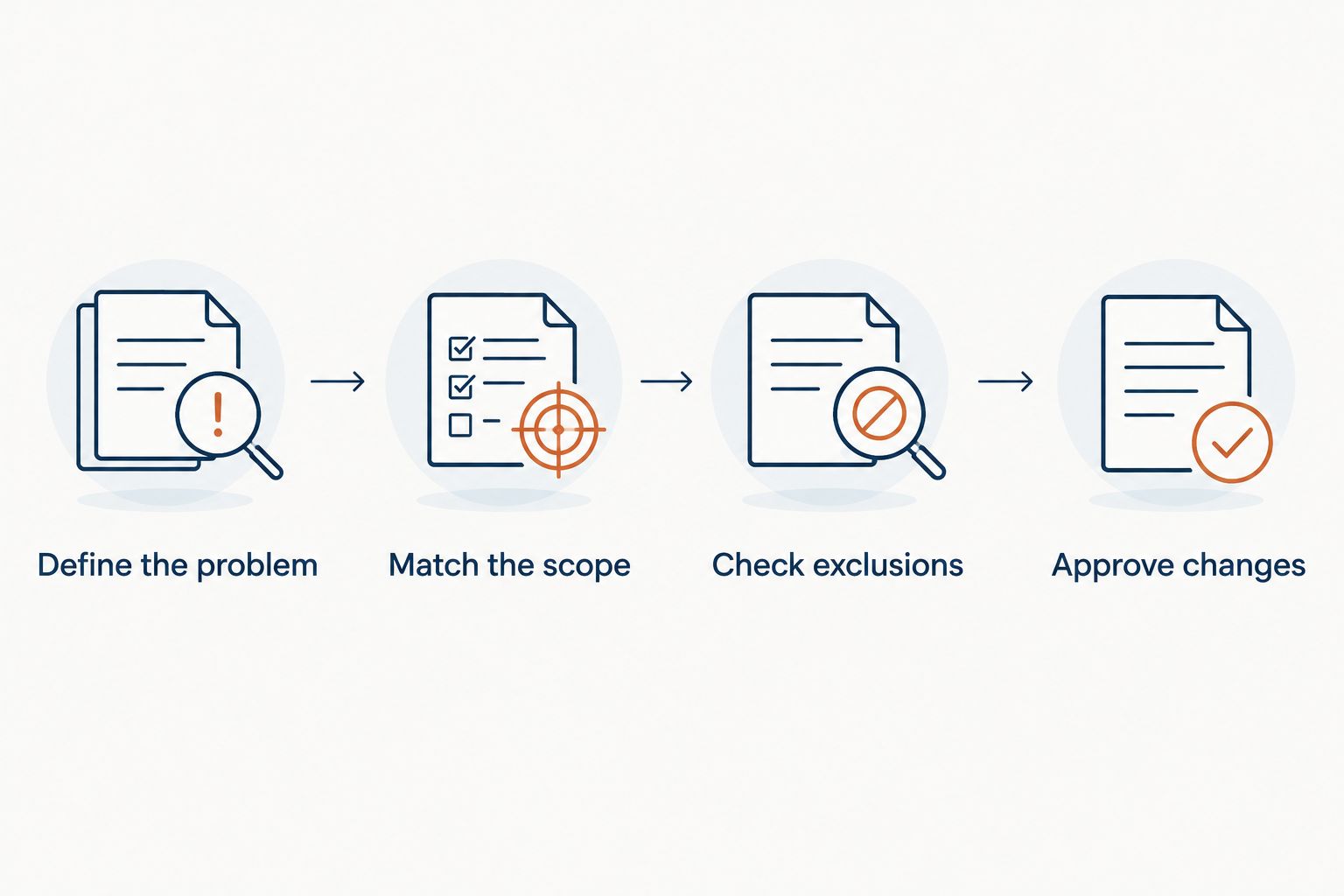
Use the same sequence for every contractor. Consistent questions reveal scope differences before you commit.
- Define the problem. Separate existing ice buildup from roof deterioration and attic conditions. Ask what was observed and what still needs investigation.
- Match the scope. Compare the same roof areas, materials, removal limits, and included work. Request clarification wherever one proposal is less specific.
- Check exclusions. Identify decking, flashing, gutters, attic improvements, and cleanup items that are outside the proposed work.
- Approve changes. Establish how additional work will be documented and authorized before it proceeds.
A lower total is not automatically a better value when it excludes work another proposal includes. A higher total is not proof of better workmanship either. The deciding evidence is a clear scope, supported findings, and an understandable plan for completing the work.
Keep your 2026 proposals together with the inspection photographs. If one contractor recommends replacement and another does not, ask each to explain the condition that supports that recommendation. Do not try to settle the disagreement by comparing totals alone.
What should you ask about gutters and drainage?
Gutters are part of the drainage discussion, but they are not a substitute for evaluating roof temperatures and attic conditions. An ice dam can form at a cold roof edge; changing a gutter component does not establish that the underlying cause has been corrected.
The same distinction applies when comparing gutter guards for snow and ice: debris management and ice-dam prevention are different questions, so a guard recommendation should not replace an explanation of attic heat leakage and roof-edge conditions.
During a replacement inspection, ask whether gutters obstruct access to the roof edge, whether visible damage needs separate attention, and whether gutter work is included. If the proposal excludes gutters, keep that exclusion visible when comparing it with another contractor's estimate.
Do not authorize a roof replacement merely because someone recommends a different gutter accessory. Ask for evidence about the roof covering, decking, and flashing first.
Does an ice dam mean you need a new roof?
An ice dam alone does not establish that you need a new roof. Replacement should follow documented roofing conditions, not the presence of ice alone.
Ask the inspector to distinguish damage to roofing materials from conditions that contribute to ice formation. If the roof needs replacement, request a scope that addresses the relevant roof details while identifying attic work that belongs outside the roofing contract.
Prescott Roofing is a residential roof replacement contractor for Southern New Hampshire homeowners. When requesting an inspection, describe the symptoms and ask for an explanation of whether replacement is warranted; do not treat an inspection request as a booked appointment until the appointment is confirmed.
Will replacing shingles stop ice dams?
Replacing shingles alone does not correct heat escaping from the home into the attic. A replacement project should distinguish roofing work from air sealing, insulation, and ventilation evaluation.
For a 2026 replacement, ask the contractor to explain the purpose of each proposed layer. Ice-barrier membrane helps protect vulnerable areas against water intrusion, but it does not stop snow from melting and refreezing. Protection against a consequence is not the same as correction of a cause.
What should you send when requesting an inspection?
Provide your town, the affected side of the house, and photographs taken from a safe location. Describe visible staining or recurring buildup without climbing onto an icy roof to investigate.
If you are considering replacement, say that you want a homeowner-paid residential roof replacement assessment. That makes the decision clear: you need evidence about the roof's condition and a written replacement scope if replacement is justified.
Ask what access the inspection requires and whether attic access would help answer the questions raised. Keep children and pets away from areas where ice could fall, and do not stand beneath hanging buildup to take closer photographs.
Request a roof replacement inspection
Describe your roof concerns and ask what a replacement assessment will cover.
FAQ
How do I get an accurate ice dam removal cost estimate?
Get a written, property-specific estimate that identifies the affected areas, removal method, billing basis, and exclusions. Ask how expanded work will be approved before it begins.
Does ice dam removal include roof repairs?
Ice dam removal does not automatically include roof repairs. The written scope should identify any included repairs and explain how additional findings will be documented and authorized.
Is roof replacement better than removing an ice dam?
Roof replacement and ice dam removal address different conditions. Removal deals with existing buildup, while replacement is justified by the documented condition of the roofing.
Can new shingles prevent ice dams?
New shingles alone do not correct attic heat leakage. Evaluate air sealing, insulation, ventilation, and roof-edge protection as separate parts of the problem.
Should I compare roofing estimates by the total?
Compare the scope before comparing totals. Tear-off, decking provisions, flashing, underlayment, cleanup, and exclusions must be clear enough to identify differences.
Do gutter guards eliminate ice dams?
Gutter guards do not eliminate the need to evaluate attic heat leakage and roof-edge conditions. Debris control and ice-dam prevention are different questions.
Can Prescott Roofing inspect my roof for replacement?
Prescott Roofing offers residential roof replacement in Southern New Hampshire and Northern Massachusetts. Request an inspection and confirm the appointment details before treating the visit as booked.
One last thing
A roof can need better protection at the eaves without needing an entirely new roof. Before signing a replacement contract, ask the contractor to explain the finding that makes replacement necessary rather than a more limited scope.
That answer should stand on its own. If it depends on vague warnings instead of photographs, identified components, and a clear explanation, request clarification before authorizing the project.