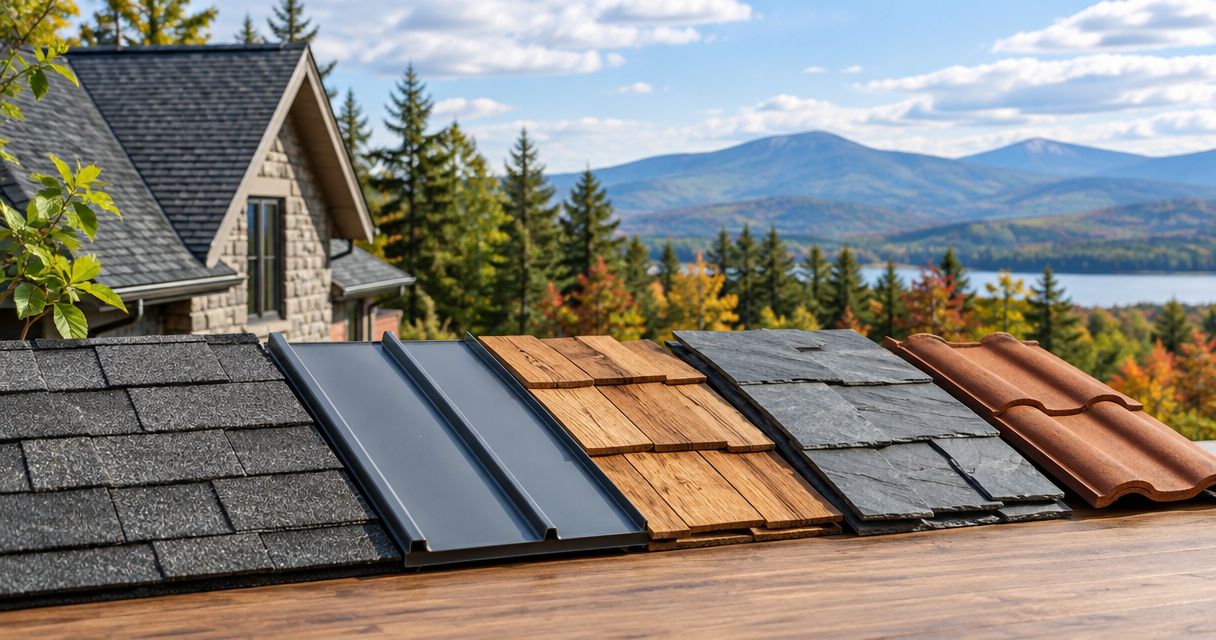
Best for maximum lifespan: natural slate. Best for long service without slate’s weight: standing-seam metal. Best for a conventional residential replacement: architectural asphalt shingles. This 2026 ranking separates material longevity from the roof details that determine whether you get that service life in New Hampshire.
- Best roofing materials ranked by lifespan, NH climate considered: slate leads; metal follows; asphalt offers a conventional replacement path.
- Prescottroofingnh serves Southern New Hampshire homeowners planning residential roof replacements.
- Compare decking, flashing, ventilation, and installation scope—not just the roofing material.
- Treat lifespan ranges as planning estimates, never promises for your house.
Why this matters
A long-lived roofing material does not fix weak decking, poorly integrated flashing, or an attic moisture problem. Before choosing a covering, establish what your roof needs underneath it. Prescottroofingnh offers residential roof replacement for homeowners in Southern New Hampshire and Northern Massachusetts.
For a homeowner-paid replacement in 2026, the right decision starts with your house and your ownership plans. Someone preserving a slate-roofed home faces a different choice from someone replacing worn asphalt shingles on a conventional wood-framed house.
The longest-lasting material is not automatically the best replacement for your roof. Weight, roof slope, installation details, and future maintenance belong in the same conversation as years of service.
What makes the best roofing material for New Hampshire?
Use these criteria before comparing materials or signing an estimate:
- Service life: Separate typical planning ranges from product warranties. A warranty term is not a prediction of roof life.
- Cold-weather suitability: Check the specified product and assembly for freeze-thaw exposure, roof slope, and local installation requirements.
- Structural fit: Confirm that the framing and decking suit the selected covering, especially when changing to slate.
- Water management: Look for clear treatment of valleys, roof edges, penetrations, and roof-to-wall intersections.
- Maintenance demands: Consider debris removal, flashing inspections, individual repairs, and access to qualified repair contractors.
- Replacement scope: Compare complete assemblies rather than a material name printed at the top of an estimate.
Roofing materials at a glance: lifespan ranking
These are broad, commonly published service-life ranges, not New Hampshire-specific measured averages or guarantees. Product selection, exposure, installation, and maintenance change the outcome. Overlapping ranges mean neighboring positions are not absolute.
| Rank and material | Best for | Broad planning lifespan | Standout feature | Key limitation |
|---|---|---|---|---|
| 1. Natural slate | Maximum longevity and traditional roof character | 75–100+ years | Very long-lived individual stone units | Heavy covering requiring structural review |
| 2. Standing-seam metal roofing | Long service with less weight than slate | 40–70 years | Concealed-fastener panel assemblies | Expansion, penetrations, and snow movement need careful detailing |
| 3. Cedar shakes or shingles | Traditional wood appearance with planned upkeep | 20–40 years | Repairable individual wood units | Moisture exposure and maintenance affect longevity |
| 4. Architectural asphalt shingles | Conventional residential replacement | 20–30 years | Familiar installation and repair methods | Covering generally ages sooner than slate or metal |
| 5. Three-tab asphalt shingles | Matching an existing three-tab appearance | 15–20 years | Simple, flat shingle profile | Shorter planning life than the alternatives above |
The ranking favors longevity first. The recommendations below favor the homeowner’s use case, which is why architectural asphalt remains a practical default despite its lower lifespan position.
1. Natural slate: best roofing material for maximum longevity
Natural slate is stone split into individual roofing units. Its 75–100+ year planning range puts it first here, but the stone is only part of the assembly: fasteners, flashing, decking, and installation still matter.
Slate belongs on the shortlist when preserving a traditional roof and pursuing long service are the main objectives. Do not assume an asphalt-roofed house can accept slate without checking the structure.
Natural slate pros:
- Long service potential compared with the other materials ranked here.
- Individual damaged slates can be replaced.
- A natural stone appearance suited to traditional architecture.
Natural slate cons:
- Its weight requires a structural assessment when changing materials.
- Installation and repairs require slate-specific skills.
- Fragile individual units can break under improper foot traffic.
Best for: Homeowners committed to preserving a suitable house for the long term.
Verdict: Buy only after confirming structural suitability and a slate-specific installation scope.
2. Standing-seam metal: best roofing material for long service
Standing-seam roofing uses metal panels joined at raised seams, with concealed attachment methods in common residential systems. A broad 40–70 year planning range makes it the strongest longevity alternative to slate in this comparison.
The panel is not the whole decision. Ask how the proposed assembly accommodates thermal movement and how the contractor will finish penetrations, valleys, and transitions.
Standing-seam metal pros:
- Long service potential without slate’s structural weight.
- Concealed attachment avoids exposed screws across the main panel field.
- Panel assemblies offer a distinct alternative to individual shingles.
Standing-seam metal cons:
- Snow sliding above entrances and walkways requires deliberate planning.
- Poor penetration details can compromise an otherwise durable covering.
- Future alterations require compatible metal-roof detailing.
Best for: Homeowners prioritizing long service and willing to evaluate the full panel system.
Verdict: Buy when the estimate explains attachment, thermal movement, flashing, and snow management.
3. Cedar: best roofing material for traditional wood character
Cedar shakes and shingles provide a wood roof surface; shakes generally have a more textured appearance than shingles. Their broad 20–40 year planning range varies with product quality, installation, exposure, and upkeep.
Cedar ranks above architectural asphalt by its upper planning range, not because every cedar roof outlasts every asphalt roof. Persistent shade, trapped debris, and poor drying conditions deserve particular attention before choosing wood.
Cedar pros:
- A distinctive natural appearance.
- Individual units can be replaced during repairs.
- A suitable option when maintaining wood-roof architectural character.
Cedar cons:
- Moisture retention and debris accumulation demand attention.
- Installation must support drainage and drying beneath the covering.
- Product treatment and applicable fire requirements need verification.
Best for: Homeowners who specifically want a wood roof and accept its maintenance demands.
Verdict: Hold unless wood appearance is a priority and the maintenance plan fits your household.
4. Architectural asphalt: best for conventional roof replacement
Architectural asphalt shingles use a laminated construction rather than the flat, repeating profile of three-tab shingles. Their broad 20–30 year planning range makes them a shorter-lived covering than slate or metal, but a practical option for conventional residential replacements.
For a 2026 replacement, compare the specified shingle alongside the proposed underlayment, flashing, ventilation, and deck repairs. The asphalt shingle brand comparison addresses the next selection step; a brand name alone does not define the installation.
Architectural asphalt pros:
- Familiar installation and repair methods.
- A layered appearance suited to many residential roof styles.
- Individual damaged shingles can be replaced when compatible materials and conditions permit.
Architectural asphalt cons:
- Shorter planning life than slate or standing-seam metal.
- Aging shingles can become brittle and harder to repair.
- Installation errors at edges and penetrations still create leak paths.
Best for: Homeowners seeking a conventional replacement rather than a change to a specialty roof system.
Verdict: Buy when a written estimate defines the complete assembly, not just the shingle.
5. Three-tab asphalt: best for matching an existing flat profile
Three-tab shingles have cutouts that create a repeating, relatively flat roof pattern. Their broad 15–20 year planning range places them last in this longevity-focused ranking.
Matching that appearance is a specific use case, not a reason to default to three-tab for a full replacement. Compare the proposed product’s installation requirements and warranty terms against an architectural alternative.
Three-tab asphalt pros:
- A simple, uniform roof appearance.
- Familiar shingle installation methods.
- A visual match for houses where the existing three-tab pattern matters.
Three-tab asphalt cons:
- Shorter planning lifespan than the other materials ranked here.
- Less dimensional appearance than architectural shingles.
- A full replacement creates an opportunity to consider longer-lived alternatives.
Best for: Homeowners with a specific reason to retain the three-tab look.
Verdict: Skip as the default for a longevity-focused replacement.
How the lifespan ranking works
This 2026 ranking uses broad category service-life ranges, then separates recommendations by structural fit, upkeep, appearance, and installation demands. It is not a product test or a forecast for a particular house.
Slate leads on longevity. Standing-seam metal follows as a lighter long-service option. Cedar, architectural asphalt, and three-tab asphalt have overlapping outcomes, so their positions should not replace a roof-specific assessment.
Turn the material choice into a clear replacement estimate
Once you have a preferred material, compare written scopes on the same basis. Prescottroofingnh offers residential roof replacement; your request should ask for findings and a clearly defined scope before you decide what to authorize.
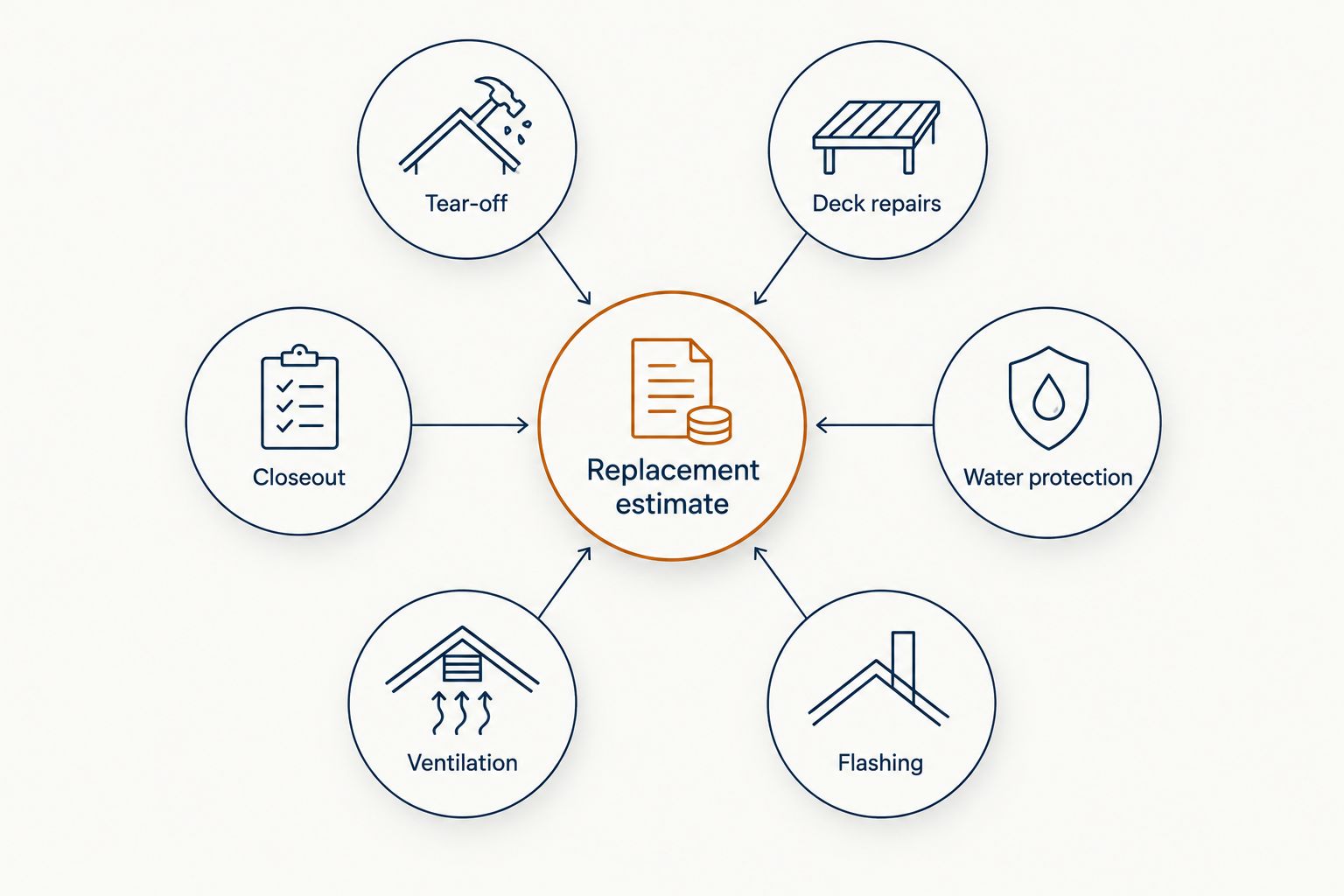
Use these headings to organize each estimate:
- Tear-off: Identify which existing roof layers will be removed and how disposal is handled. Tear-off means removing the existing covering rather than installing over it.
- Deck repairs: Identify how concealed deterioration will be documented, approved, and added to the scope after removal exposes the decking.
- Water protection: Specify underlayment and self-adhered membrane locations, including treatment at vulnerable edges and transitions.
- Flashing: State which metal water-shedding components will be replaced and which, if any, will remain.
- Ventilation: Explain the existing intake and exhaust arrangement, proposed changes, and any limitations.
- Closeout: Define cleanup, final review, and the documents you receive when the work is complete.
A lifespan claim also needs the right geographic context. Discussions of asphalt shingle lifespan in Georgia concern a different climate; do not transfer a regional expectation directly to a New Hampshire estimate. Ask how your roof’s slope, shade, attic conditions, and winter exposure affect the proposed assembly instead.
An exclusion is not automatically a problem. An unexplained exclusion is. For example, concealed decking damage cannot be fully assessed before tear-off, but the process for approving additional work can be settled before work begins.
Keep the same discipline with flashing. Step flashing consists of overlapping metal pieces where a sloped roof meets a wall. An estimate that says only “flashing as needed” leaves you without a clear understanding of what is included.
Check the roof details that outlast the sales conversation
New Hampshire homeowners should ask how the roof assembly manages water when snow and ice interrupt normal drainage. An ice-protection membrane provides secondary protection at specified locations; it does not correct indoor air leakage, insulation gaps, or an unsuitable ventilation arrangement.
Attic insulation and air sealing are separate from the exterior roof covering. If those conditions need attention, establish whether the roofing scope includes any work, requires another contractor, or leaves the condition unchanged. Do not assume a new covering fixes an attic problem.
For standing-seam metal, discuss where sliding snow would land before choosing the system. For slate, confirm the structure before selecting the stone. For cedar, discuss drying conditions. For asphalt, ask how the installer will handle starter courses, roof edges, valleys, and penetrations.
You do not need to supervise every installation detail. You do need a contractor who can explain the proposed assembly plainly and put the important commitments in writing.
Which roofing material should you choose in 2026?
Choose architectural asphalt as the starting point for a conventional replacement; compare standing-seam metal when longer service is your priority. Choose slate when maximum longevity and architectural character justify a structural assessment and specialized workmanship.
Prescottroofingnh is a fit for Southern New Hampshire homeowners planning a residential roof replacement. Request an inspection to establish the roof’s condition and replacement scope before choosing solely by a lifespan chart. Submitting a request does not mean an appointment is booked; confirm the appointment directly.
Request a roof inspection
Discuss your roof’s condition, material options, and replacement scope. Confirm appointment details directly.
FAQ
What roofing material lasts longest in New Hampshire?
Natural slate has the longest broad planning lifespan among the materials compared here, at 75–100+ years. That range is not a guarantee for a particular New Hampshire roof; structure, slate quality, flashing, fasteners, and workmanship still matter.
Is metal roofing better than asphalt for a New Hampshire home?
Standing-seam metal is the stronger choice when longer service life is the main priority. Architectural asphalt remains a practical conventional replacement; compare complete installation scopes and address snow movement before choosing metal.
How long do architectural asphalt shingles last?
A broad planning range for architectural asphalt shingles is 20–30 years. Exposure, ventilation, product selection, installation, and maintenance affect the actual service life, and warranty length is not a lifespan promise.
Can I replace asphalt shingles with slate?
Replacing asphalt shingles with slate requires confirming that the structure can support the proposed roof. Have the framing, decking, slope, and installation requirements assessed before committing to the material.
Should all roof replacement estimates include new flashing?
Every replacement estimate should explain which flashing will be replaced and which will remain. Do not assume a general reference to flashing includes every roof-to-wall intersection, chimney, valley, and penetration.
Does a new roof fix attic ventilation problems?
A new roof covering does not automatically fix attic ventilation problems. Ask the contractor to explain the intake and exhaust arrangement and distinguish roof work from insulation or air-sealing work.
How do I request a roof replacement inspection?
Contact Prescottroofingnh to request an inspection for your Southern New Hampshire residential roof replacement. Explain your concerns and confirm the appointment details directly; submitting a request does not itself book a visit.
One last thing
Before accepting a 2026 replacement estimate, ask: “What stays on my roof, and why?” That question brings reused flashing, concealed decking, existing vents, and other assumptions into the open. A clear answer gives you something more useful than a headline lifespan: a defined job you can evaluate before signing.