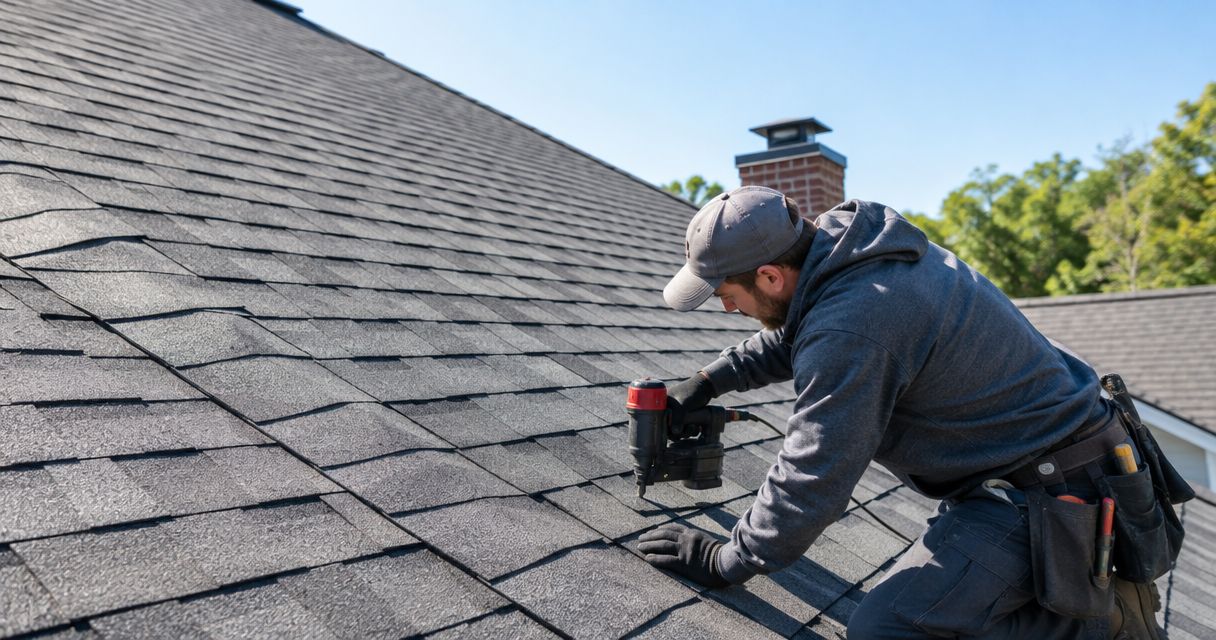
Yes, a new asphalt shingle roof can be installed over existing shingles when the existing covering, roof deck, applicable code, and new shingle manufacturer's instructions allow it. A roof over existing shingles leaves the deck covered, so it does not provide the same access to inspect and repair the wood, underlayment, and flashing as a complete tear-off.
- A roof over existing shingles requires a suitable existing roof, code approval, and manufacturer-approved installation details.
- Choose tear-off when damaged decking, unsuitable shingles, or existing layers rule out a roof overlay.
- Compare overlay and tear-off estimates by scope, not just the bottom line.
- Prescott Roofing serves Southern New Hampshire homeowners considering residential roof replacement.
Can a new roof be installed over existing shingles?
Yes, but permission and suitability are separate questions. An overlay adds shingles without removing the existing covering; a tear-off removes the old roofing so the contractor can inspect the exposed deck.
| Replacement method | Best for | Main advantage | Main limitation |
|---|---|---|---|
| Shingle overlay | A sound roof that meets code and manufacturer requirements | Avoids removing the existing shingle covering | Conceals the deck and complicates access to underlying details |
| Complete tear-off | A replacement requiring deck inspection or underlying repairs | Exposes the deck and allows rebuilding from that surface | Requires more removal, debris handling, and temporary weather protection |
Before comparing proposals, review what a roof replacement estimate includes. The words “new roof” alone do not tell you whether removal, deck repairs, or flashing replacement are included.
Why this matters
For a homeowner-paid roof replacement in 2026, the decision is about what work your house needs—not simply whether another layer will fit. An overlay and a tear-off are different scopes of work, even when both proposals name the same shingles.
In Southern New Hampshire, roof edges, valleys, chimneys, and wall intersections deserve close attention. New shingles do not correct deteriorated wood or poorly integrated flashing beneath them.
When is a shingle overlay acceptable?
An overlay needs a suitable base. The contractor must evaluate existing layers, shingle condition, deck condition, structural capacity, and the installation instructions for the proposed roofing.
The International Residential Code's reroofing provisions prohibit recovering a roof that already has 2 or more applications of roof covering. They also prohibit recovering roofing that is water-soaked or deteriorated enough to be an inadequate base. Your building department determines the code and amendments that apply to your address.
That means 1 existing shingle layer is a starting condition to investigate, not automatic approval. Adding another covering would create 2 total shingle layers, but the roof still has to satisfy the other requirements.
Ask these questions before accepting an overlay proposal:
- How did the contractor verify the existing layer count?
- What evidence supports the conclusion that the deck is sound?
- Do the proposed shingles' instructions permit this installation?
- How will roof edges, valleys, vents, and wall intersections be handled?
- What conditions would require stopping and changing to tear-off?
Choose an overlay only after the contractor explains why your existing roof is a suitable base. A verbal assurance that overlays are common does not answer those questions.
When is a complete tear-off the better choice?
A tear-off is the better choice when the work requires access beneath the shingles. It is also necessary when the existing roof fails the conditions for recovering.
Curled or uneven shingles can prevent the new covering from lying properly. Deteriorated decking cannot be repaired by covering it, and existing leaks require identifying the entry point rather than assuming new shingles will solve it.
Removal exposes the roof deck—the wood sheathing beneath the roofing. The contractor can then inspect that surface, replace unsuitable sections, and install the specified underlayment and roof details.
Tear-off has a practical drawback: the crew must manage debris and protect exposed areas during construction. Your proposal should explain property protection, cleanup, and how the roof will be kept weather-resistant during the work.
Choose tear-off when the replacement needs a sound starting surface that cannot be established with the old roofing in place. Removal creates access; careful inspection and installation still determine the quality of the finished work.
Why overlay suitability varies from roof to roof
A neighbor's overlay does not establish whether your house qualifies. These conditions determine the right scope for a 2026 replacement:
- Existing layers: The contractor must identify what is already installed, including layers hidden at edges or transitions.
- Deck condition: Soft, damaged, or deteriorated sheathing requires direct attention. An overlay leaves most of its upper surface concealed.
- Shingle condition: Curling, buckling, and uneven surfaces affect the base beneath the new covering.
- Flashing details: Chimneys, roof-to-wall intersections, and penetrations need a workable plan for directing water outward.
- Structural capacity: An added roof covering adds permanent weight. Structural concerns require evaluation rather than assumptions based on appearance.
- Manufacturer instructions and local requirements: Product installation details and the rules enforced at your address both matter.
An attic inspection can reveal staining, ventilation concerns, and visible damage from below. It does not provide the same view as examining the upper deck surface after removal.
What should the contractor inspect before recommending an overlay?
A useful inspection connects the recommendation to visible conditions. You should understand what was checked, what remains concealed, and what findings would change the proposed work.
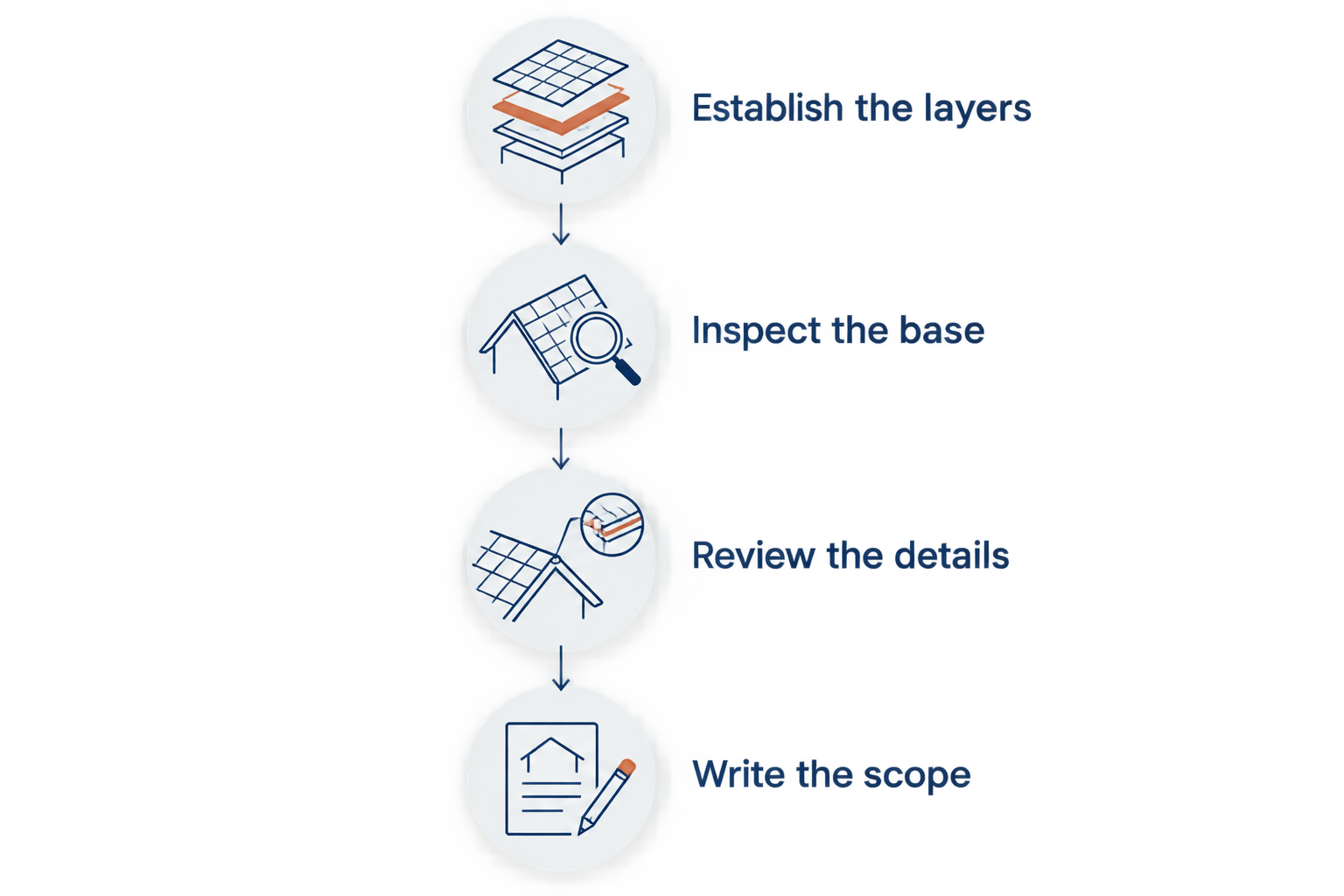
Establish the layers
Ask the contractor to document the existing roof coverings. An edge observation helps, but roof additions and previous partial replacements can leave different conditions on different slopes.
Inspect the base
The inspection should consider shingle flatness, visible sagging, accessible attic conditions, and signs of moisture damage. Do not climb onto the roof yourself; ask for photographs and an explanation of the findings.
Review the details
Have the contractor explain the treatment of valleys, plumbing vents, chimneys, and walls. Step flashing—the individual metal pieces woven into roofing where a sloped roof meets a wall—needs particular attention when another shingle layer changes the roof surface height.
Write the scope
The proposal should identify the installation method and its limitations. If concealed damage would require removal, the agreement should explain how that change gets documented and authorized.
These checks belong together. A suitable-looking shingle surface does not settle questions about the structure or the concealed roofing details.
What should an overlay or tear-off estimate include?
For your 2026 estimate comparison, start with the installation method. A proposal that leaves the old roof in place is not equivalent to a proposal that removes it, even if both use identical shingles.
Ask each contractor to address the same items:
- Removal: State whether the existing roofing stays or goes, and which areas the scope covers.
- Deck repairs: Explain how damaged wood will be identified, documented, and approved for replacement.
- Underlayment: Identify the material beneath the shingles and where it will be installed.
- Roof edges and valleys: Specify the treatment of drip edges, valleys, and protective membranes where required.
- Flashing and penetrations: State which components will be replaced, retained, or rebuilt.
- Ventilation: Identify whether intake or exhaust changes are included, excluded, or subject to further evaluation.
- Permits and cleanup: Assign responsibility and describe disposal and property protection.
Prescott Roofing offers residential roof replacement in Southern New Hampshire. When requesting an estimate, ask for an explanation of the recommended installation method and the conditions supporting it.
Do not treat a short proposal as a clear proposal. “Install new shingles” leaves too much unresolved if the document says nothing about the roofing underneath.
Does installing shingles over shingles affect the warranty?
An overlay must meet the requirements of the specific roofing product and any applicable warranty. Do not assume that permission to install a product automatically means every warranty option applies.
For a 2026 project, request the current installation instructions and written warranty terms for the actual shingles in the proposal. Ask the contractor to identify any provisions that address recover installations, deck requirements, ventilation, or installation methods.
Separate the manufacturer's coverage from the contractor's workmanship obligations. Those are different commitments, and neither should be represented by an unexplained “full warranty” statement.
Get warranty representations in writing before signing. A product name on an estimate is not a substitute for the terms that apply to your installation.
Will a roof overlay fix existing leaks?
A roof overlay does not establish why an existing roof leaks. Water entry at flashing, penetrations, or damaged underlying components requires a repair plan tied to the actual defect.
Ask the contractor to explain the suspected entry point and how the proposed scope addresses it. If the explanation is simply that new shingles cover everything, request a more specific answer.
Can the contractor know the deck is sound without tear-off?
A contractor can evaluate accessible evidence without removing all the shingles, but the existing covering conceals the deck's upper surface. An attic inspection and exterior observations do not eliminate that limitation.
Your agreement should explain how concealed deterioration will be handled if it becomes apparent during the work. A clear change-authorization process protects you from making rushed decisions with an open roof.
How should you decide between the proposals?
For a 2026 replacement, use the inspection findings to choose the scope before choosing the contractor. An overlay proposal needs a documented reason the existing roof can remain; a tear-off proposal needs clear details for rebuilding after removal.
Prescott Roofing is best suited to homeowners seeking residential roof replacement in Southern New Hampshire. Request an inspection to discuss the existing roof, the proposed removal scope, and what remains uncertain before work begins.
You can request a roof inspection. Submitting a request is not a confirmed appointment; confirm the date and access arrangements with the contractor.
FAQ
Can I put new architectural shingles over old shingles?
Architectural shingles can be installed over existing shingles only when the roof conditions, applicable code, and specific manufacturer's instructions permit it. Ask the contractor to document the existing layers and explain the proposed installation details.
How many shingle layers can a roof have?
The International Residential Code prohibits recovering a roof that already has 2 or more applications of roof covering. Having 1 existing layer does not automatically qualify a roof for an overlay; local requirements, roof condition, and manufacturer instructions still apply.
Is tearing off old shingles better than roofing over them?
Tearing off old shingles is better when deck inspection, underlying repairs, or rebuilding roof details requires access beneath the covering. It also involves more removal, debris handling, and protection of exposed areas.
Can new shingles cover curled shingles?
Curled shingles are not a suitable base to accept without correction and evaluation against the new product's installation instructions. Ask why the contractor considers the surface suitable rather than assuming the new shingles will flatten it.
Will roofing over shingles fix rotten wood?
Roofing over shingles does not fix rotten wood. Deteriorated decking needs to be exposed and repaired so the replacement roofing has a suitable base.
Will an overlay void my shingle warranty?
Warranty treatment depends on the specific product and written coverage terms. Request the current documents and ask which provisions apply to a recover installation before signing.
What should I ask a roofer before agreeing to an overlay?
Ask the roofer to explain existing layers, deck condition, manufacturer requirements, flashing treatment, and local code compliance. Get the proposed scope and the process for handling concealed damage in writing.
One last thing
The most useful question is not “Can you cover these shingles?” It is “What will remain underneath, and why is it acceptable?” Ask your contractor to answer that question with inspection findings and a written scope.
Prescott Roofing homeowners considering replacement should bring competing proposals to that same standard. Matching shingle names are not enough; matching the removal, repair, and installation details makes the comparison useful.