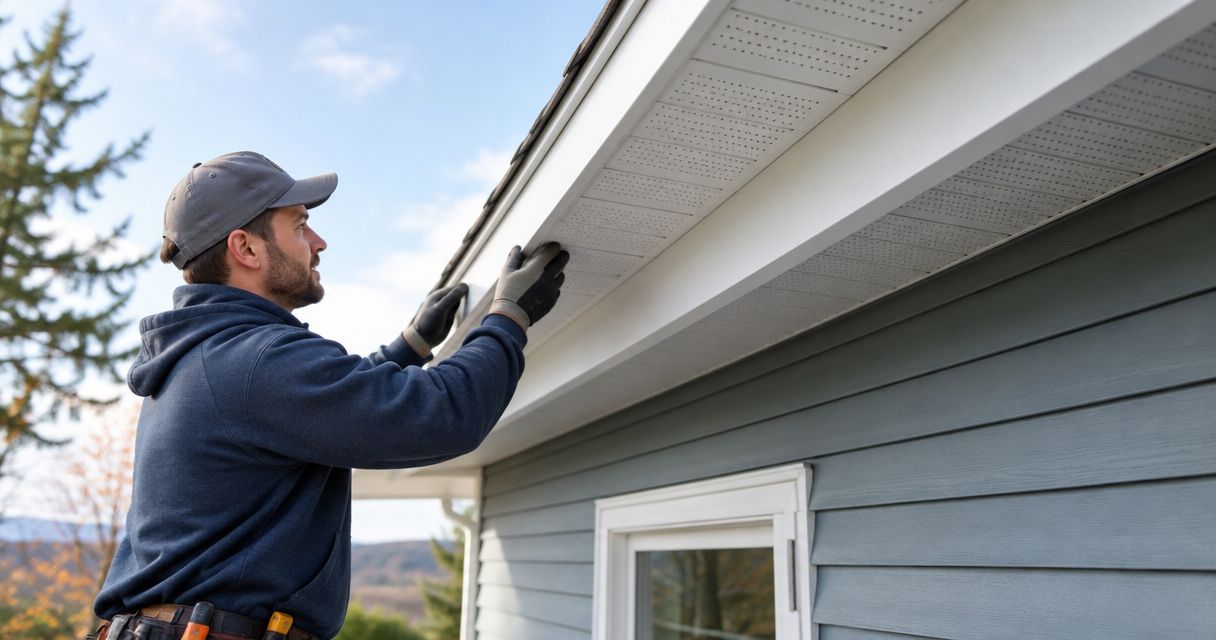
Best overall: aluminum soffit and fascia over sound backing. Best for replacement fascia boards: cellular PVC. Best for a straightforward soffit replacement: vinyl. The best soffit and fascia materials for NH homes depend on ventilation, the condition of the wood underneath, and how the roof edge handles water—not just the finish you see.
- Aluminum is the best overall soffit and fascia materials choice for NH homes when installed over sound backing.
- Cellular PVC suits fascia-board replacement; vinyl suits soffits where panel support and ventilation are properly detailed.
- Wood preserves traditional trim details but requires ongoing finish maintenance and attention to moisture.
- Ask Prescott Roofing to identify deteriorated backing and separate trim work from the residential roof replacement scope.
Why this matters during roof replacement
Soffit covers the underside of your roof overhang. Fascia is the vertical edge board where gutters commonly attach. Neither replaces the roofing, but both affect the details around it.
During a homeowner-paid roof replacement, you need to know whether the estimate includes these components or leaves them untouched. A new roof does not automatically mean new fascia, repaired rafter ends, or corrected soffit ventilation.
For your 2026 project, ask Prescott Roofing to identify which roof-edge components need attention and which can stay. Replace damaged backing before covering it; a clean exterior finish is not evidence of sound wood underneath.
What makes the best soffit and fascia materials?
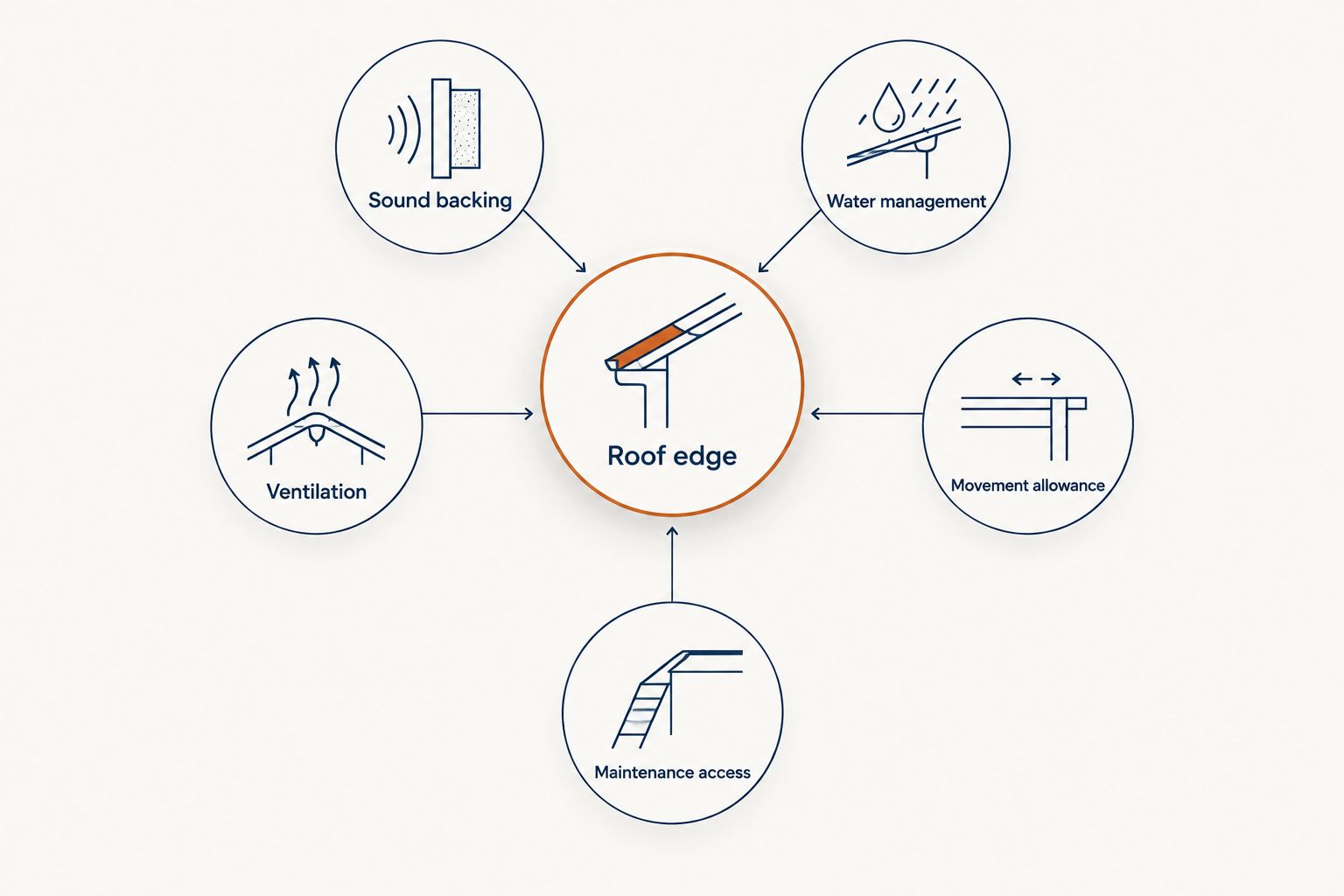
Judge the assembly against these criteria before choosing a material:
- Sound backing: Fascia coverings need a suitable substrate, and gutter fasteners need adequate support.
- Water management: Drip edge, fascia, and gutters must work together to direct runoff outward rather than behind trim.
- Ventilation: Vented soffits need an open path into the attic where the roof uses eave intake ventilation.
- Movement allowance: Metal, vinyl, and PVC need fastening and joint details that accommodate temperature changes.
- Maintenance access: You should understand how finishes, joints, and damaged sections will be maintained or replaced.
These criteria matter more than a material-only promise. Aluminum over decayed wood is a poor assembly. Properly maintained wood with sound flashing can be a sensible choice.
Soffit and fascia materials at a glance
This 2026 ranking separates the job each material does best. A soffit panel, a fascia board, and a metal fascia covering are not interchangeable products.
| Rank and material | Best for | Standout feature | Key limitation |
|---|---|---|---|
| 1. Aluminum | Coordinated soffit and fascia covering | Vented soffit options and formed fascia trim | Thin fascia covering does not replace damaged backing |
| 2. Cellular PVC | Replacing exposed fascia boards | Does not rot like wood | Requires planned joints, fastening, and gutter support |
| 3. Vinyl | Simple soffit replacement | Vented and solid panel options | Needs appropriate support and room for movement |
| 4. Painted wood | Matching traditional trim | Can reproduce existing profiles and details | Requires finish maintenance and moisture control |
| 5. Fiber cement | Soffits coordinated with fiber-cement siding | Rigid panels and compatible exterior detailing | Heavier, more demanding cutting and fastening |
1. Aluminum: best overall for coordinated roof-edge trim
Aluminum soffit panels cover the underside of the overhang, while formed aluminum fascia covers the vertical backing board. These are separate pieces with different installation requirements.
Aluminum does not rot like wood. It remains a covering, however: the wood behind fascia trim still needs inspection before installation.
Aluminum pros:
- Available in vented and solid soffit configurations.
- Can cover existing sound fascia without reproducing painted wood surfaces.
- Formed trim accommodates different roof-edge shapes.
Aluminum cons:
- Thin trim can dent or show waviness.
- Covering deteriorated backing conceals rather than fixes the problem.
- Poor fastening or bending produces loose edges and an uneven finish.
Best for: Homeowners replacing roofing who want coordinated soffit and fascia covering without retaining exposed painted fascia.
Ask the contractor where the fascia covering ends relative to the drip edge and gutter. The estimate should describe backing repairs separately from the metal covering.
Verdict: Buy aluminum when the backing is sound or its repair is included.
2. Cellular PVC: best for replacing fascia boards
Cellular PVC trim is a board material rather than a thin metal wrap. It is useful when the existing fascia board needs replacement and you want an alternative to exposed wood.
PVC is not a substitute for a fastening plan. Gutter attachment, board joints, and thermal movement still require manufacturer-specific details.
Cellular PVC pros:
- Does not absorb moisture and decay in the same way as wood.
- Can be cut and shaped for trim details.
- Provides a replacement-board option rather than merely concealing the old fascia.
Cellular PVC cons:
- Expansion and contraction require deliberate joint treatment.
- Fastener placement and gutter attachment need suitable backing.
- Paint choices must follow the trim manufacturer's instructions.
Best for: Roof replacements that also require exposed fascia-board replacement.
For a 2026 estimate, ask whether the proposed PVC work includes soffit support, corner joints, and gutter removal and reinstallation. Do not assume a fascia-board allowance includes those adjoining tasks.
Verdict: Buy cellular PVC for fascia replacement when the attachment and joint details are specified.
3. Vinyl: best for a straightforward soffit replacement
Vinyl soffit panels fit into supporting channels beneath the eaves. Vented versions can provide intake openings, but those openings must connect to an unobstructed ventilation path.
Treat vinyl primarily as a soffit option in this comparison. It does not answer whether a deteriorated fascia board needs replacement.
Vinyl pros:
- Available as solid or vented panels.
- Does not require the recurring painting associated with exposed wood.
- Individual panel sections can be replaced when compatible material is available.
Vinyl cons:
- Cold vinyl is more vulnerable to cracking during handling.
- Incorrect fastening can restrict movement and distort panels.
- Unsupported spans and loose channels undermine the installation.
Best for: Homeowners whose fascia remains serviceable but whose soffit panels need replacement.
Ask how the installer will support panels at corners and along wide overhangs. Also ask whether existing attic insulation blocks the intake path; changing the visible panel alone will not remove that obstruction.
Verdict: Buy vinyl for suitable soffit work; skip it as an answer to damaged fascia backing.
4. Painted wood: best for matching traditional trim
Wood remains useful when existing eaves have shaped profiles, exposed details, or proportions you want to preserve. The specification should identify the wood product, profile, and finish preparation rather than simply saying wood trim.
A traditional appearance comes with maintenance obligations. Water entry and neglected coatings can lead to decay.
Painted wood pros:
- Can reproduce detailed existing profiles.
- Accepts conventional painted finishes.
- Allows localized carpentry repairs where the surrounding material remains sound.
Painted wood cons:
- Requires recurring inspection and finish maintenance.
- End grain and joints need careful moisture protection.
- Concealed decay can extend beyond the visibly damaged section.
Best for: Homeowners prioritizing a close match to original trim details.
On a Manchester or Bedford home with distinctive eaves, compare a sample profile before approving a substitute. Replacing shaped wood with flat covering changes the appearance even when the color stays similar.
Verdict: Hold until the profile, preparation, and maintenance expectations are clear.
5. Fiber cement: best for soffits matched to existing siding
Fiber-cement soffit panels make sense when they form part of a coordinated exterior specification. Vented and nonvented products exist, so the exact panel matters.
Use a product approved for the intended soffit application. A siding panel is not automatically suitable just because its appearance matches.
Fiber cement pros:
- Provides a rigid panel surface.
- Offers an option for coordinating soffits with fiber-cement siding.
- Does not decay like wood.
Fiber cement cons:
- Requires suitable support and specified fastening.
- Cutting requires appropriate silica-dust controls.
- Edges, joints, and finishes need product-specific treatment.
Best for: Homeowners matching an existing fiber-cement exterior during coordinated roof-edge work.
Ask which panel is specified and how penetrations and joints will be finished. Fiber cement is not the default choice when only a small section of fascia covering needs repair.
Verdict: Hold unless the product fits the existing exterior and the installation scope is clear.
What your roof replacement estimate should include
For a 2026 roof replacement, compare written scopes before comparing totals. Ask Prescott Roofing to distinguish necessary roof-edge repairs from optional appearance changes.
Define the existing condition
The estimate should identify visible deterioration, loose soffit panels, damaged trim, and accessible ventilation obstructions. It should also explain how concealed damage discovered during tear-off will be documented and authorized.
Tear-off means removing the existing roofing. It can expose damage that was not visible during an initial inspection; that does not justify an undefined repair allowance.
Separate the materials and quantities
Request fascia quantities in linear feet and soffit quantities in square feet, with the product and finish identified. Covering sound fascia and replacing the board underneath are different tasks.
Keep ventilation units separate too. 144 square inches equal 1 square foot, but a vent's rated net free area is not the same as its overall panel size. Net free area means the opening available for airflow after accounting for the vent's design.
State the adjoining work
A useful estimate addresses:
- Removal and disposal of existing soffit or fascia.
- Repair authorization for concealed wood deterioration.
- Drip-edge treatment where it meets the fascia.
- Gutter removal, protection, and reinstallation where needed.
- Intake ventilation and access around existing insulation.
- Finish preparation, joints, and cleanup.
Do not accept “trim included” as the complete scope. Ask what is included, what stays, and what triggers an additional authorization.
Request a roof replacement inspection
Ask for a roof-edge review and a clear distinction between roofing work and optional trim replacement.
Submitting an inspection request does not mean an appointment is booked. Confirm the visit details directly before arranging access.
How this ranking was decided
The ranking favors sound backing, water management, ventilation, movement allowance, and maintainable details. It compares material categories rather than claiming one manufacturer's panel performs like every other panel in that category.
Aluminum takes the default position because it offers both soffit panels and fascia covering. PVC takes the replacement-board position; vinyl, wood, and fiber cement serve narrower needs. Installation details remain decisive in every case.
Which material should you choose?
Choose aluminum soffit and fascia covering as the default, then change that choice only for a specific condition. Choose cellular PVC when the fascia board itself needs replacement; retain wood when matching traditional detail is the priority.
For a 2026 residential roof replacement, do not replace serviceable soffits solely because the roof is being replaced. Ask Prescott Roofing to explain the condition, the recommended work, and what leaving existing trim in place means for the roof-edge installation.
FAQ
What's the best soffit and fascia material for a New Hampshire home?
Aluminum is the best general starting point for soffit and fascia covering over sound backing. Cellular PVC is a separate option when the fascia board itself needs replacement.
Is PVC fascia better than aluminum fascia?
PVC and aluminum fascia usually serve different roles: PVC is a trim board, while aluminum commonly covers a backing board. Choose based on whether you need board replacement or a protective exterior covering.
Should I replace soffits when I replace my roof?
Replace soffits when their condition, support, or ventilation requires it—not automatically with every roof replacement. Ask for the soffit work to be listed separately so you understand what the roofing scope includes.
Can aluminum fascia go over rotten wood?
Do not use aluminum fascia covering to conceal rotten backing. Have the deteriorated material assessed and repaired before the covering and gutter attachments are installed.
Do vented soffits fix attic ventilation?
Vented soffits alone do not establish a working attic ventilation system. Their openings need a clear intake path and a compatible exhaust arrangement for the roof assembly.
What should a soffit and fascia estimate include?
A soffit and fascia estimate should identify materials, quantities, removal, backing repairs, ventilation details, and adjoining gutter or drip-edge work. It should also explain how concealed damage will be documented and authorized.
Can I keep wood fascia during a roof replacement?
You can keep wood fascia when it remains sound and works with the proposed roof-edge details. Check its condition, finish, and gutter attachment before deciding to retain it.
One last thing
A vented soffit panel can sit beneath a blocked attic intake. Before signing your 2026 estimate, ask how the airflow path will be checked—not simply whether the replacement panel has holes.
That question separates a visible material change from a working roof-edge detail. For Prescott Roofing roof replacement discussions, bring it alongside your questions about fascia backing and gutter attachment.