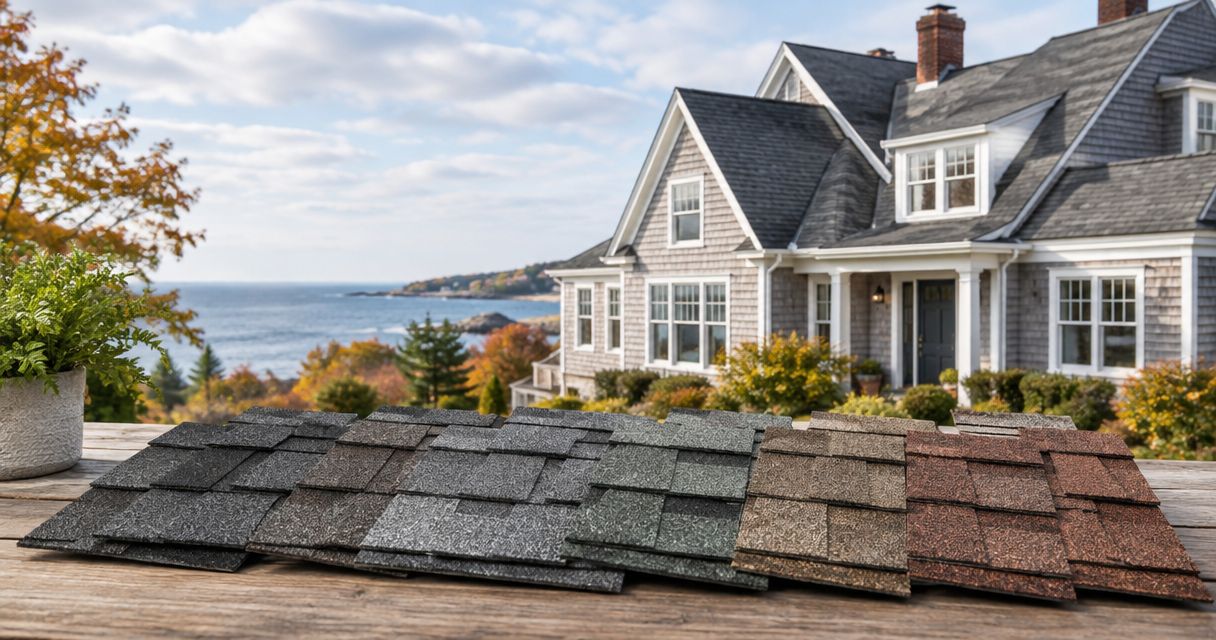
Best overall: weathered gray. Best for light siding: charcoal; best for warm masonry: brown; best for crisp contrast: black; best for earthy exteriors: muted green. These are the best roof shingle colors for New England homes to shortlist for a 2026 residential roof replacement, with the final choice checked against your actual siding, masonry, and trim.
- The best roof shingle colors for New England homes start with weathered gray for a restrained, adaptable appearance.
- Choose charcoal for light siding, brown for warm masonry, and black when you deliberately want stronger contrast.
- Prescott Roofing is a residential roof replacement option for Southern New Hampshire homeowners; request an inspection before settling the scope.
- Compare physical asphalt shingle samples outside, then record the exact manufacturer, product, and color in your estimate.
Why this matters
Your roof color needs to work with the parts of your house you are keeping. A brick chimney, stone entry, or broad stretch of siding gives you a better starting point than a small image on a screen. Start with those fixed materials, not a color name.
For a homeowner-paid replacement, keep appearance and construction decisions separate. You need a color you like and a written scope that explains what happens beneath it. You can request a residential roof replacement inspection through Prescott Roofing; submitting a request is not the same as having a confirmed appointment.
Choose the roof color against the house, not against another shingle sample. A sample that wins on its own can still clash with the masonry beside your front door.
What makes the best roof shingle color?
Use these criteria for your 2026 shortlist before comparing individual colors:
- Fixed materials: Start with brick, stone, siding, and any other exterior finish you plan to keep.
- Undertones: Look for warm brown or tan notes versus cooler blue or gray notes. A color name alone does not settle this.
- Contrast: Decide whether the roof should blend into the exterior or stand out against it.
- Roof visibility: Consider how much roof you see from the street. A broad, prominent roof deserves a larger sample review.
- Sample accuracy: Judge physical samples outdoors, not just photographs or a contractor's phone screen.
- Product identification: Choose an exact shingle product and color, rather than leaving the estimate at a general description such as gray architectural shingles.
Roof shingle colors at a glance
These are color families, not manufacturer color names. The same general label can describe noticeably different blends, so use the table to narrow your direction rather than approve a purchase.
| Rank and color | Best for | Standout visual feature | Key limitation |
|---|---|---|---|
| 1. Weathered gray | A restrained starting point | Less contrast than a near-black roof against light siding | Some blends contain brown or blue notes that clash with fixed materials |
| 2. Charcoal | Light siding that needs definition | A dark roofline without choosing a flat black appearance | Strong contrast can make a large roof visually dominant |
| 3. Brown | Warm brick, stone, and tan siding | Repeats earthy tones already present on the house | Warm brown can conflict with cool siding or trim |
| 4. Black | Deliberately high-contrast exteriors | A distinct outline against white or pale siding | Leaves little room for a soft, blended appearance |
| 5. Muted green | Earthy exterior palettes | Connects the roof with green, brown, or natural wood tones | A pronounced green cast restricts other exterior color choices |
1. Weathered gray: best roof shingle color for a restrained look
Weathered gray is the default recommendation when you want the roof to support the exterior rather than become its main feature. Start here if your house has several materials and you need a quieter color direction.
Do not assume weathered gray means neutral gray. Inspect the sample for brown, blue, or green notes, especially beside a chimney or stone foundation that stays after replacement.
Weathered gray pros:
- Offers a restrained alternative to a near-black roof.
- Gives you a useful starting point when comparing mixed exterior materials.
- Lets you choose a warmer or cooler blend to suit the house.
Weathered gray cons:
- The name does not identify a consistent shade across products.
- A strongly blended sample can look busier than expected across a large roof.
Best for: Homeowners who want an understated roof and have not committed to strong contrast.
Verdict: Buy weathered gray after the physical sample works beside your fixed materials.
2. Charcoal: best roof shingle color for light siding
Charcoal is the stronger choice when pale siding needs a defined roofline. On a white, cream, or light-gray exterior, start by comparing charcoal against weathered gray to decide how much contrast you actually want.
Pay attention to the entire roof shape. A color that looks balanced on a small dormer can become the dominant feature when repeated across a broad main roof.
Charcoal pros:
- Creates a distinct boundary against light siding.
- Gives you a darker option without automatically choosing black.
- Suits a deliberate, limited exterior palette.
Charcoal cons:
- Can overpower an exterior when the roof occupies much of the street view.
- Cooler charcoal blends need checking against warm brick and cream trim.
Best for: Light-sided homes whose owners want a clearly defined roof.
Verdict: Buy charcoal for intentional contrast; skip it if your goal is a soft, blended exterior.
3. Brown: best roof shingle color for warm masonry
Brown is the first color family to compare when your house has tan stone, brown brick, or warm beige siding. Look for a sample that repeats an existing tone without making the roof and walls look like one continuous surface.
Check the mortar as well as the brick. A roof sample can echo the brick face yet conflict with the lighter material surrounding it.
Brown pros:
- Gives warm masonry an obvious color reference.
- Offers an earthy alternative to gray and black.
- Lets you build a palette around tan, cream, and wood tones.
Brown cons:
- Red or orange notes can compete with similarly colored brick.
- A close match to brown siding can erase the contrast you wanted.
Best for: Homes where warm masonry or tan finishes set the exterior palette.
Verdict: Buy brown when it supports the masonry; skip a blend that introduces a competing warm tone.
4. Black: best roof shingle color for crisp contrast
Black is a deliberate design choice, not the automatic answer for every traditional home. Compare it when you want a strong division between the roof and pale siding, particularly if you intend to keep the rest of the palette simple.
Separate appearance from performance. A black color label does not establish a shingle's durability, ventilation requirements, or suitability for your roof assembly.
Black pros:
- Creates pronounced contrast against white or pale siding.
- Makes the roof outline a clear part of the exterior design.
- Provides a straightforward direction for a limited color palette.
Black cons:
- Can feel visually heavy on a prominent roof.
- Is a poor fit when you want the roof to recede into the house.
Best for: Homeowners who specifically want a high-contrast exterior.
Verdict: Buy black for a deliberate contrast scheme; skip it as a default chosen from a screen.
5. Muted green: best roof shingle color for earthy exteriors
Muted green belongs on the shortlist when your exterior already includes earthy green, brown, or natural wood tones. Keep the emphasis on muted: compare how strongly the green reads beside the house, not just how appealing the sample looks alone.
Treat this as the most selective recommendation here. If you expect to repaint the siding, review that future direction before committing to a distinctly colored roof.
Muted green pros:
- Repeats green tones already present in an exterior palette.
- Offers an alternative to the gray, brown, and black shortlist.
- Supports an intentionally earthy appearance.
Muted green cons:
- A noticeable green cast limits compatible siding choices.
- A small sample does not show how prominent the color feels across the roof.
Best for: Homes with an established earthy palette that the owner plans to keep.
Verdict: Hold muted green until a larger sample confirms the match.
Check your shortlist against the actual house
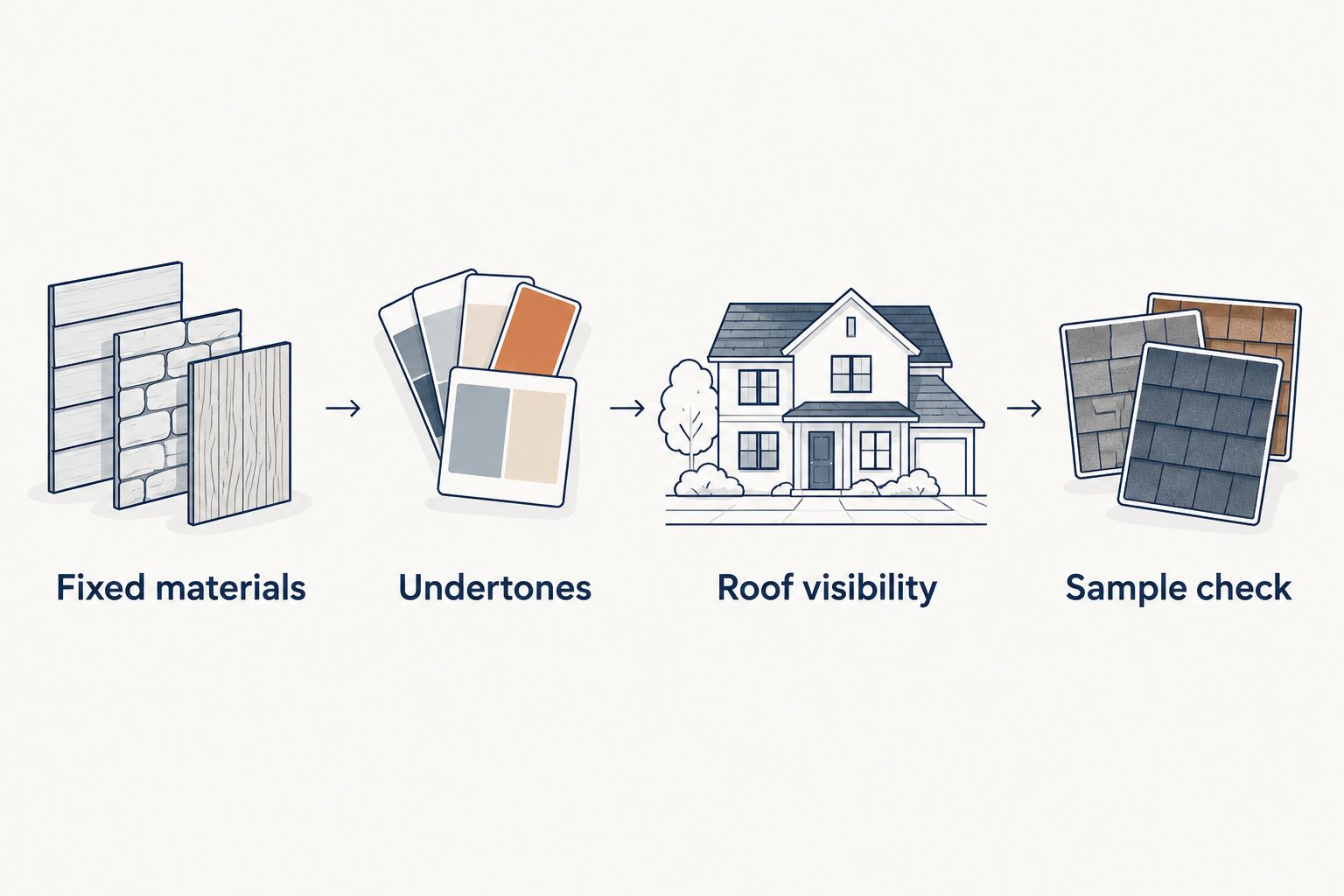
For your 2026 replacement, use a repeatable sample check rather than collecting more color names. Start with 3 physical samples, compare them from 2 viewing distances, and review them in 2 daylight conditions: direct sunlight and shade. These are practical comparison steps, not product performance standards.
- Fixed materials: Place the samples beside the siding, masonry, and trim you are keeping. Do not climb onto the roof to do this.
- Undertones: Remove any sample whose warm or cool cast conflicts with those materials.
- Roof visibility: Look close enough to see the blend, then step back to your normal street or driveway view.
- Sample check: Review the remaining choices in sunlight and shade before approving the exact color.
Ask whether a larger sample board or a completed installation of the exact product is available to view. Treat photographs as supporting references, not substitutes for the physical sample. Lighting, camera settings, and your screen all affect the image you see.
Keep the color decision separate from the replacement estimate
A color selection does not tell you whether two roof replacement estimates cover the same work. For a 2026 estimate from Prescott Roofing or another contractor, ask for the construction scope and appearance selection to be identified separately.
Look for clear answers on:
- Tear-off: Which existing roofing layers will be removed, and how will disposal be handled?
- Decking: How will the contractor document damaged roof boards or sheathing and obtain approval for additional work?
- Underlayment: What protective layer beneath the shingles is included?
- Flashing: What happens to the metal details that direct water away from chimneys, walls, and other roof intersections?
- Ventilation: What existing intake and exhaust conditions will be evaluated?
- Color approval: Which manufacturer, product line, and exact color will appear in the agreement?
Ask what is excluded and how changes require your approval. A neatly named shingle color cannot compensate for an unclear tear-off or flashing scope.
Request a roof replacement inspection
Discuss the roof condition, replacement scope, and color choices before approving the work.
How these colors were ranked
This 2026 ranking prioritizes compatibility with fixed materials, control over contrast, roof visibility, and the ability to verify a choice with samples. It is an appearance guide, not a durability test or a ranking of shingle manufacturers.
Weathered gray takes the default position because the recommendation starts with a restrained appearance. Charcoal, brown, black, and muted green each serve a different visual goal. Your house overrides the ranking whenever the samples show a clear mismatch.
Which roof shingle color should you choose?
Start with weathered gray if you are undecided, then compare charcoal or brown according to your siding and masonry. Keep black for deliberate contrast and muted green for an established earthy palette.
Prescott Roofing is a residential roof replacement option for homeowners in Southern New Hampshire. Request an inspection to discuss the work, and keep the final color approval tied to the exact product in the written estimate.
FAQ
What's the best roof shingle color for a New England home?
Weathered gray is the default recommendation for a restrained appearance. Compare physical samples against your siding, trim, and masonry before choosing the exact product.
Is charcoal or black better for a white house?
Choose charcoal for a dark roofline or black for more pronounced contrast. Compare both against the actual white siding because the roof's size and visibility affect the overall appearance.
What roof shingle color should I choose for a brick house?
Start with brown for warm masonry, then compare weathered gray as an alternative. Check the brick and mortar together rather than matching only one brick face.
Should my roof shingles match my siding?
Your shingles should coordinate with the siding, not necessarily match it. Decide whether you want the roof to blend with the walls or create a distinct boundary.
Can I choose roof shingles from an online picture?
Use online pictures to create a shortlist, not to approve the final color. Review physical samples outdoors because lighting, photography, and screens affect the appearance.
Does a darker shingle color mean a better roof?
No, a darker color does not establish roof quality. Compare the specified shingle product, installation requirements, and replacement scope separately from appearance.
What should my roof replacement estimate say about color?
The estimate should identify the manufacturer, product line, and exact selected color. Ask how final approval and any later substitutions will be documented.
One last thing
Before you approve your 2026 roof replacement, photograph the sample label and compare it with the written selection. A general color name is not enough to identify the roof you chose. Keep that record with your Prescott Roofing estimate or whichever contractor agreement you select.