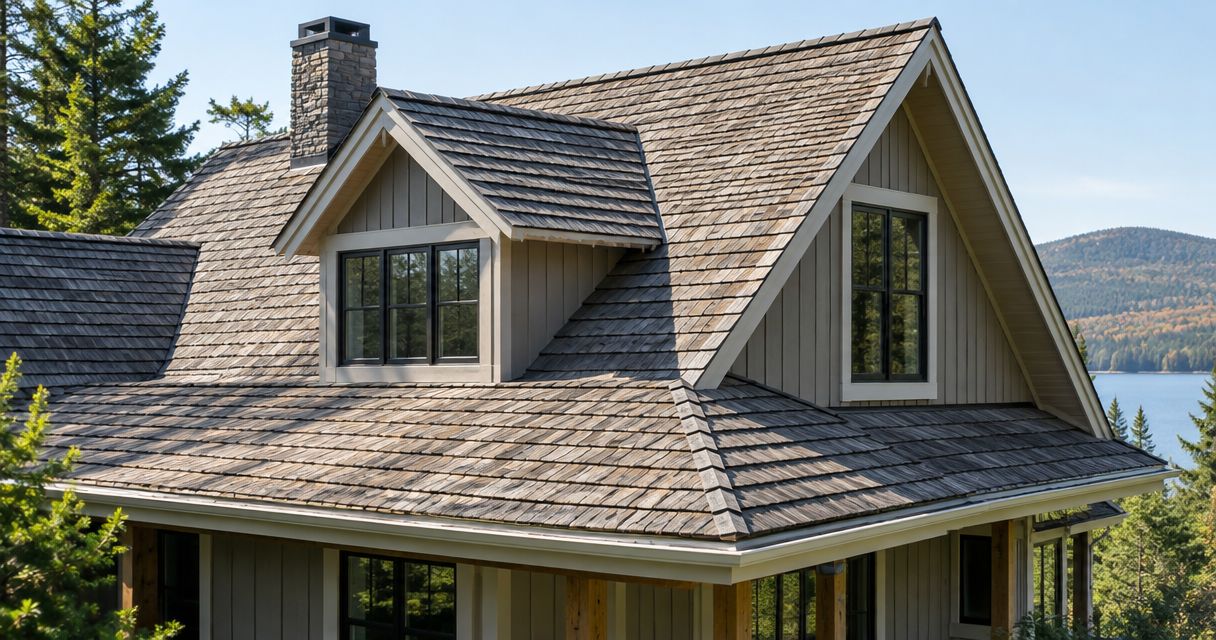
Best overall for a straightforward replacement: architectural asphalt shingles. Best for preserving cedar’s appearance: synthetic shake; best for textured metal: stone-coated steel shake. This 2026 guide from Prescott Roofing compares cedar shake alternatives for Southern New Hampshire homeowners paying for their own roof replacement.
- The best cedar shake alternatives for NH roof replacements are architectural asphalt, synthetic shake, and metal roofing.
- Architectural asphalt shingles are the default recommendation when matching cedar’s appearance is not your main requirement.
- Synthetic shake is best for homeowners who want a cedar-like profile without installing wood shakes.
- Prescott Roofing recommends comparing tear-off, decking, flashing, ventilation, and material specifications before choosing a replacement estimate.
Why this matters
Replacing cedar changes more than the surface you see from the driveway. The replacement material needs suitable roof decking, compatible flashing, and installation details that fit your roof’s slope and shape.
For a homeowner in Bedford or Nashua, the useful question is not simply which material looks most like cedar. It is which complete roof assembly fits the house, the appearance you want, and the maintenance you will accept. Choose the roof system before choosing the color.
What makes the best cedar shake alternative?
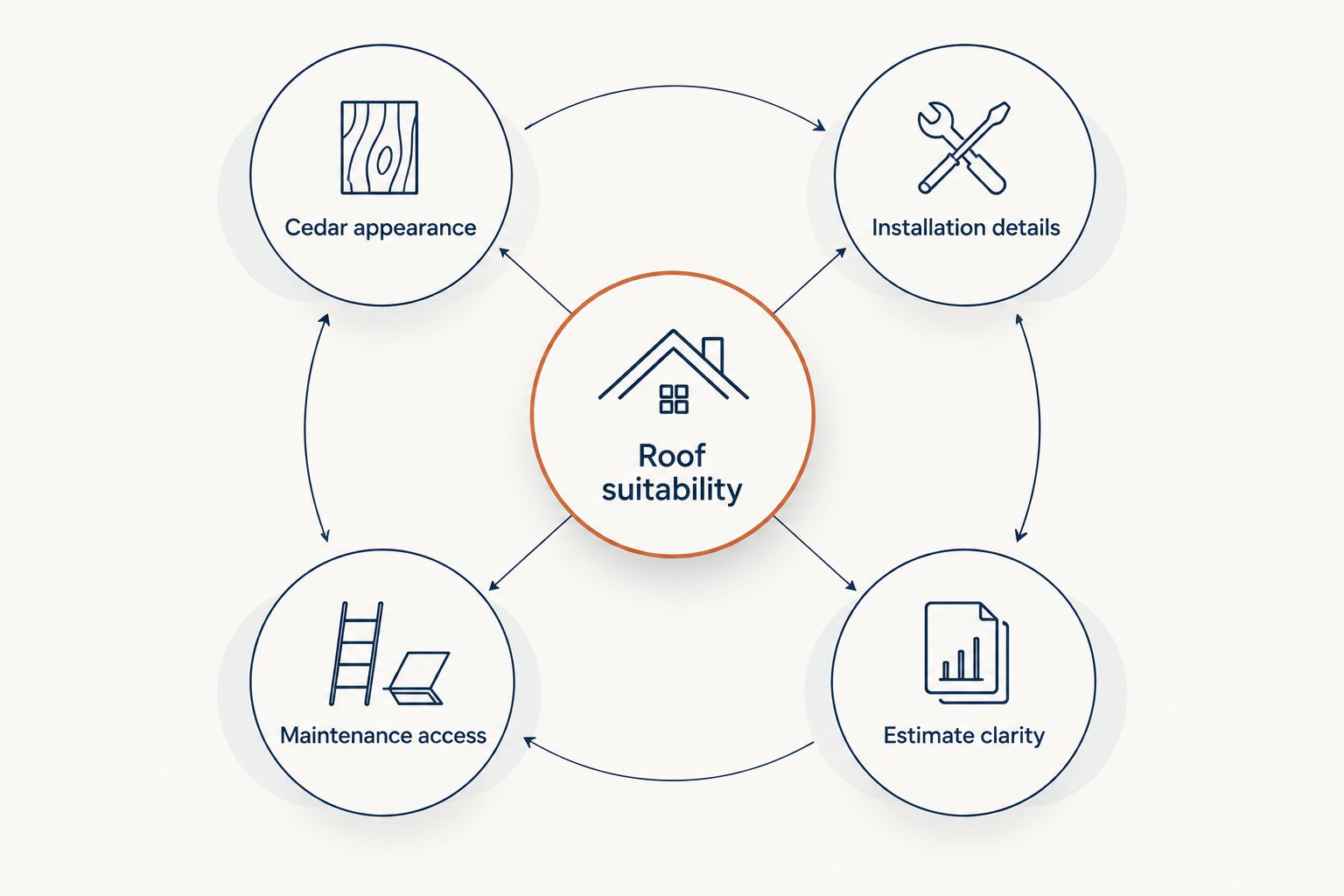
Judge your 2026 replacement options against these criteria before comparing estimates:
- Cedar appearance: Decide whether you need a convincing shake profile or simply a roof that suits the house.
- Roof suitability: Check slope, deck requirements, roof intersections, and the manufacturer’s installation instructions.
- Installation details: Compare treatment of valleys, chimneys, walls, roof edges, and penetrations—not just field roofing.
- Maintenance access: Ask how the finished surface should be inspected, walked on, and repaired.
- Estimate clarity: Require named materials, defined exclusions, and written procedures for concealed damage.
These criteria prevent a common comparison mistake: treating different materials as interchangeable because the proposals cover the same house. A shake-profile roof and a standing-seam roof need different accessories and detailing.
Cedar shake alternatives at a glance
| Rank and material | Best for | Standout feature | Key limitation |
|---|---|---|---|
| 1. Architectural asphalt shingles | A straightforward change away from cedar | Layered shingle profile without a wood-shake surface | Does not reproduce cedar’s irregular texture |
| 2. Synthetic shake | Keeping a cedar-like appearance | Manufactured shake shapes and surface texture | Requirements and performance vary by product |
| 3. Stone-coated steel shake | A textured metal alternative | Formed steel panels with a granular surface | Panel layout and accessories need system-specific detailing |
| 4. Standing-seam metal | A deliberate architectural change | Long panels with raised seams | Does not resemble cedar shake |
The ranking favors a practical replacement decision, not the closest visual imitation in every case. If retaining the original shake appearance is essential, move synthetic shake to the top of your shortlist.
1. Architectural asphalt: best for a straightforward replacement
Architectural asphalt shingles use a layered profile rather than the flat, uniform appearance of traditional strip shingles. They suit homeowners who want to replace cedar without making a cedar replica the central requirement.
Prescott Roofing’s default cedar shake alternative is architectural asphalt for homeowners who do not need to preserve a shake profile. That recommendation is about fit, not a claim that asphalt outperforms every other material.
Architectural asphalt pros
- A layered surface gives the roof visible depth.
- Individual shingles allow localized replacement where the surrounding roof remains serviceable.
- The appearance works without trying to imitate individual wood shakes exactly.
Architectural asphalt cons
- The finished roof will not have cedar’s irregular grain and split texture.
- Shingles do not correct unsuitable decking, poor ventilation, or deficient flashing underneath them.
Ask the contractor to identify the exact shingle line and matching accessories. A proposal that says only architectural shingles leaves the actual product unspecified.
Best for: Homeowners who prioritize a clearly specified replacement over a close cedar match.
Verdict: Buy architectural asphalt when changing the roof’s texture is acceptable and the estimate defines the full installation.
2. Synthetic shake: best for keeping the cedar look
Synthetic shake is a category of manufactured roofing designed to resemble wood shakes. Composition, fastening patterns, accessories, and installation requirements differ between products; the category name alone tells you too little.
For a 2026 replacement on a house where the roof is a prominent design feature, synthetic shake deserves a closer look. Review a physical sample outdoors and ask to see the proposed layout, not just a small catalog image.
Synthetic shake pros
- Shake-shaped pieces preserve more of cedar’s visual character than standard asphalt shingles.
- Molded texture and varied profiles can create a wood-like appearance.
- You can pursue the shake look without selecting another wood roof.
Synthetic shake cons
- Products within the category are not interchangeable in composition or installation requirements.
- A sample viewed close up does not establish how the full roof will look from the street.
Require the exact manufacturer, product name, installation instructions, and relevant classification documents. Confirm that accessories at ridges, hips, and valleys belong to the proposed assembly.
Best for: Homeowners whose main requirement is retaining a cedar-like roof profile.
Verdict: Buy synthetic shake when appearance leads the decision and the contractor can document the exact system.
3. Stone-coated steel shake: best for textured metal roofing
Stone-coated steel shake uses formed steel panels with a granular surface and a shake-style profile. It offers a different route to texture than either wood or molded synthetic pieces.
The important distinction is the panel system underneath that texture. Ask how panels attach, how penetrations are flashed, and how a damaged section would be accessed. Compare configurations in the guide to metal roofing panels for New Hampshire homes before treating all metal roofs as the same option.
Stone-coated steel shake pros
- Provides a textured surface rather than the smooth appearance of standing seam.
- Offers a shake-style outline with a metal panel substrate.
- Gives homeowners a metal option without choosing long vertical seams.
Stone-coated steel shake cons
- Interlocking panels can make localized access more involved than replacing an exposed individual shingle.
- Walking and servicing procedures depend on the specific panel system.
Do not accept a generic metal-roof description in the estimate. The panel profile, attachment method, underlayment, flashings, and accessories need to be identified together.
Best for: Homeowners who specifically want metal roofing with a textured, shake-style appearance.
Verdict: Hold until the proposal identifies the complete panel system and explains maintenance access.
4. Standing-seam metal: best for changing the roof’s appearance
Standing-seam metal uses long panels joined at raised seams. It is an alternative to a cedar roof, but not a cedar lookalike.
Choose it because you want the lines of a metal roof. Before committing, review how those lines meet dormers, valleys, porches, and additions; a simple sample panel cannot show those transitions.
Standing-seam metal pros
- Creates a clearly different, linear appearance.
- Concealed-fastener systems keep attachment points beneath panels or seams across the main roof field.
- Long panels avoid the repeated horizontal courses of shake-style roofing.
Standing-seam metal cons
- It changes the architectural character rather than preserving cedar’s texture.
- Snow shedding needs consideration above entrances, walkways, and other occupied areas.
In the estimate, identify the panel profile, attachment system, flashing details, and any proposed snow-retention components. Do not assume every standing-seam assembly uses the same installation method.
Best for: Homeowners intentionally moving away from the shake appearance.
Verdict: Buy standing seam for a deliberate design change; skip it if matching cedar is essential.
What your cedar replacement estimate must explain
A useful 2026 estimate describes what happens after the cedar comes off. The visible covering is only part of the work.
Tear-off and decking
Require a clear description of which existing roof layers will be removed and how debris will be handled. Cedar roofs can have different underlying deck arrangements, so the contractor needs to establish whether the replacement material requires changes to the existing deck.
Ask how concealed damage will be documented and authorized. The estimate should explain how additional decking work is measured and approved before it proceeds.
Underlayment and water control
Underlayment is the layer between the roof deck and the finished covering. Ask which product is specified and where self-adhered membrane is included.
Do not accept a single vague line for waterproofing. Valleys, eaves, roof-to-wall intersections, and penetrations require details suited to the selected roofing system and applicable requirements.
Flashing and ventilation
Flashing directs water away from joints and roof openings. Step flashing consists of overlapping pieces where a sloped roof meets a wall; chimney and valley details require their own treatment.
The proposal should distinguish replacement from reuse. It should also explain how intake and exhaust ventilation will be assessed rather than assuming new roofing fixes an attic ventilation problem.
Measurements and exclusions
Roofing uses a square to mean 100 square feet of roof area. Roof pitch describes vertical rise over 12 inches of horizontal run; a roof rising 6 inches over that distance has a 6:12 pitch.
Those measurements help you understand the proposal, but they do not establish material suitability by themselves. Ask the contractor to connect the measured slope to the selected manufacturer’s instructions.
Prescott Roofing recommends comparing these scope details before choosing between cedar shake alternatives. Also ask whether permits, disposal, property protection, gutters, and final cleanup are included or excluded.
Request a roof replacement inspection
Discuss your existing cedar roof, replacement options, and the scope your estimate needs to address.
An inspection request is not a confirmed appointment. Confirm the date, access arrangements, and what the inspection will cover before planning around the visit.
How the alternatives are ranked
This 2026 ranking uses the criteria above: cedar appearance, roof suitability, installation details, maintenance access, and estimate clarity. It ranks material categories by homeowner use case, not by an unsupported lifespan or performance score.
Architectural asphalt leads for a straightforward change away from cedar. Synthetic shake leads for visual continuity; stone-coated steel serves the textured-metal preference; standing seam serves a deliberate change in style. The specified product and installation plan still determine whether an option belongs on your roof.
Which cedar shake alternative should you choose?
Start with architectural asphalt unless preserving the shake appearance is a firm requirement. If it is, compare a named synthetic shake system against your existing roof’s appearance and construction.
Choose stone-coated steel because you want textured metal, not because the estimate simply calls it premium. Choose standing seam because you want its raised-seam appearance and have addressed details around roof intersections and pedestrian areas.
For your 2026 decision, ask Prescott Roofing to inspect the existing roof before narrowing the material shortlist. A useful inspection connects your preferred appearance to decking, flashing, ventilation, and a written replacement scope.
FAQ
What’s the best cedar shake alternative for a New Hampshire home?
Architectural asphalt is the default choice when you do not need to preserve cedar’s appearance. Synthetic shake is the stronger shortlist option when a cedar-like profile is your main requirement.
What roofing material looks most like cedar shake?
Synthetic shake is designed specifically to reproduce wood-shake shapes and texture. Compare the exact product outdoors and review full-roof examples rather than relying only on a small sample.
Is synthetic shake better than architectural asphalt?
Synthetic shake is better suited to preserving a shake-style appearance; architectural asphalt suits a straightforward change away from cedar. The better choice for your house depends on the specified product, roof construction, and installation scope.
Can I put a new roof over existing cedar shakes?
Do not assume an overlay is suitable. Have the contractor explain removal requirements, inspect the existing deck, and verify the selected roofing system’s installation requirements before you approve the scope.
Will my cedar roof need new decking during replacement?
The existing deck must be assessed before that scope is settled. Its arrangement and condition, together with the replacement material’s requirements, determine whether changes or repairs are needed.
Is standing-seam metal a good cedar shake substitute?
Standing-seam metal is a replacement option when you want a different appearance, not a cedar imitation. The proposal should address panel attachment, flashing, and snow shedding above occupied areas.
What should I ask before accepting a cedar replacement estimate?
Ask for the exact roofing product, tear-off scope, decking provisions, underlayment, flashing, ventilation assessment, and exclusions. Require a written process for approving concealed work before it proceeds.
One last thing
Ask the contractor to describe the roof with the cedar removed. What deck will be exposed, which flashing will be replaced, and what work requires your approval?
That explanation tells you more about the replacement plan than another shingle sample. Choose the material after you understand the roof it must attach to.