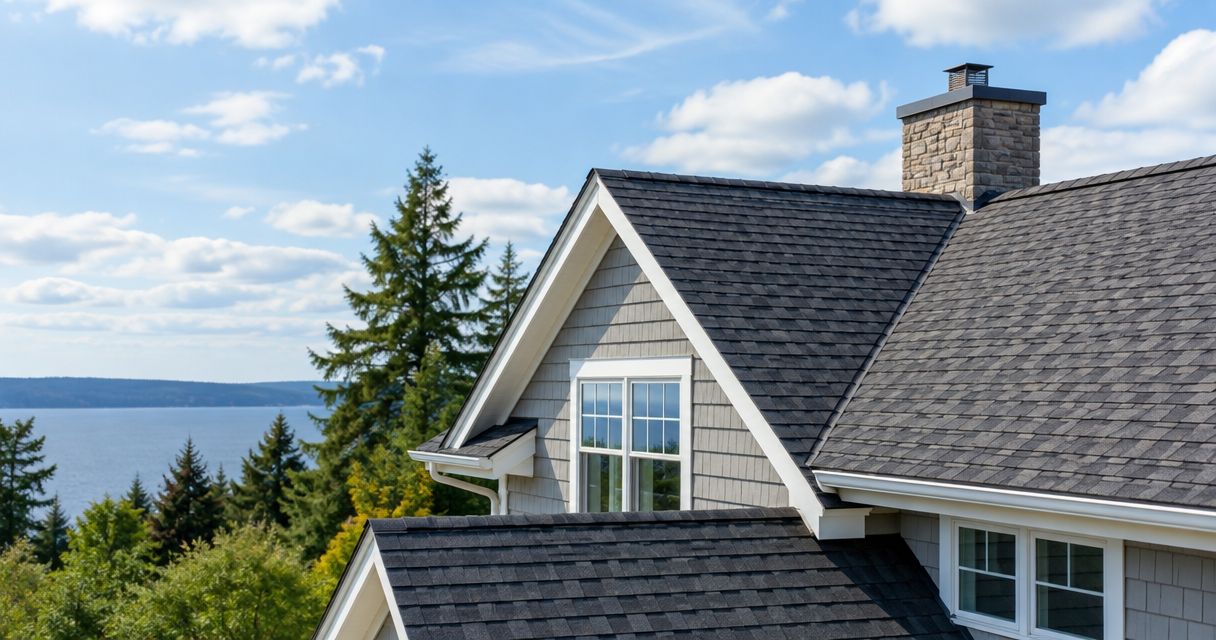
Best for a wind-focused shortlist: standing-seam metal with documented uplift resistance. Best for a conventional shingle replacement: architectural asphalt. Best for a slate-style appearance: documented synthetic roofing. For NH homeowners comparing roofing materials in 2026, the deciding evidence is the tested roof assembly and installation specification—not the material name alone.
- Best roofing materials ranked by wind resistance NH: compare documented roof assemblies, not material names alone.
- Standing-seam metal belongs on the wind-focused shortlist when its tested assembly matches your roof.
- Architectural asphalt suits homeowners who want a conventional shingle replacement with documented wind classification.
- Prescott Roofing offers residential roof replacement in Southern New Hampshire; request an inspection before choosing a system.
Why this matters
Wind resistance is a roof-system question. Shingles depend on fastening and sealing; metal panels depend on connections that include seams, clips, fasteners, and the supporting roof deck. A strong covering does not excuse weak attachment beneath it.
For your 2026 replacement, ask the contractor to connect the proposed material to your actual house: roof shape, exposure, deck condition, and local requirements. Prescott Roofing serves homeowners in Southern New Hampshire and Northern Massachusetts considering residential roof replacement.
The useful ranking is the one your contractor can support in writing. A material category alone cannot establish which finished roof will resist more wind.
What makes the best wind-resistant roofing material?
Use these criteria before comparing samples or accepting an estimate:
- Documented performance: Ask for the exact product’s wind classification or assembly test documentation, not a general claim about the category.
- Assembly match: Confirm that the tested deck, attachment method, and installation conditions fit the proposed replacement.
- Edge attachment: Require clear details for eaves, rakes, ridges, and perimeter fastening. These connections deserve specific attention.
- Deck condition: Identify how damaged sheathing and inadequate attachment will be addressed after tear-off—the removal of existing roofing.
- Installation instructions: The estimate should identify the manufacturer’s requirements, including fastening, slope limitations, and accessory components.
- Repair practicality: Ask how an individual damaged shingle, panel, or accessory would be repaired without disturbing unnecessary roofing.
Compare 3 written estimates using the same scope. That is a recommended comparison method, not a requirement to choose the middle bid.
Roofing materials at a glance
This 2026 ranking prioritizes a documented wind-resistant assembly, then practical fit for a homeowner-paid replacement. It is a decision guide, not a laboratory ranking of every product within each category.
| Rank and material | Best for | Standout feature | Key limitation |
|---|---|---|---|
| 1. Standing-seam metal | Wind-focused replacements with assembly documentation | Concealed attachment and defined panel connections | Panel profile, clips, spacing, and deck details must match the specified assembly |
| 2. Architectural asphalt shingles | Conventional residential reroofing | Overlapping shingles with documented product-specific wind classifications | Performance depends on correct nailing, sealing, and starter details |
| 3. Synthetic slate or shake | A slate-style or shake-style appearance | Alternative profiles with product-specific performance documentation | Products differ; appearance does not establish wind resistance |
| 4. Three-tab asphalt shingles | Matching an existing three-tab appearance | A familiar, flat shingle profile | The category label supplies no evidence of a wind advantage |
1. Standing-seam metal: best for a documented wind-focused replacement
Standing-seam roofing uses metal panels joined along raised seams. Many systems conceal their attachment beneath the panels, but the panel profile and attachment design vary.
For an exposed NH home, place standing-seam metal first on the shortlist only when the contractor supplies relevant assembly documentation. A panel brochure without the proposed clip, fastener, spacing, and deck information leaves the central question unanswered.
Standing-seam metal pros
- Concealed attachment keeps many primary roof-panel fasteners beneath the covering.
- Assembly documentation can identify the tested panel and connection details.
- Panel and trim specifications give you concrete items to compare between estimates.
Standing-seam metal cons
- Similar-looking panels can use different seams and attachment methods.
- Penetrations and transitions need carefully specified flashing details.
- Replacing an individual panel can involve adjacent connections or trim.
Ask whether the proposal specifies a snap-lock or mechanically seamed profile, then ask why that profile fits your roof. Neither name alone proves the assembly’s wind resistance.
Best for: Homeowners prioritizing documented uplift resistance and willing to evaluate a detailed metal-roof specification.
Verdict: Buy only when the proposed assembly, attachment schedule, and roof conditions match.
2. Architectural asphalt: best for a conventional shingle replacement
Architectural asphalt shingles use a layered profile rather than the flat appearance of three-tab shingles. Their wind performance depends on the exact product, attachment, starter course, and sealing requirements.
Architectural asphalt is the practical starting point when you want a conventional shingle replacement. Compare the specified products and installation details instead of assuming that a heavier-looking shingle automatically produces a stronger roof.
Architectural asphalt pros
- Product documentation provides an identifiable basis for comparing wind classifications.
- Individual shingles can be replaced without treating the roof as one continuous panel system.
- Starter, field-shingle, and ridge requirements can be itemized in the estimate.
Architectural asphalt cons
- Incorrect nail location or attachment can undermine the specified installation.
- Seal activation and any required hand-sealing need attention during installation.
- A named field shingle does not define the quality of every roof edge and transition.
For a 2026 replacement, ask how installation conditions affect sealing and whether the manufacturer requires additional steps. Get the answer in writing rather than accepting a general promise that the shingles will settle down later.
Best for: Homeowners seeking a conventional residential roof with clear, product-specific installation requirements.
Verdict: Buy when the estimate identifies the shingle, fastening requirements, starter, and ridge components.
3. Synthetic roofing: best for a slate-style appearance
Synthetic roofing includes manufactured products shaped to resemble slate or wood shakes. Those products are not interchangeable: composition, fastening details, permitted slopes, and documented performance differ.
Treat synthetic roofing as an appearance-led option that must still pass the wind-documentation check. A slate-like shape does not establish the performance of natural slate, and a category-wide wind claim is not enough.
Synthetic roofing pros
- Provides slate-style or shake-style profiles for homeowners who prefer that appearance.
- Product documentation can specify fastening and roof-slope requirements.
- Individual-piece construction allows the contractor to explain a localized repair method.
Synthetic roofing cons
- Category names conceal substantial differences between products.
- Cutting, spacing, and fastening requirements need product-specific attention.
- Future matching and repair methods should be discussed before installation.
Ask the contractor to identify the exact product before you compare its documented wind performance. Also request the installation instructions that apply to your roof slope and deck.
Best for: Homeowners who want a slate-style or shake-style roof and will compare specific products rather than broad material claims.
Verdict: Hold until the exact product and installation specification appear in the estimate.
4. Three-tab asphalt: best for matching a three-tab appearance
Three-tab shingles have cutouts that create a repeating, flat roof pattern. They remain a distinct appearance choice, but that shape does not establish a wind-performance advantage.
For a replacement driven primarily by wind resistance, require a product-specific reason to choose three-tab shingles over the other proposed options. Compare classifications and installation requirements, not simply the word asphalt on competing estimates.
Three-tab asphalt pros
- Preserves the familiar flat appearance of an existing three-tab roof.
- Uses individual shingles rather than continuous metal panels.
- Provides an identifiable product specification for a direct comparison with architectural shingles.
Three-tab asphalt cons
- The three-tab label does not establish a wind rating.
- Nailing, sealing, starter, and edge details still determine installation quality.
- Appearance matching alone does not justify a wind-focused recommendation.
Best for: Homeowners who specifically prefer a three-tab appearance and have verified the proposed product’s suitability.
Verdict: Skip as the default wind-focused choice unless the written specification supports it.
What your replacement estimate must explain
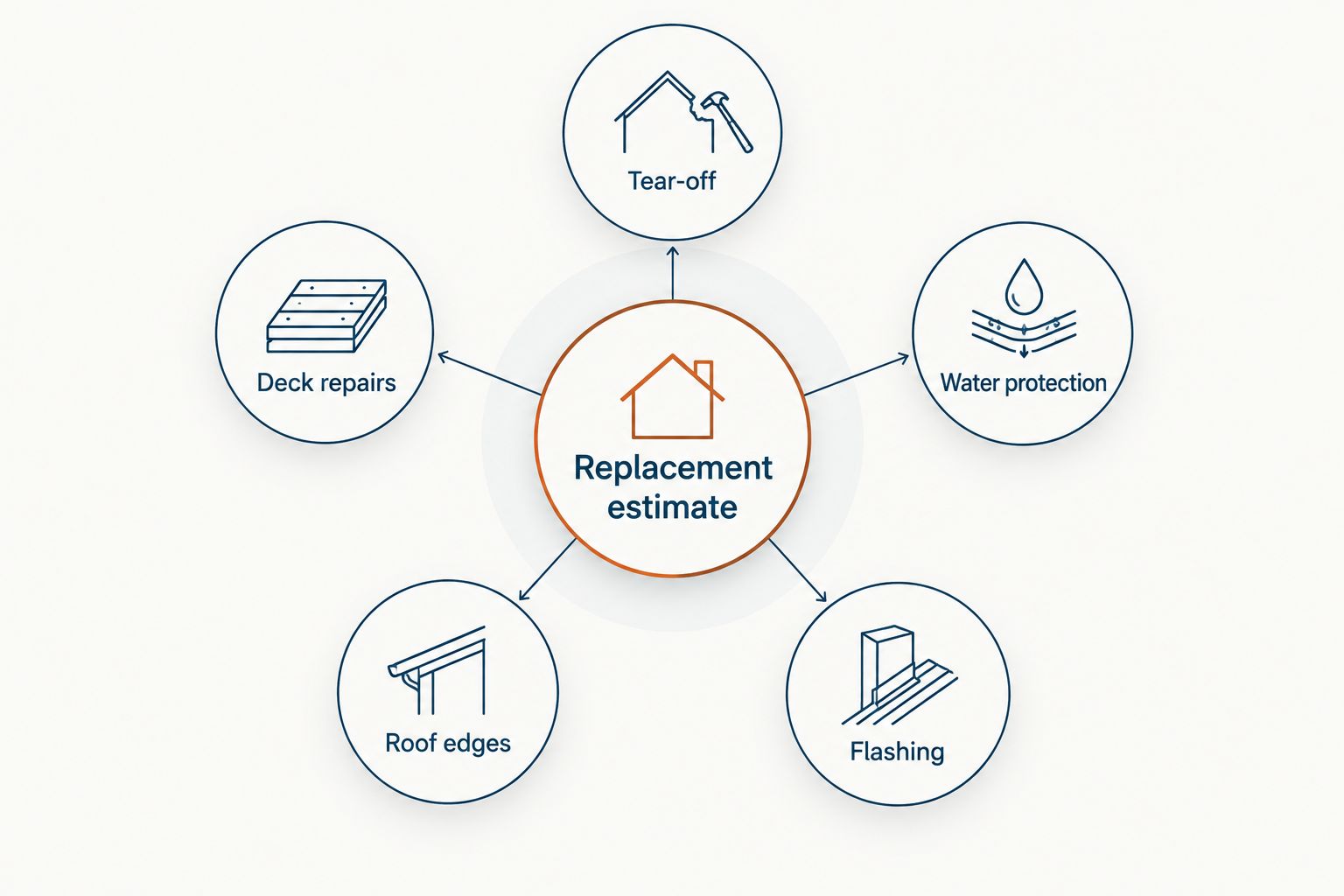
A 2026 roof estimate should describe the work beneath the visible material. Use these headings to compare bids and expose omissions before you sign.
Tear-off
Confirm what existing roofing will be removed and how disposal is handled. Ask whether the contractor intends to inspect the exposed deck before installing the replacement.
Deck repairs
Ask how damaged sheathing will be identified, documented, and authorized. The agreement should explain how additional work is approved rather than leaving you to resolve it while the roof is open.
Water protection
Underlayment is the protective layer beneath the roof covering. Ask what will be installed, where additional water-protection membranes are specified, and how the installation follows applicable requirements; underlayment does not replace proper attachment of the covering.
Roof edges
Require starter, drip-edge, rake, and ridge details appropriate to the chosen system. On metal roofs, ask for the perimeter attachment and trim connections; on shingle roofs, ask for the starter and fastening requirements.
Flashing
Flashing directs water away from joints and penetrations. Step flashing consists of overlapping pieces where a sloped roof meets a wall; the estimate should distinguish replacement from any proposed reuse.
Ask for 2 sets of photos: exposed-deck conditions and completed details. This is a practical documentation request, not a substitute for inspection or a guarantee of workmanship.
How to check a wind claim before signing
A wind-speed figure, a classification, and an uplift-pressure result are not interchangeable. Ask what the submitted document measures and how it applies to your particular roof.
Use this sequence:
- Identify the product. Record the manufacturer and exact shingle, panel, or synthetic roofing model.
- Identify the assembly. Confirm the deck, fasteners, clips where applicable, and required installation accessories.
- Check the application. Ask the contractor to explain roof slope, building exposure, and any relevant limitations.
- Put it in writing. Require 1 written specification connecting the estimate to the proposed installation.
Do not compare a metal assembly’s uplift-pressure result directly with an asphalt shingle’s advertised wind-speed figure. Ask the contractor or responsible design professional to explain suitability under the applicable requirements.
How the materials were ranked
The order reflects a homeowner’s decision path, not proprietary testing. Standing-seam metal leads the wind-focused shortlist when supported by matching assembly documentation; architectural asphalt is the conventional shingle alternative.
Synthetic roofing earns its place for appearance, subject to product verification. Three-tab shingles belong on the list when their appearance is specifically wanted—not because the category proves stronger wind performance.
All four options remain subject to the same checks: documented performance, sound decking, correct attachment, careful edges, and a repair plan.
Which roofing material should you choose?
Start with architectural asphalt if you want a conventional replacement; compare documented standing-seam metal if wind resistance drives the decision. Choose synthetic roofing for its appearance only after checking the exact product’s requirements.
Prescott Roofing is a residential roof replacement option for Southern New Hampshire homeowners. Request an inspection with a clear purpose: determine the deck condition, review material suitability, and define what the replacement estimate includes and excludes.
For your 2026 project, bring photographs of the roof, any previous roofing paperwork, and your questions about attachment details. You do not need to climb onto the roof to prepare.
Request a roof replacement inspection
Discuss your roof, material options, and estimate scope. A request is not a confirmed appointment.
FAQ
What's the best roofing material for wind resistance in New Hampshire?
The best choice is a documented roof assembly suited to your house, not a material category by itself. Start by comparing standing-seam metal and architectural asphalt with their exact attachment and installation requirements.
Is standing-seam metal always more wind-resistant than asphalt?
No, the material names alone do not establish which roof assembly performs better. Compare documentation for the exact metal assembly and asphalt product, then confirm their suitability for your roof.
What should a wind-resistant roof replacement estimate include?
The estimate should identify the roof covering, deck preparation, attachment requirements, edge details, underlayment, and flashing work. It should also explain exclusions and how additional deck repairs are authorized.
Does a shingle wind rating guarantee that my roof will not fail?
No, a wind classification is not a guarantee that the completed roof cannot fail. Installation, supporting materials, roof conditions, and the classification's limitations still matter.
Can I choose synthetic slate mainly for wind resistance?
Choose synthetic slate for wind resistance only after checking the exact product and proposed installation. A slate-style appearance does not establish a wind rating or make all synthetic products equivalent.
Should I replace the roof deck when replacing my roof?
Replace damaged or unsuitable decking as required by the actual conditions and applicable installation requirements. Ask the contractor to document findings after tear-off and explain how repair work will be approved.
How do I request a Prescott Roofing replacement inspection?
Use Prescott Roofing's website to request a residential roof replacement inspection. Treat the request as an inquiry until the appointment details are confirmed.
One last thing
Ask to see the proposed edge detail before choosing the shingle color or metal finish. A sample shows the surface; the edge specification shows how the system is attached where the roof ends. Get that detail into the agreement, not just the sales conversation.