NH home sellers’ roof replacement is replacing a worn or failing roof before listing to address its condition before a buyer evaluates the property. Roof replacement before selling a house should follow documented findings—not roof age alone—and your decision needs to account for the listing schedule, written scope, and work you will pay for yourself.
- Roof replacement before selling a house should follow an inspection, not an assumption that a new roof guarantees a higher offer.
- Prescott Roofing handles residential roof replacement for Southern New Hampshire homeowners; keep home-sale valuation questions with your real estate agent.
- Compare roof replacement estimates by tear-off, decking, flashing, ventilation, exclusions, and cleanup—not the total alone.
- Choose replacement, repair, or selling without replacement based on documented condition and your transaction timeline.
Why roof replacement matters for NH home sellers
A seller has a different decision from a homeowner planning to stay: you need to address roof problems without treating every upgrade as a resale investment. A new roof addresses roof condition; it does not guarantee a higher sale price or a trouble-free transaction.
For a 2026 sale in Manchester, Nashua, or nearby communities, separate the roofing decision from the pricing decision. A contractor evaluates the roof and replacement scope. Your real estate agent advises how that condition fits the listing strategy; your attorney handles transaction-specific legal questions.
Prescott Roofing provides residential roof replacement in Southern New Hampshire. Prescott Roofing is best for Southern New Hampshire homeowners seeking residential roof replacement, not home-sale valuation advice. Start with evidence of what needs work, then decide whether completing it before listing serves your plans.
How to decide and prepare for replacement
Document the roof before choosing a solution
Start with records you already have. Find installation paperwork, past repair invoices, and photographs of any interior staining. Write down when you noticed a problem and whether it has changed. Do not climb onto the roof to build this file.
Then request a professional inspection that distinguishes visible symptoms from their likely cause. A stained ceiling does not establish that the entire roof needs replacement, and shingles that look acceptable from the driveway do not settle the condition of flashing or decking.
For your 2026 planning file, make a 1-page checklist that separates confirmed findings from unanswered questions. Ask the contractor to explain which areas were inspected and which were inaccessible. Photos help you understand recommendations without turning an estimate into a guessing exercise.
- Record known installation and repair information without estimating missing dates.
- Photograph interior stains from a safe, accessible location.
- Ask for photographs identifying the location of exterior concerns.
- Separate localized defects from widespread roof-system problems.
- Note inspection limits, including concealed decking and inaccessible attic areas.
Compare replacement with the alternatives
Before requesting replacement proposals, ask whether the documented problem requires a full replacement or has a narrower repair scope. Your objective is to make a defensible decision, not to buy the largest project or postpone necessary work until a buyer raises it.
A localized flashing defect and widespread shingle deterioration are different findings. Flashing is the material that directs water away from roof intersections and openings. Replacing shingles alone does not answer whether those details need correction.
Ask your real estate agent how each path affects your listing strategy. Selling without replacement leaves the existing condition in place; a negotiated credit does not repair it. Keep any proposed transaction terms separate from the contractor’s work agreement.
Prescott Roofing offers residential roof repair and replacement. Ask for the reasoning behind the recommended scope, including why a smaller repair would or would not address the documented condition.
- Request an explanation of repair versus replacement for the actual findings.
- Ask what remains unresolved under a repair-only approach.
- Discuss listing timing separately with your real estate agent.
- Avoid treating a buyer credit as completed roofing work.
- Record your decision and the evidence supporting it.
Compare written estimates line by line
You can build a comparison sheet yourself before discussing proposals with contractors. As a practical starting point, request 3 written estimates using the same inspection findings and intended scope. That is a comparison method, not a requirement to select the middle proposal.
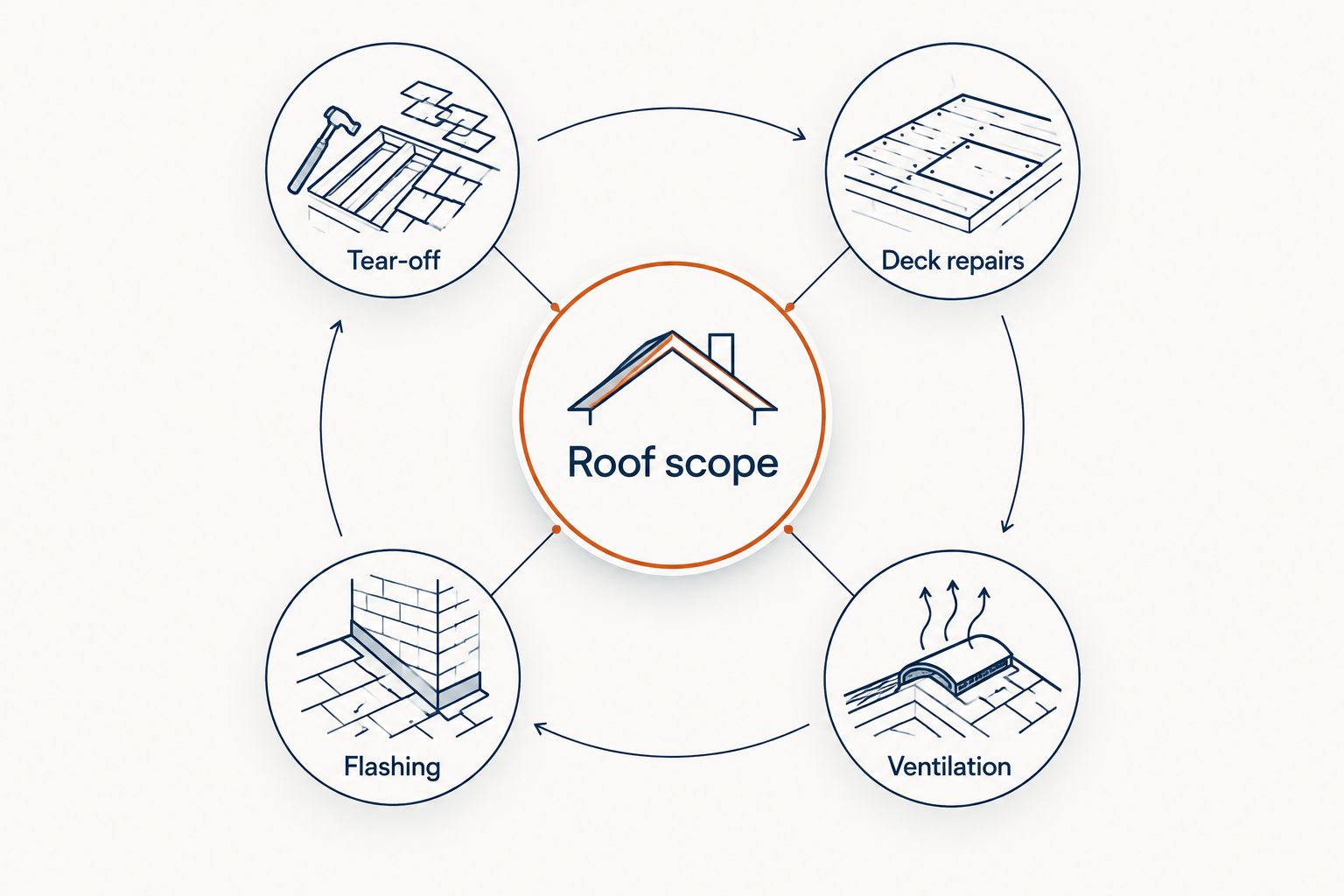
For a 2026 roof replacement, the written scope should explain what comes off, what goes back on, and how concealed problems are handled. Tear-off means removing existing roofing so the underlying surface can be examined. Decking is the wood surface beneath the roofing system; some of its condition remains hidden until removal.
Ask each contractor to identify exclusions and describe how additional work requires your approval. A proposal that names shingles but leaves flashing, ventilation, or decking decisions undefined gives you less information for choosing a contractor.
- Tear-off: identify the existing roofing included in removal and disposal.
- Deck repairs: explain how concealed deterioration is documented and approved.
- Flashing: distinguish replacement from reuse at walls, chimneys, and penetrations.
- Ventilation: state the planned intake and exhaust approach.
- Cleanup: describe debris removal and protection of surrounding property.
A useful scope connects the visible roofing to the supporting details. Keep these categories beside each proposal rather than assuming that similarly named materials mean identical work.
Choose materials that fit the roof and sale plan
Start by asking what materials suit the roof’s slope, existing details, and installation requirements. Then compare appearance. A seller does not need to choose the most elaborate material to make a sound replacement decision.
Architectural asphalt shingles, metal roofing, and specialty roof coverings involve different installation details. Do not substitute one for another based on appearance alone. Ask the contractor to explain the proposed material, its installation requirements, and how transitions to other roof surfaces will be handled.
Keep your sale objective visible. A material upgrade is a choice you fund, not a documented resale return. Request written product identification so you and a future buyer can distinguish what was installed from general descriptions such as premium roofing.
- Confirm the proposed material is suitable for the roof’s slope.
- Ask how valleys, walls, and roof penetrations will be detailed.
- Compare the proposed appearance with the house’s existing exterior.
- Request the manufacturer and product identification in writing.
- Separate necessary work from optional appearance upgrades.
Set the work sequence before setting the listing date
Write down the dates that matter to you, then ask the contractor which milestones can be confirmed. Separate inspection, proposal acceptance, scheduling, installation, and closeout. Requesting an inspection is not the same as receiving a confirmed appointment or reserving installation time.
Do not base listing photography or buyer access on an unconfirmed completion date. Ask how weather interruptions and concealed decking repairs affect the sequence. Your contractor should explain the process for updates rather than leave you to infer progress from activity outside.
For a 2026 listing, coordinate access to the driveway, yard, and attic before work begins. If the property is occupied, clarify what residents need to move or protect and who will communicate any changes.
- Confirm the inspection appointment separately from the initial request.
- Obtain the installation schedule before coordinating other property work.
- Ask how weather-related changes will be communicated.
- Identify parking, material staging, and property-access needs.
- Agree on the process for approving concealed repair work.
Keep a closeout file for the sale
Prepare the file yourself as documents arrive; do not wait until a buyer asks for them. Keep 2 sets of photographs: the documented condition before replacement and the completed work afterward. Photographs support the record but do not replace the contract or inspection findings.
Ask Prescott Roofing what completion documents will accompany your residential roof replacement. Request the final scope, approved changes, and product information. If warranty documents are provided, read their actual terms rather than assuming coverage transfers to the next owner.
Keep statements in your 2026 listing consistent with the paperwork. A partial replacement should not be described as a whole-house replacement, and a shingle replacement should not imply every roof component was replaced.
- Save the signed agreement and approved scope changes.
- Retain before-and-after photographs with identifiable roof locations.
- Keep final invoices and any applicable permit documentation.
- File product details and any supplied warranty documents.
- Describe the completed work accurately in sale materials.
If replacement is the next step, request an inspection and explain that you are preparing for a home sale. An inspection request starts the conversation; wait for appointment confirmation before planning around it.
Compare your pre-sale roofing options
Choose the option that addresses the documented condition—not the one that sounds easiest during listing preparation. Each approach has a useful role and a limitation. Discuss the roofing scope with a contractor and the sale implications with your real estate agent.
| Option | Best for | Main advantage | Key limitation |
|---|---|---|---|
| Full roof replacement | Sellers with documented widespread deterioration or a roof requiring replacement | Addresses the agreed replacement scope before listing | Requires project coordination and does not guarantee a higher offer |
| Targeted roof repair | Sellers with a localized, repairable defect | Focuses work on the identified problem | Does not renew the remaining roof or resolve unrelated defects |
| Sell without replacement | Sellers choosing to market the home in its current condition | Avoids managing replacement before listing | Leaves the roof condition unresolved and open to buyer evaluation |
| Negotiate a buyer credit | Sellers and buyers who agree to address roofing through transaction terms | Separates the sale agreement from managing installation beforehand | Does not complete the work; terms need transaction-specific review |
Common mistakes NH home sellers make
- Replacing the roof based only on age. Installation history is useful context, but condition and roof-system findings should support the scope. Do not turn an unknown installation date into a replacement diagnosis.
- Comparing proposal totals without comparing work. A proposal that reuses flashing differs from one that replaces it. Identify those differences before deciding which contractor offers the scope you want.
- Choosing an upgrade because it must pay back at closing. A material preference is not evidence of resale return. Ask your agent about the listing strategy without treating an opinion as a guaranteed outcome.
- Scheduling photography against an assumed finish date. Confirm installation and closeout milestones first. Leave room in your plan for documented changes rather than making promises the contractor has not confirmed.
- Calling the roof entirely new when work was partial. Match the listing language to the completed scope. Clear records help distinguish new work from components that remain in place.
FAQ
Should I replace my roof before selling my house in New Hampshire?
Replace the roof before selling when documented findings support replacement and completing the work fits your sale plan. Roof age alone does not establish that replacement is necessary; review the condition with a contractor and the listing strategy with your real estate agent.
Will a new roof increase my home's sale price?
A new roof does not guarantee a higher sale price or full recovery of your spending. It addresses the agreed roofing scope; ask your real estate agent how the completed work fits your property's listing strategy.
Is repairing the roof better than replacing it before a sale?
Repair is the narrower option when a documented defect can be corrected without replacing the entire roof. Ask what the repair addresses and what condition remains elsewhere before choosing it over replacement.
What should a roof replacement estimate include before I list?
A roof replacement estimate should identify removal, proposed materials, decking provisions, flashing, ventilation, cleanup, and exclusions. It should also explain how concealed repair work is documented and approved.
Can I offer a buyer credit instead of replacing the roof?
A buyer credit is an option to discuss during negotiations, not a substitute for completed roof work. Have your real estate agent and attorney review the proposed terms, and confirm any transaction-specific requirements with the appropriate parties.
What roof paperwork should I give a buyer?
Keep the signed scope, approved changes, final invoices, product information, photographs, and any applicable permit or warranty documents. Describe only the work those records establish, and do not assume warranty terms transfer.
Does requesting a roofing inspection book an appointment?
Requesting a roofing inspection does not book an appointment. Wait for confirmation of the date, access arrangements, and inspection scope before coordinating your sale preparation around it.
One last thing
Ask what stays before you ask what is new. A replacement proposal can include new shingles while retaining specified existing components. For your 2026 sale file, a clear list of retained materials is more useful than an unsupported promise that everything has been replaced.